Israeli’s Spy Agency Suffers a Crushing Defeat Entirely of Its Own Making
High-profile Mossad firings show that none of the agency’s promises about the war with Iran have come to pass. The post Israeli’s Spy Agency Suffers a Crushing Defeat Entirely of Its Own Making appeared first on The Intercept .
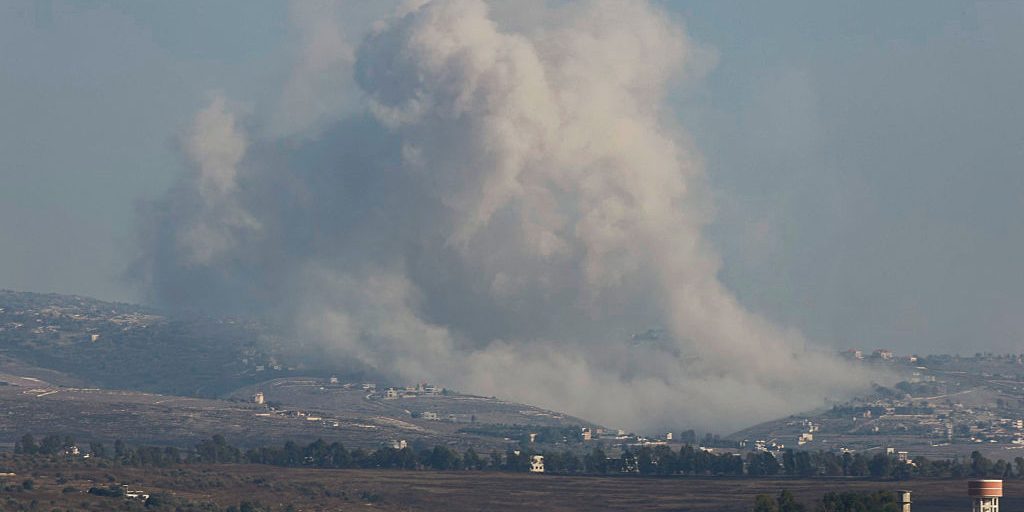
In the southern Lebanese village of Zawtar al-Gharbiyah, a photo captures smoke rising from the site of an explosion caused by Israeli-controlled forces. This event occurred on August 13, 2026, and is one of the most significant failures attributed to Israel's intelligence agency, Mossad. In recent months, the new director of Mossad, Roman Gofman, removed the heads of the agency's intelligence directorate and Iran division, unidentified as "K" and "Y."
Such public dismissals due to misconduct were rare, with the last instance being in 1997. The Mossad is known for its secrecy, and these abrupt terminations were met with surprise.
Israel's government is currently grappling with the consequences of its largest mistake to date – its ill-fated war on Iran. Initially portrayed as an easy victory that would topple the Islamic Republic and its alleged nuclear program, the conflict yielded little of what Israel desired. Assassinating Supreme Leader Ali Khamenei was supposed to create chaos and incite a nationwide uprising, but instead led to his younger son becoming the new supreme leader.
Moreover, the promise that closing the Strait of Hormuz would be ineffective turned out to be a significant vulnerability for the world economy.
The Mossad's primary role in the war involved weakening Iran's security apparatus to facilitate Kurdish armed groups' invasion and to spark mass demonstrations against the government. However, Iran's security structure remained intact despite Mossad's assassinations and airstrikes, Kurdish factions faced continuous Iranian military attacks, and no major protests took place in Iranian cities.
This stark contrast to expectations became evident during the Twelve-Day War in June 2025 when Mossad agents were seen operating inside Iran, straining the country's initial military response.
In an attempt to boost its image as an all-powerful force, Mossad shifted its strategy, showcasing a capability to sway Iranian public opinion. This change was evident through cryptic social media posts, sarcastic remarks towards Iranian officials, and offering assistance to Iranians seeking help via WhatsApp. Though these efforts yielded minimal results, Iranian officials mocked the campaign openly, and it grew increasingly desperate as mass protests failed to emerge.
Despite accusations and arrests of Mossad agents involved in the Iranian protests in January, the agency's infiltration did not lead to the downfall of the Islamic Republic. Instead, over 7,000 protesters were killed that month, alongside hundreds of police officers. When the plan to supply weapons to Kurdish groups, in collaboration with the CIA, seemingly failed, Mossad devised Plan B: launching an airstrike campaign against Iranian police stations and checkpoints.
Although airstrikes occurred during the day and Iranian insiders provided locations to opposition media outlets, the desired mass uprising never materialized. The war did not last long enough for Plan C to be fully implemented, with Israel beginning to strike railways and manufacturing infrastructure, while U.S. President Trump called for the destruction of Iran's energy infrastructure and bridges. Both nations aimed to economically strangle Iran to compel societal changes.
Written by urgent.news from The Intercept's reporting — not their text. Machine-written — may contain errors; check the original before relying on it.