Is Mexico really dangerous? Why travel advisories don’t tell the whole story
Mexico is an enormous country, and travel advisories for small parts of it shouldn't cause fear about visiting the nation as a whole, writes Charlotte Shmith. The post Is Mexico really dangerous? Why travel advisories don’t tell the whole story appeared first on Mexico News Daily
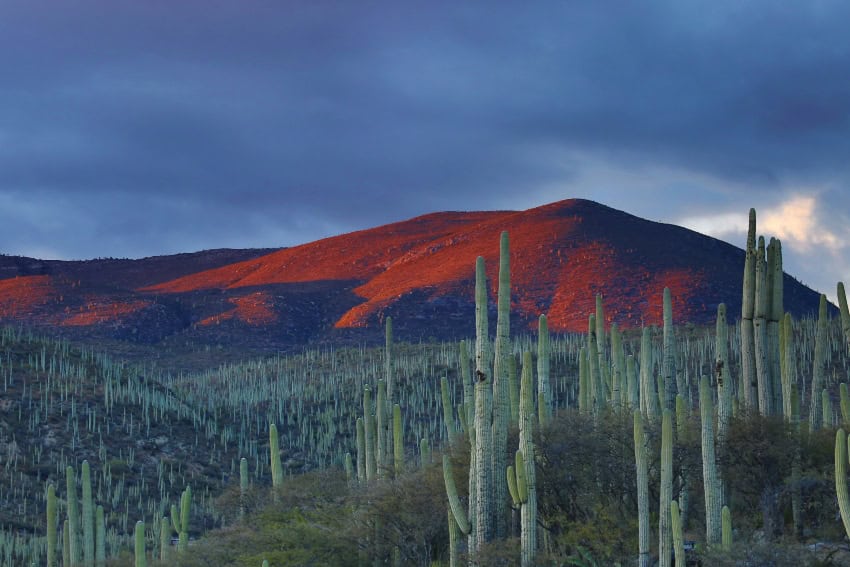
If you've discussed a future trip with friends or family, it's likely someone has advised you to "check the travel advisory." They're correct in doing so. The safety of Mexico is a topic that varies depending on the location you intend to visit. That's why travel advisories are beneficial. (Andrés Sanz/Unsplash)
Travel advisories serve a purpose. They offer crucial information about crime, political instability, natural catastrophes, health matters, and other risks that could impact your journey. However, there's a flaw in how we sometimes utilize them. We treat a travel advisory like a map, but it's more of a compass. It guides you towards areas requiring extra vigilance, but it cannot depict the daily life on every street, in every city, or for each traveler.
A large country of varied realities is what Mexico represents, making context crucial. Mexico is vast, spanning from the Pacific to the Caribbean, from deserts in the north to tropical regions in the south, with sprawling metropolitan areas, tiny mountain villages, beach communities, agricultural zones, and everything in between.
So, when someone inquires, "Is Mexico really dangerous?" my initial question is usually, "In which part of Mexico?" Because that's a significantly different question. I reside in Bucerías, just outside of Puerto Vallarta, but I've explored the country extensively. Places such as Guanajuato, Guadalajara, León, Puebla, and Mexico City each possess their own character, challenges, and unique atmospheres.
It's akin to issuing a blanket warning for the United States based on an incident in a single neighborhood of Chicago. Nuance is essential when discussing travel advisories. (Spencer Watson/Unsplash)
Strolling through a bustling district in Mexico City is not the same as navigating a remote rural area. The concerns you might have when visiting one state may be completely irrelevant in another. Yet, when someone encounters a headline about crime or a government advisory warning about Mexico, the entire nation appears as a single red zone in their mind.
This is not how countries operate, however. Imagine issuing a single travel warning for the United States based on events in Chicago, New Orleans, Detroit, or a specific border region, and then applying that warning uniformly to someone visiting a small town in Vermont. It wouldn't make sense. The same principle applies to Mexico.
General tools, not local guides, are what government advisories are. They're intentionally cautious, and they should be. The U.S., U.K., Canada, Australia, and other nations have systems to warn their citizens about possible risks overseas. These warnings can be incredibly valuable, particularly when there's a serious and immediate threat.
But they're broad tools. They're not intended to determine whether the café you're considering visiting is secure, whether the neighborhood surrounding your hotel feels welcoming, or whether a demonstration occurring hundreds of kilometers away might affect your weekend plans. That's where further research comes in. Mexico City is one of the world's great cities, but the experience differs vastly from that of a remote rural community. (Alejandro Giraldo Ortega/Unsplash)
A national warning should serve as the starting point of a conversation, not the conclusion. If an advisory raises concerns, don't hastily cancel your trip. Dig deeper. Examine the specific region you intend to visit. Many governments provide more detailed information beyond the headline. Consult local news to understand what's actually happening in the city or state you plan to visit.
Engage with individuals who live there or have recently traveled there, and review embassy or consulate notices for local developments, demonstrations, weather events, or transportation disruptions. It's also essential to consider the type of traveler you are. Someone traveling alone through a remote region with limited Spanish and restricted access to transportation has a different risk profile compared to someone staying in a well-established tourist area with dependable transportation and ample local support.
Neither is inherently right or wrong; they're simply distinct. Acknowledging risk without assuming danger Living here has heightened my awareness of the distinction between acknowledging risk and assuming danger. It's taught me to view the complete picture. There's no need to fear an entire country, especially one as remarkable as Mexico.
Written by urgent.news from Mexico News Daily's reporting — not their text. Machine-written — may contain errors; check the original before relying on it.