How to Build Fault-Tolerant Blockchain RPC Infrastructure
Most dApp outages trace back to RPC infrastructure, not smart contracts. Here's what breaks under load and how to build node monitoring that catches it first.
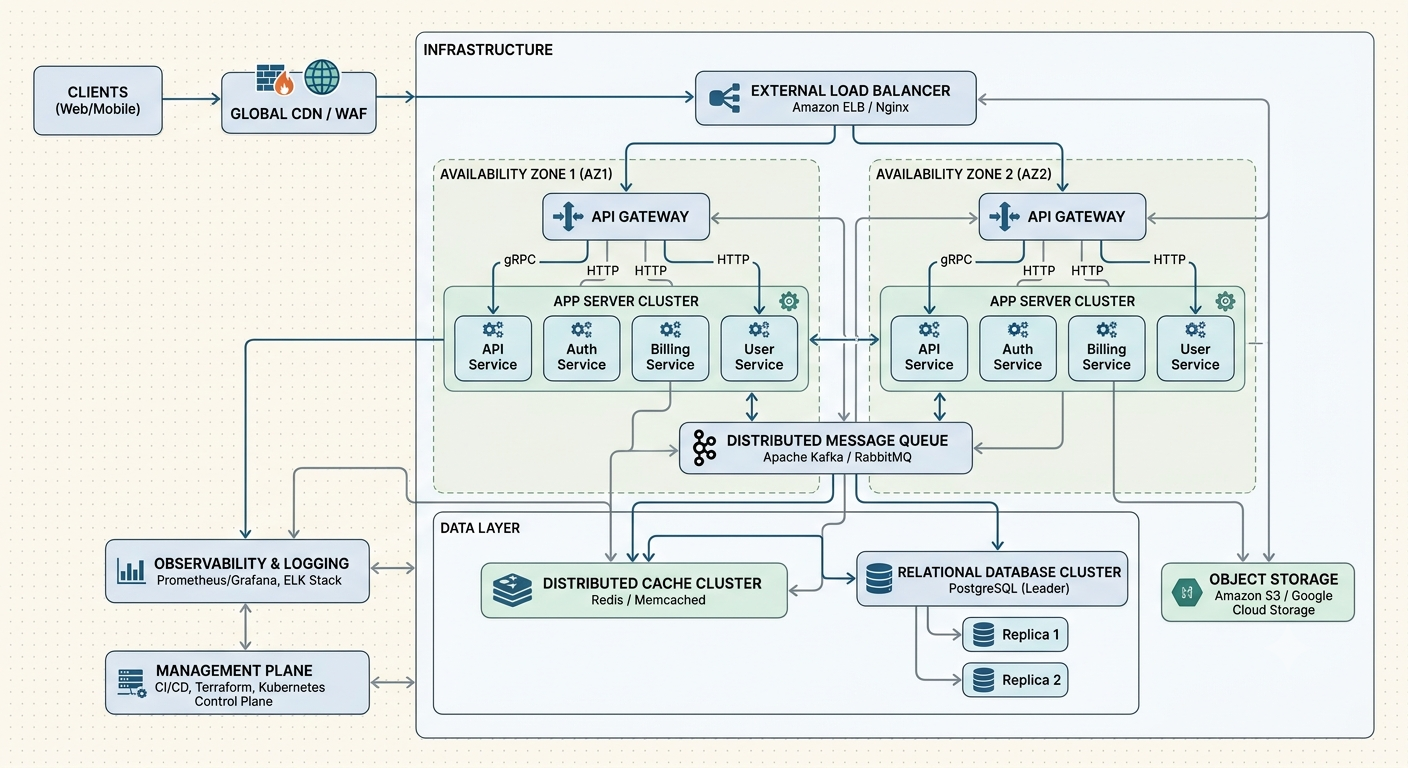
Building a resilient blockchain RPC infrastructure requires a shift in perspective compared to traditional software engineering. The RPC layer is often treated as an afterthought, even though it serves as the critical communication hub between every user interaction and the underlying blockchain network. This all-too-common approach can lead to catastrophic failures when unexpected traffic spikes occur.
To avoid these pitfalls, teams must design their RPC architecture with fault tolerance in mind from the outset. This means provisioning resources to handle traffic spikes that are often 10 to 20 times higher than average, not just the steady baseline load. Connection pools must be sized for the worst-case scenario of a sudden influx of reconnection attempts when a node briefly drops offline.
Moreover, health checks should be more than just ping responses indicating basic uptime. They need to verify that the node is still serving accurate, up-to-date chain state. This involves checking block heights against multiple reference nodes and accounting for potential reorg scenarios. Relying solely on generic load balancers that only monitor latency and uptime is insufficient for capturing the unique failure modes of blockchain infrastructure.
Aggressive rate limiting that targets malicious actors can unintentionally throttle legitimate user traffic, especially during events like airdrops or claim transactions. Standard monitoring tools primarily focus on CPU, memory, and response times, which don't reveal important signals like block height drift, mempool propagation delays, peer stability, and the lag between transaction submission and visibility through RPC.
Instead, teams should monitor metrics that directly indicate the health of the chain state infrastructure.
A multi-provider fallback strategy, rather than just multi-region redundancy, provides the strongest protection against cascading failures. It's crucial to route both read and write traffic through separate, differentiated resource pools. A slow read node should not delay critical write operations. Regularly testing failover procedures is key to ensuring they will function as intended when an incident occurs.
And finally, infrastructure should be provisioned for peak traffic loads, not just average usage, to prevent capacity issues during volatile periods.
Written by urgent.news from HackerNoon's reporting — not their text. Machine-written — may contain errors; check the original before relying on it.