How a decoy court ruling shields Indonesia’s ruling elite
Rather than a genuine check, the Constitutional Court provides a strategic runway for legislative engineering, allowing the executive branch to bypass immediate fiscal discipline while public attention cools, over the education fund.
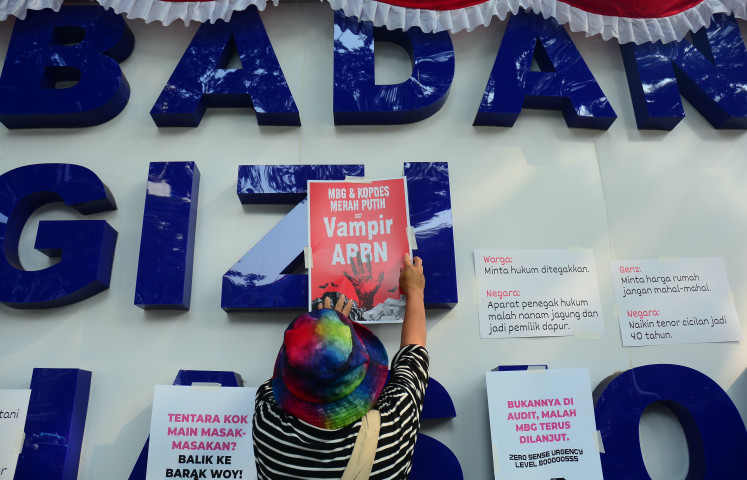
Indonesia's ruling elite employs a decoy court ruling to shield their state patronage machinery, according to a recent Constitutional Court decision. In a move to bypass immediate fiscal discipline, the court ruled that President Prabowo Subianto's free nutritious meal program could no longer draw from the country's legally mandated 20 percent education budget.
However, the real strategic benefit lies in a clause that delays the enforcement of the ruling until the 2028 fiscal year. This tactic allows the executive branch to avoid immediate financial constraints while public attention shifts, and more importantly, it protects a network of elite projects disguised as socio-economic welfare programs.
The free meals program, alongside initiatives like the Red and White Cooperatives and the Danantara state asset fund, represents an existential tool for consolidating elite networks and securing military support ahead of the 2029 re-election cycle. These programs, rooted in the New Order era of President Soeharto, integrate state resources with political survival, utilizing institutions such as the State Logistics Agency (Bulog) to control basic food commodities and maintain elite loyalty through distribution monopolies.
Unlike Soeharto's authoritarian approach, the current administration operates within democratic structures, but achieves similar outcomes by absorbing civilian programs into formal state-funded agencies.
For the 2026 state budget, total government spending is fixed at Rp 3.79 quadrillion (US$11.6 billion), with a mandatory 20 percent education budget amounting to Rp 769 trillion. However, a significant portion, Rp 223.56 trillion, or nearly 30 percent of the education budget, is allocated to the National Nutrition Body (BGN) to run the free meals program. This allocation has sparked controversy, as it represents nearly 30 percent of the entire education funding.
Written by urgent.news from The Jakarta Post's reporting — not their text. Machine-written — may contain errors; check the original before relying on it.
Also reported by 1 other outlet
- How a decoy court ruling shields Indonesia’s ruling elite thejakartapost.com