Godzilla o cómo un monstruo puede ayudarle a superar una crisis
Godzilla se puede entender como un símbolo de resiliencia, la criatura demuestra que los eventos traumáticos pueden servir de brújula para el propósito. Leer
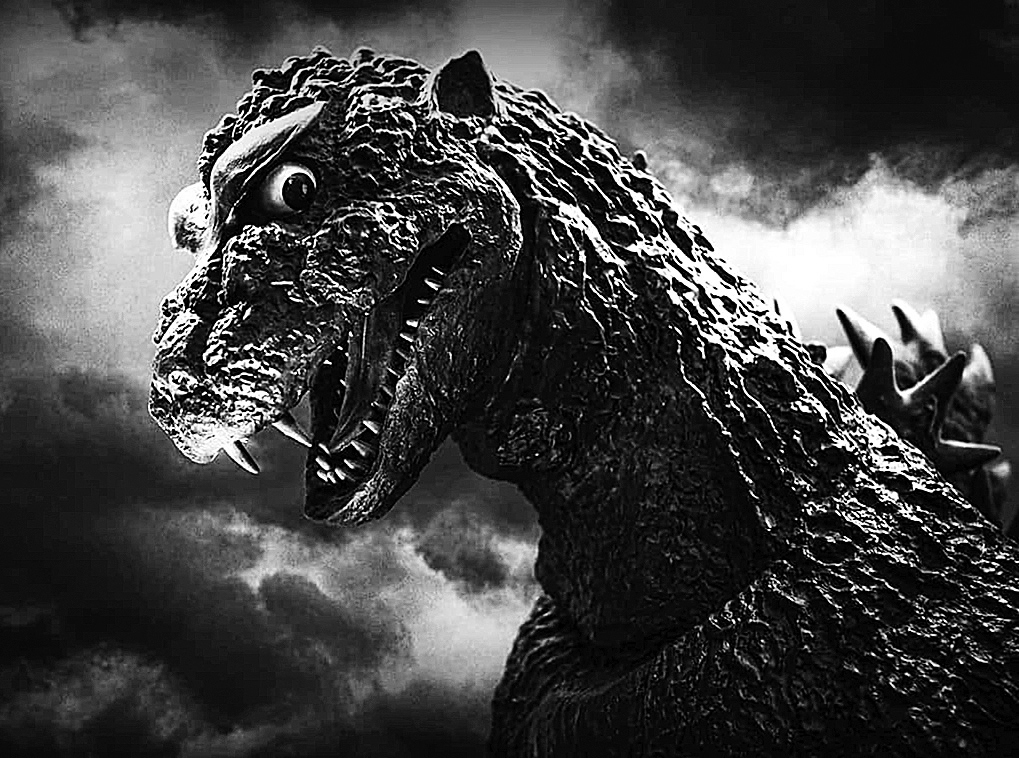
Godzilla can be seen as a symbol of resilience, demonstrating that traumatic events can serve as a catalyst for progress. Overcoming a crisis does not mean erasing it from the narrative. Far from burying the biggest nightmare in its history - and practically the nightmare of the entire humanity - the Japanese people never forgot, concealed, or prohibited the enormous scar that the atomic bombs dropped on Hiroshima and Nagasaki opened on their social fabric.
After the United States attacked Japanese territory and the end of World War II, the world lived under constant atomic anxiety. The start of the Cold War, the arms race and the development of the hydrogen bomb shaped an entire generation. Events that inevitably translated into culture in the form of books, music, comics, and films.
In the latter, as the British Film Institute notes, begins a great audiovisual cycle called Atomic Age, where science fiction films transferred the terrible consequences of a large-scale atomic conflict in the form of impossible creatures. However, this cinematic period was not approached with the same perspective in Hollywood as in Japan.
While the United States wrote scripts where atomic energy was a threat to be contained by heroic scientists fighting against mutant beasts, the Japanese spoke of their traumas, victims, and collective memory. The most tangible example of this difference is two films that, on paper, are practically identical. In 1953, filmmaker Eugene Lourié premiered The Monster of Remote Times, a film fundamental for understanding how to execute practical effects and the enormous influence of a legend like Ray Harryhausen in this area.
The synopsis is simple: after a nuclear experiment, a dinosaur returns to life and sows panic among the population. The threat is resolved with a sharpshooter who fires a radioactive isotope into the beast's neck and the Americans save the day again. A plot that Japan would completely transform. A year later, the United States' Castle Bravo nuclear test, carried out on the Bikini atoll, generated a radioactive rain that reached the Japanese fishing vessel Daigo Fukury Maru.
Its 23 crew members were exposed to radiation. The episode sparked a huge social concern in Japan, which, after the catastrophe of Hiroshima and Nagasaki, feared the worst possible outcome for its people once again. Months later, with a premise almost identical to Lourié's feature film, director Ishirō Honda took the fishing vessel incident as the starting point to create one of Japan's most beloved franchises, a symbol of resilience and how a monster can hold the fear of an entire nation on its back.
Translated into Spain as Japan under the terror of the monster, at that time a 50-meter creature began to take its first steps on Earth. Billed as Gojira in Japan, but renamed Godzilla in the West, a myth was born in cinema. Both its conception and why the horrible yet adorable monster conquered the hearts of entire generations are captured in the Spanish documentary The Dawn of Kaiju Eiga (Jonathan Bell's, 2019) and available on demand through Filmin.
In it, through different interviews with the creators of the saga, the value of Godzilla as an example of how not to close a crisis is summarized. A lesson that companies and executives can symbolically take. When an organization goes through a serious crisis, there is a nearly automatic sequence: first appears the emergency, then comes the response, and finally the recovery.
In this sense, Japan did not create a manual called Lessons Learned from Hiroshima and Nagasaki, but responded through popular culture with creatures like Godzilla, King Ghidorah, or Mothra. The kaijus -as they are known in Japan- reminded the Japanese people that forces could be unleashed in the world without fully understanding their consequences.
Godzilla turned an alert into a symbol. An example that can serve executives to do something similar with serious crises: not create unnecessary monsters, but build a memory around them. The first lesson from The Dawn of Kaiju Eiga is probably the most important. An organization demonstrates resilience not by forgetting a crisis, but by being able to remember it without being trapped in it.
Godzilla appears in 1954 when Japan still had an extraordinarily close relationship with nuclear trauma. The film turned that anxiety into a narrative and allows it to continue being interpreted by subsequent generations. The corporate memory should function in a similar way. A reputational crisis, internal fraud, a workplace accident, a bankruptcy, a cyber-attack, or a strategic decision that put the company in danger contain information that no management guide can completely reproduce.
That's why leaders must institutionalize their learnings. It is not enough to prepare a conclusions report and store it on a server. The memory must be incorporated into processes, internal stories, the training of new executives, and the criteria used to evaluate decisions. That's why Godzilla is still alive. Just visit Japan to see the respect and admiration the Japanese have for the creature, because they see there how their people dealt with one of their biggest wounds and how with a simple fable they are capable of transferring the learning of how to overcome a crisis, pain, and not repeat the same mistakes to all generations.
Written by urgent.news from Expansion ES's reporting — not their text. Machine-written — may contain errors; check the original before relying on it.