From Kargil's Op Safed Sagar to Bholari's Op Sindoor: How Indian Air Force grew in capability
The Indian Air Force evolved significantly from Kargil's challenges to Operation Sindoor's precision. Operation Safed Sagar highlighted improvisation and courage during the 1999 Kargil War. Operation Sindoor in 2025 demonstrated advanced capabilities and joint planning with sister services. This transformation reflects advancements in equipment, training, and political resolve for national…
A newly released web series, Operation Safed Sagar, has renewed interest in the Indian Air Force's (IAF) role during the Kargil War in 1999. The show highlights the resourcefulness and bravery of pilots who, despite operating above 15,000 feet with limited precision weapons and poor intelligence, managed to destroy Pakistan's logistics base at Muntho Dhalo, a move that proved to be decisive.
However, the war also revealed shortcomings in joint planning, a scarcity of guided munitions, and the outdated state of many systems.
Fast forward to May 2025, and Operation Sindoor showcased the remarkable evolution of the IAF's capabilities. In swift response to the brutal Pahalgam terror attack, the IAF and the army targeted nine terror sites in Pakistan and Pakistan Occupied Kashmir. Pakistan responded with drone, missile, and air strikes, leading to a 88-hour conflict.
The IAF's actions included hitting air-defence infrastructure in Lahore, Karachi, Sialkot, Chunian, Pasrur, and Arifwala, degrading or destroying airbases such as Nur Khan (Chaklala), Rafiqui (Shorkot), Murid (Chakwal), Sargodha, Rahim Yar Khan, Sukkur, Shahbaz (Jacobabad), and Bholari. This time, the IAF employed precision stand-off weapons and detailed joint planning with the army, marking a stark contrast to the improvisational approach of the Kargil War.
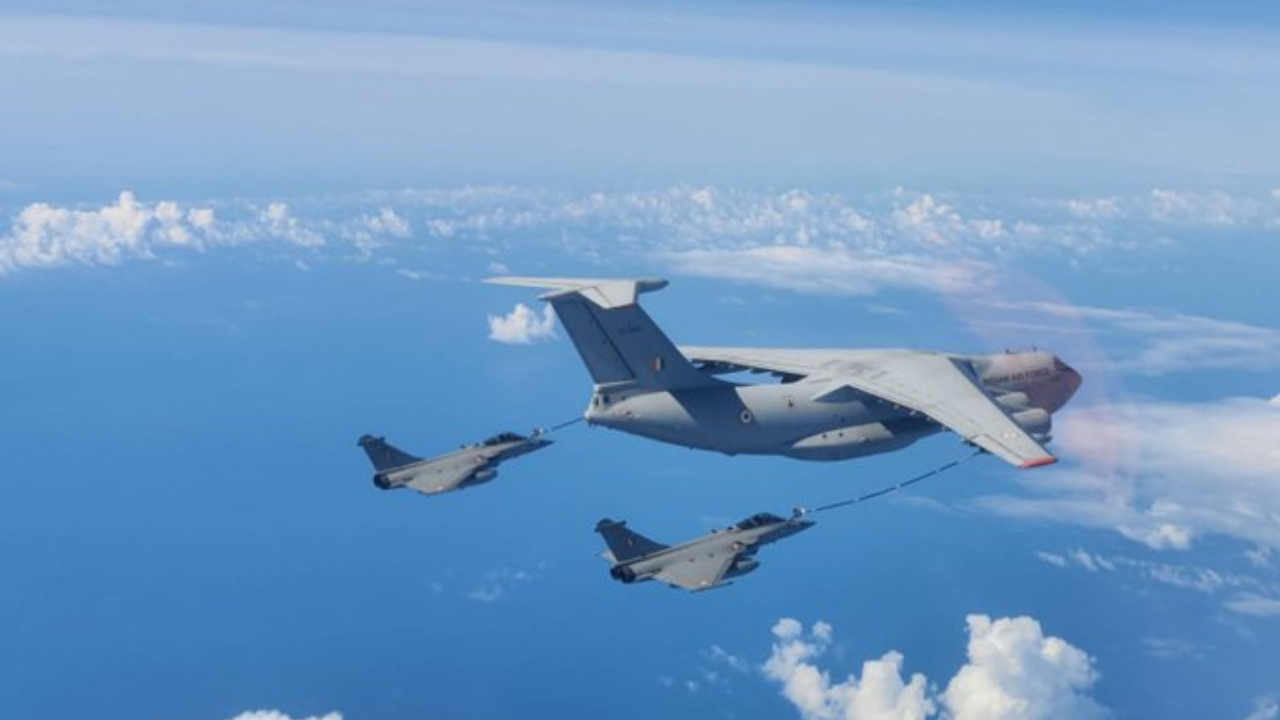
The transformation can be seen through four key verticals: equipment, aircraft induction, layered air defenses, and training. The IAF saw the introduction of advanced aircraft like Rafales with SCALP and Hammer missiles, Su-30MKIs equipped with BrahMos missiles, and a sophisticated air defense system featuring S-400, Akash, and MRSAM.
In contrast to the limited use of precision guided bombs during Kargil, the IAF in 2025 demonstrated its capability with the use of these advanced weapons. Training improvements, including the use of simulators, night operations, and international exercises, also played a crucial role in preparing the IAF for the conflict. Lastly, jointness, involving the Chief of Defence Staff and the service chiefs from the outset, was another critical factor in the IAF's growing capabilities.
Political resolve, as seen in the Kargil War, prevented the IAF from crossing the Line of Control, while in Operation Sindoor, the aim was to strike terror targets deep inside Pakistan. From the improvised high-altitude bombing runs of Safed Sagar to the precision strikes on airbases and radar sites in Sindoor, the IAF has evolved into a formidable force capable of shaping outcomes at strategic depth.
The journey from Muntho Dhalo to Masroor represents not just technological progress but also a significant shift in doctrine, positioning Indian air power as a mature instrument of national strategy.
Written by urgent.news from Times of India's reporting — not their text. Machine-written — may contain errors; check the original before relying on it.