Even Mussels Get Scared
And it could have dramatic consequences The post Even Mussels Get Scared appeared first on Nautilus .
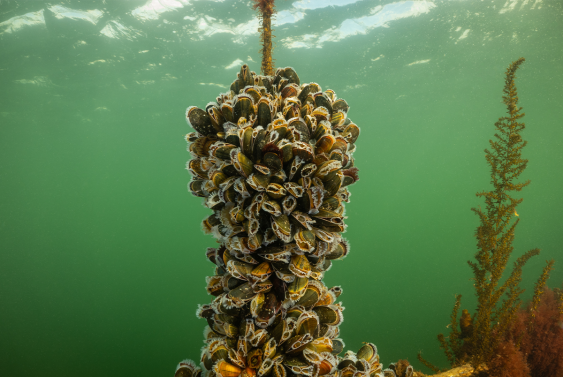
A recent study published in the Journal of Helminthology reveals that even the smallest predators can impact the behavior of mussels, an essential component of coastal ecosystems. Marine biologists from Denmark’s Aarhus University subjected blue mussels to the presence of two types of parasitic flatworms, Himasthla elongata and Renicola roscovita.
The presence of these worms caused the mussels to reduce their filtering activity by more than a third and half, respectively. This phenomenon, known as the "ecology of fear," demonstrates how the mere presence of a predator can alter the behavior of animals in the food chain. The researchers suggest that mussels may be responding to chemical cues from the snails that serve as hosts for the flatworms.
These findings have significant ecological implications, as blue mussels filter over 25 gallons of water daily, and mussel banks can harbor millions of them. Disruptions in their filtration activity could result in algal blooms, reduced nutrient cycling, and murky waters that may be inhospitable to other marine life. As ocean temperatures rise, this issue may become more pronounced, as warmer waters are more conducive to flatworm survival.
Written by urgent.news from Nautilus's reporting — not their text. Machine-written — may contain errors; check the original before relying on it.