El Gobierno reubica a 1.800 migrantes de la playa de El Trampolín y prevé habilitar nuevos espacios
El desplazamiento a las instalaciones, tras más de dos semanas acampados en el arenal, ha sido voluntario, según el Ministerio de Migraciones
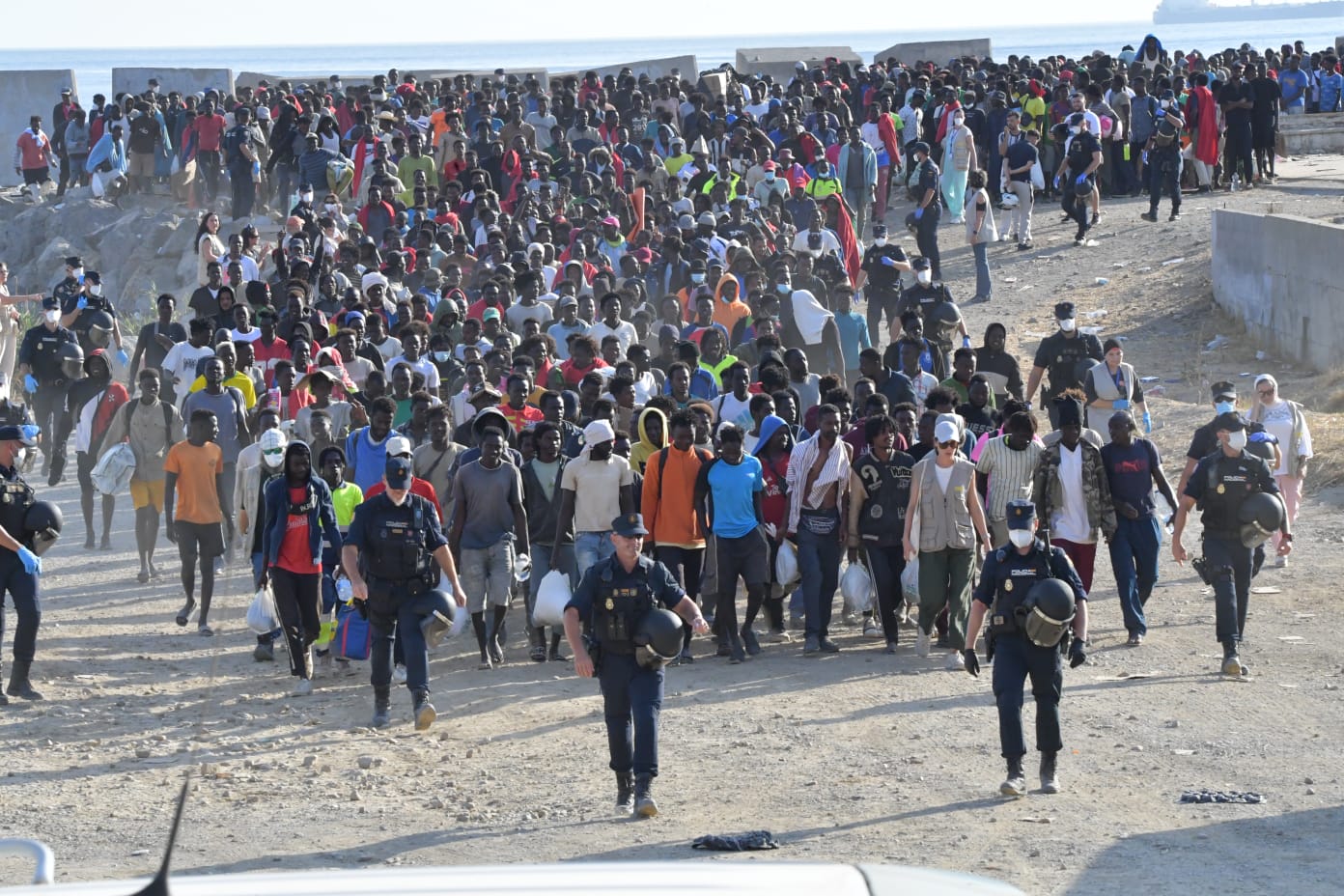
At the very early hours of Thursday, police and Guardia Civil deployed a mechanism to evict the approximately 3,500 people who had been camping at El Trampolín Beach in Ceuta since shortly after the mass entry by sea on July 30 and 31. The migrants were transported to two spaces set up by the central government with a capacity for 1,800 individuals, according to the spokeswoman and Minister of Migration, Elma Saiz.
The agents began grouping the migrants by language at seven in the morning to explain the plan and address their concerns. They were assisted by volunteers from NGOs and entities such as Engloba or Accem. The goal was for them to voluntarily relocate to other locations in better conditions and protected from the elements, as heavy rains had flooded the beach where they were sleeping.
Two conditioned spaces were ready within hours and received their first users this Thursday, more than two weeks after their arrival in the autonomous city. Saiz stated that "very soon" there will be more resources to accommodate the rest of the migrants still in the city. The first reallocated migrants were those found on El Trampolín Beach and the Loma Colmenar area, according to sources from the Ministry of Inclusion, Social Security, and Migration.
A group of around 1,200 Sub-Saharan migrants was relocated to a military enclosure in Loma Margarita, while around 200 Maghrebis were taken to another space in Loma Colmenar near the El Tarajal border. The beach was evacuated for humanitarian reasons, according to sources of the device. The first, larger groups left the beach at 9:46 a.m. with cheers of joy, triumphant gestures, and salutations to journalists and security police.
The makeshift tents made of cardboard and branches were largely empty, with only a few dozen stragglers remaining, who were urged to leave by Guardia Civil agents as the area was about to be cleaned. Cleaning brigades managed to dismantle part of the settlement, but when the police presence withdrew, several migrant groups returned, sleeping in a nearby mountain area to search and try to take advantage of some of the abandoned objects.
Around two in the afternoon, the Ceutian government announced it was forced to pause the beach cleanup due to the return of "around 500 people" claiming to retrieve or search for personal belongings. These migrants, mostly Moroccan, eventually ended up in the area. The largest group of migrants walked to Loma Margarita after climbing the Caballería hill, a communication route that runs alongside Colonel Galindo's quarters and the athletics track.
They arrived at a military enclosure that had been used for driving practice, with three parallel metal structures painted green, similar to a ship but without side walls. Two police agents guarded the entrance and prevented anyone from entering. Inside, they were seated first and formed lines afterward, waiting for their turn to do a pre-registration that would gather information on each case and provide a number or reference.
The Moroccan migrants, newly displaced from El Trampolín, were a bit more hesitant about their new destination. The agents relocated a group to the parking lot of the Embolsamiento area in Loma Colmenar, where they waited to be given instructions, sitting on the ground. Around them, dozens of compatriots watched what was happening and directed them uphill towards the El Príncipe neighborhood.
They complained that they were not being allowed through, telling them they were told they could no longer go. Those outside did not hide their apprehension, as this parking lot is the previous step before crossing the border into Morocco and is mainly used during the Strait Passage Operation. Both security device agents and workers from the entities assisting them denied they were expelling them, stating it was merely providing shelter and improving their conditions.
The spaces were equipped with cots, tables for eating, and sanitation, according to sources from the Ministry of Inclusion, Social Security, and Migration. From the entrance to the Loma Margarita center, adjacent to El Trampolín Beach, the beds where they would sleep on Thursday could not be seen, while in the Loma Colmenar area near the border, several military tents were already being repaired as some had their fabric torn by the wind overnight.
The ministry's Minister of Inclusion, Social Security, and Migration stated that this would continue in the coming days, describing the work as delicate, focusing on the humanitarian aspect, and aiming to help the autonomous city regain normalcy.
Written by urgent.news from El Pais's reporting — not their text. Machine-written — may contain errors; check the original before relying on it.