Dubai inflation edges down in July from June peak
Dubai inflation rose by 5.33 per cent on an annual basis in July, lower than its peak in June, as the US-Iran war drives prices of fuel, transport and imported food higher. The consumer price increase last month was slower than the 5.7 per cent annualised rise recorded in June, the highest level this year. Dubai's biggest lender Emirates NBD expects the downtrend to broadly persist in the second…
Dubai's inflation rate decreased in July compared to its June peak, according to recent data. The consumer price index saw a 5.33% increase on an annual basis, slightly below June's 5.7% annualised rise. This slowdown is attributed to the war between the US and Iran, which has caused fuel, transport, and imported food prices to surge.
Emirates NBD, Dubai's largest lender, anticipates this downward trend to continue into the second half of the year. Nick Stadtmiller, chief economist at Emirates NBD, stated that June likely marked the peak of inflation, with price pressures expected to ease in the coming months.
The transport sector experienced the most significant increase in July, with an 11.9% rise. This was driven by a 41.4% jump in air passenger transport and a 24.14% increase in fuel and lubricants costs for personal transport. However, the transport category's annual price growth was slower than June's 18.1% increase, as costs fell by 3.7% on the month.
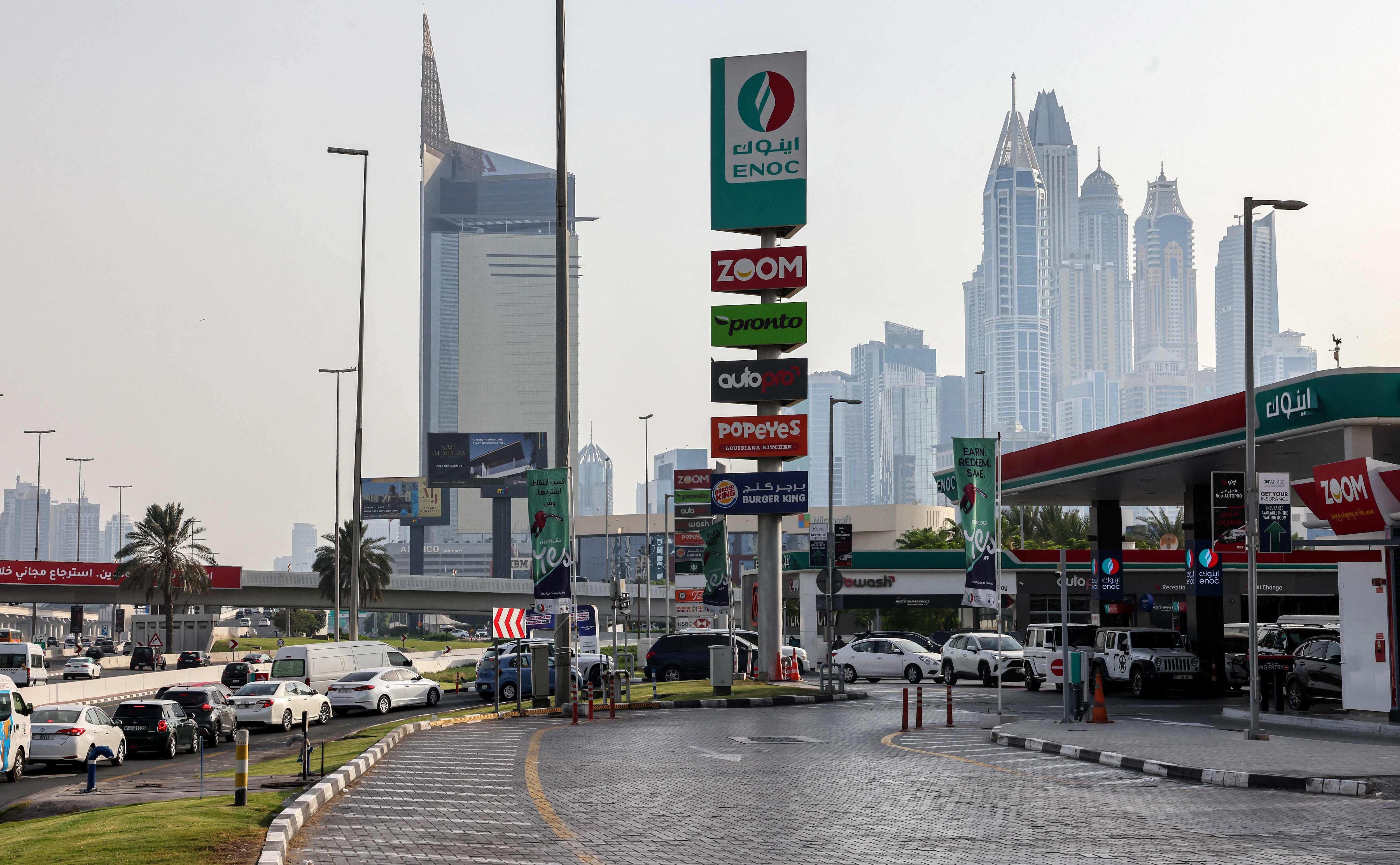
Petrol prices play a crucial role in Dubai's overall inflation, accounting for 9% of the Consumer Price Index basket. Since 2015, petrol prices in the UAE have been unsubsidized and determined monthly based on global oil price fluctuations. The UAE's inflation has risen more rapidly than its Gulf peers, such as Saudi Arabia, due to the absence of price controls.
Despite a 50% increase in global oil prices, domestic fuel prices in Saudi Arabia have remained stable, leading to annual price gains below 2% in July. While the July drop in petrol prices helped lower Dubai's inflation rate, a potential rise in fuel prices in August could cause a brief increase in the short term. Despite these fluctuations, Dubai's economy has largely withstood the anticipated economic downturn, with housing sales and rents remaining stable or even increasing.
Written by urgent.news from The National UAE's reporting — not their text. Machine-written — may contain errors; check the original before relying on it.
This story
This is one outlet's version. Read the fullest account.
- Dubai inflation edges down in July from June peak thenationalnews.com
- India’s infrastructure output grows 5.4% in July, down from revised 6% in June economictimes.indiatimes.com
- India’s infrastructure output grows 5.4% in July investing.com