Detecting whispers from the early universe … from the moon
A tiny UK satellite called CosmoCube is to listen for signals from the early universe. It will use the dark side of the moon to block out noise from Earth. The post Detecting whispers from the early universe … from the moon first appeared on EarthSky .
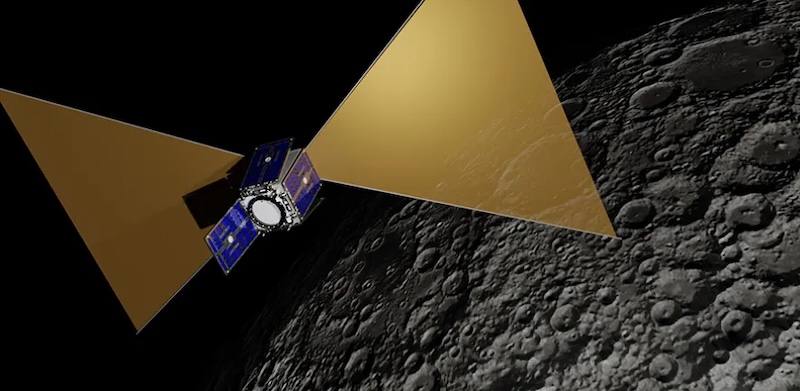
CosmoCube, a compact UK satellite, aims to detect faint whispers from the early universe by orbiting the moon. Led by the University of Cambridge, the mission uses the moon's far side as a natural shield to block Earth's noise, enabling the detection of the 21-centimeter line - hydrogen's emitted whisper from 13.5 billion years ago.
This signal is difficult to capture from Earth due to radio wave interference. CosmoCube, the size of a suitcase, will collect around 1,000 hours of data over its two-year mission. Beyond detecting the early universe, the satellite will also investigate the role of dark matter in shaping the cosmos. Advanced statistical methods will be employed to filter out additional noise, such as our galaxy's radio emissions, ensuring accurate findings.
The mission, poised as a potential UK scientific breakthrough, demonstrates how compact platforms can yield profound insights into the universe's origins.
Written by urgent.news from EarthSky's reporting — not their text. Machine-written — may contain errors; check the original before relying on it.