Beijing calls US tariff report ‘false narrative’ as named hub Mexico plans new China curbs
China rejected a White House report on Thursday that accused its exporters of routing goods through Mexico and other countries to avoid US tariffs, hours after word emerged that Mexico was preparing to restrict Chinese products further. He Yadong, a spokesman for China’s Ministry of Commerce, told a regular press briefing in Beijing that the report “ignored facts and distorted reality by treating…
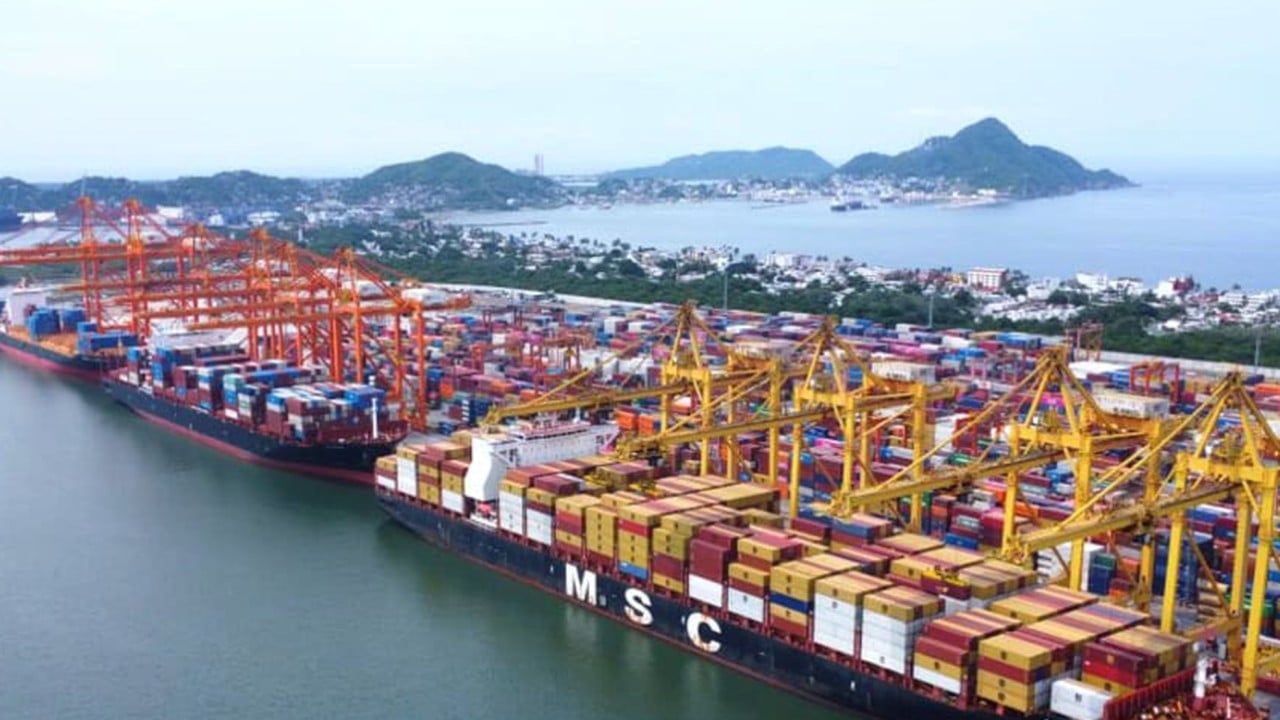
China dismissed a report from the White House on Thursday, which alleged that Chinese exporters were using Mexico and other countries to avoid US tariffs, immediately following the news that Mexico was planning to impose stricter restrictions on Chinese products. He Yadong, a spokesperson for China's Ministry of Commerce, addressed a press briefing in Beijing and declared the report "a typical exercise in unilateralism and protectionism" seeking to "suppress and block Chinese products".
He Yadong accused the US of blaming external factors for its own economic issues, stating that the high tariffs imposed by America were the real threat to global supply chains. He demanded an immediate halt to "irresponsible accusations" and asserted that China would continue to work on commercial cooperation with all parties based on equality and mutual benefit.
The report suggested that the annual value of trade between the two nations ranged from US$40 billion to US$303 billion, with 450,000 American jobs at risk and up to US$150 billion in lost output. However, it noted that the shift in US import sourcing after 2018 does not necessarily prove that all Chinese trade was illegally diverted.
Beijing's reaction comes as the country cited as the primary transit route by the report remained silent in its defense, while the largest foreign investors in Mexico urged their government to act on the accusations rather than contest them. The White House document, titled "The Great Transshipment Scam," listed over 40 countries with heightened risks of illegal transshipment, with Mexico, Canada, the European Union, India, Israel, Japan, South Korea, and Taiwan all falling within the top tier due to the risks embedded in their trade flows.
Chinese exporters allegedly conceal the true origin of their goods by carrying out tasks such as sewing, labeling, packaging, or inspection work in third countries, the document alleges, with Mexico, Canada, and several Southeast Asian nations named as common destinations for benefiting from more favorable US terms. The publication of the report further exacerbated tensions over semiconductors, artificial intelligence, and rare earths as Chinese President Xi Jinping is set to visit Washington on September 24 for the first time since Donald Trump's return to office.
Mexico is under pressure to raise tariffs on Chinese goods, and officials have been discussing the idea with Washington, though the extent of the proposed measures remains unclear. Mexican officials have been in talks with their US counterparts, and no final decision has been made on whether these duties would be enacted through a decree or via Congress.
Currently, Mexico imposes duties ranging from 5 to 50 percent on over 1,463 products originating from countries without trade agreements, including China, India, South Korea, Indonesia, Brazil, and Turkey.
Written by urgent.news from South China Morning Post's reporting — not their text. Machine-written — may contain errors; check the original before relying on it.
This story
This is one outlet's version. Read the fullest account.