As Europe bakes, momentum grows for climate-resilient farming
Extreme weather has added urgency to the debate over whether climate change has transformed the economics of intensive agriculture designed to feed the maximum number of people.
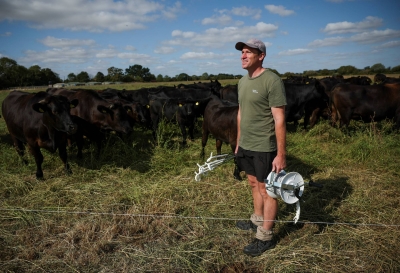
As the heatwave continues to scorch Britain, farmers like Sam Squier are gaining momentum in their pursuit of climate-resilient farming practices. Squier's nearly 81-hectare beef farm in southeastern England stands out amidst fields of scorched brown earth, as his Aberdeen Angus herd grazes on dense pasture maintained through a variety of climate-adaptive techniques.
The method includes planting herbal leys, a mix of grasses, deep-rooting herbs, and legumes, inspired by ancient farming practices, and designed to improve soil structure and build resilience to both drought and wet conditions.
Squier's cattle thrive on the rich, nutrient-dense feed provided by the herbal leys, which also help control parasites and reduce the need for medications. The legumes in the mix fix nitrogen in the soil, eliminating the need for artificial fertilizers. According to Squier, his farm has not required winter feed for the past eight years, and soil water retention has increased by 400,000 liters per acre since adopting regenerative methods.
Earthworm numbers have also soared from 80 million to 680 million within the first six years of the switch.
The shift towards regenerative farming is gaining significant attention from both public and private sectors. Banks, insurance companies, water utilities, and major food groups such as McDonald's are investing in the transition, recognizing the potential benefits for both farmers and the environment. Meteorologists predict that Britain will endure its hottest summer on record, a trend that has been mirrored across Europe, with five heatwaves and below-average rainfall experienced this year.
The extreme weather has led to poor grass growth, a record cereal harvest shortfall, and reduced production for fruit and vegetable growers, with losses for farmers in the European Union and Britain potentially reaching €2.3 billion.
Written by urgent.news from Japan Times's reporting — not their text. Machine-written — may contain errors; check the original before relying on it.