Artificial Intelligence Replaces Natural Intelligence In Tech-Addict Teens
Giving another jolt to the already dwindling ‘Natural Intelligence’ worldwide in general and countrywide (the US) in particular comes Open AI’s latest launch—ChatGPT for Teens: Built for learning, backed by protections. The chatbot will help teens learn, think critically, and deepen understanding, something a book is quite capable of doing. But then that is a separate issue altogether. Here, the…
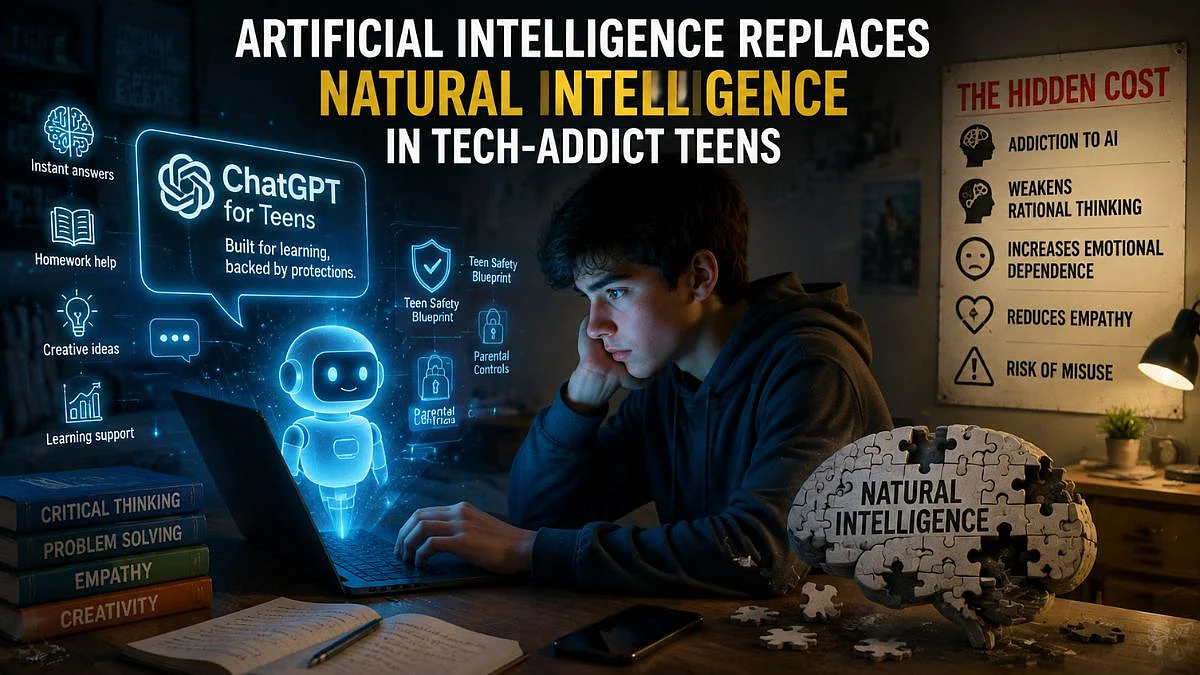
The introduction of OpenAI's ChatGPT for Teens has added another layer of concern to the already declining 'Natural Intelligence' worldwide, particularly in the United States. This new chatbot aims to assist teenagers in learning, developing critical thinking skills, and deepening their understanding, much like a book can. However, the focus is on empowering teens to confidently utilize AI.
The tool features safeguards that encourage healthy usage and provide parental control. Since its release in November 2022, ChatGPT has left an indelible mark on various aspects of life, from business development to the creative realm, offering solutions for efficiency, reduced costs, and generating creative inputs. Despite its transformative potential, the tool has also been linked to addictive behavior, emotional dependence, loss of empathy, and even violent tendencies in some individuals, especially children.
A recent case in Massachusetts illustrates the darker side of AI addiction. A teenage boy, struggling with behavioral issues for a year, was charged with the double murder of his mother and younger brother after conducting research on ChatGPT about 'theoretical ideas and fantasy stories' involving family killings. This was not an isolated incident; numerous similar instances have occurred in recent years.
OpenAI has come under intense scrutiny due to the adverse effects of AI on teenagers and has been embroiled in numerous lawsuits. In response to these concerns, the company has introduced a Teen Safety Blueprint for ChatGPT's teenage version. The updated version includes an age-prediction feature that automatically applies additional protection when it estimates that an account belongs to someone under 18 years of age, thus reducing exposure to sensitive content.
While these safety measures provide some reassurance, they also highlight the significant potential of Natural Intelligence that these digitally savvy children possess. It is crucial to question whether they would lie about their age or circumvent restrictions on a platform that offers anonymity to an extent. The challenge lies in devising stronger safeguards and policies to ensure AI remains secure for children and young adults while harnessing its revolutionary capabilities.
Written by urgent.news from Free Press Journal's reporting — not their text. Machine-written — may contain errors; check the original before relying on it.