After 9 Years, China Is Reopening Its Borders To Recycled Plastic
Now Beijing needs to build domestic demand for recycled materials – and global rules for the trade.
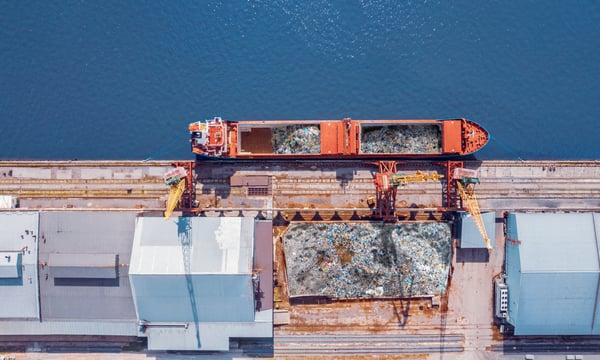
In November 2026, the European Union will ban the export of potentially recyclable plastic to non-OECD countries, citing these shipments as "waste" and "environmental exploitation." Meanwhile, China has reversed its stance and plans to broaden the flow of recycled plastic across its borders. For the majority of the past decade, China had entirely restricted imports of plastic waste.
The EU and China appear to be diverging in their approaches: Europe aims to increase demand for recycled plastic domestically while implementing stringent export controls, whereas China's strategy focuses more on supply and less on demand for recycled plastic. Each perspective offers valuable insights for tackling global plastic pollution, which necessitates action on both supply and demand fronts.
However, China's recent developments have received minimal scrutiny outside the country, despite its significant role in shaping the global recycling trade. China's Plastic Ban China's "National Sword" policy, introduced in 2017, abruptly halted China's imports of plastic waste. This abrupt shift occurred as China absorbed much of the world's recovered plastic for two decades.
Several factors led to the change, including the contamination and unreliability of plastic waste shipped from wealthier nations, inadequate local handling capacity, and an underdeveloped monitoring system. The National Sword policy helped reduce air and land pollution caused by earlier shipments but failed to build a circular economy for plastic.
Consequently, the market resorted to producing more virgin plastic. China's imports of primary plastic surged from 29.7 million tonnes in 2017 to 40.9 million tonnes in 2020, tripling the growth rate from the preceding five years. Thereafter, China developed its capacity to produce domestically what it once imported, achieving near-complete self-sufficiency in synthetic resins by 2024.
China continued to generate substantial plastic waste, but the shift was from using mountains of plastic to relying on domestically sourced virgin material. Recycled plastic in China competes with a domestic petrochemical sector that produces over 17 million tonnes annually, faces oversupply, and operates at thin margins, incentivizing producers to increase volume at any price.
When crude prices spiked this year, the price differential between virgin and recycled plastic narrowed. However, as oil prices decreased this summer, so did the cost of virgin plastic, prompting some Chinese buyers to revert to purchasing virgin material. The central lesson from China's National Sword policy extends beyond its borders: restricting supply-side recycled plastic without implementing demand-side policies promoting a circular economy may perpetuate the dominance of virgin plastic.
Today, much of China's waste is incinerated for energy, consuming significant volumes of plastic that could be repurposed for recycling. Beijing's Change of Course - But Work Remains China's circular economy framework is gradually taking shape, with the Circular Economy Development 15th Five-Year Plan, published in July 2026, committing China to accepting high-quality recycled feedstock from abroad.
The plan aims to establish a more advanced recycling sector by 2035, with a separate seven-agency action plan targeting over 19.5 million tonnes of recycled plastics by 2030. In 2017, China closed the world's largest market for recovered materials. Now, Beijing is preparing to reopen it, selectively. This significant change in direction, however, is still in progress.
The vision of a circular economy remains largely theoretical. Simply increasing imports of recyclable plastic will not create a market; without a mandated demand for recycled content, warehouses of pellets will accumulate, unable to compete with domestically produced virgin plastic. To address this, the Chinese government should mandate a minimum share of recycled resin in packaging or consumer goods.
Such a requirement would stimulate domestic collection and recycling efforts, bolstering the case for imported feedstock to reach scale efficiently. Currently, Chinese national standards for recycled plastic are primarily recommendations rather than mandates. This is beginning to change, with the Ecological Environment Code, effective this month, establishing a mandatory system for the use of recycled materials.
Written by urgent.news from The Diplomat's reporting — not their text. Machine-written — may contain errors; check the original before relying on it.