ABG-topp om hjemmekontor: – Kritisk til at ansatte lager ramaskrik
Knut Brundtland leder et av Norges fremste meglerhus. Han mener hjemmekontor-debatten er…
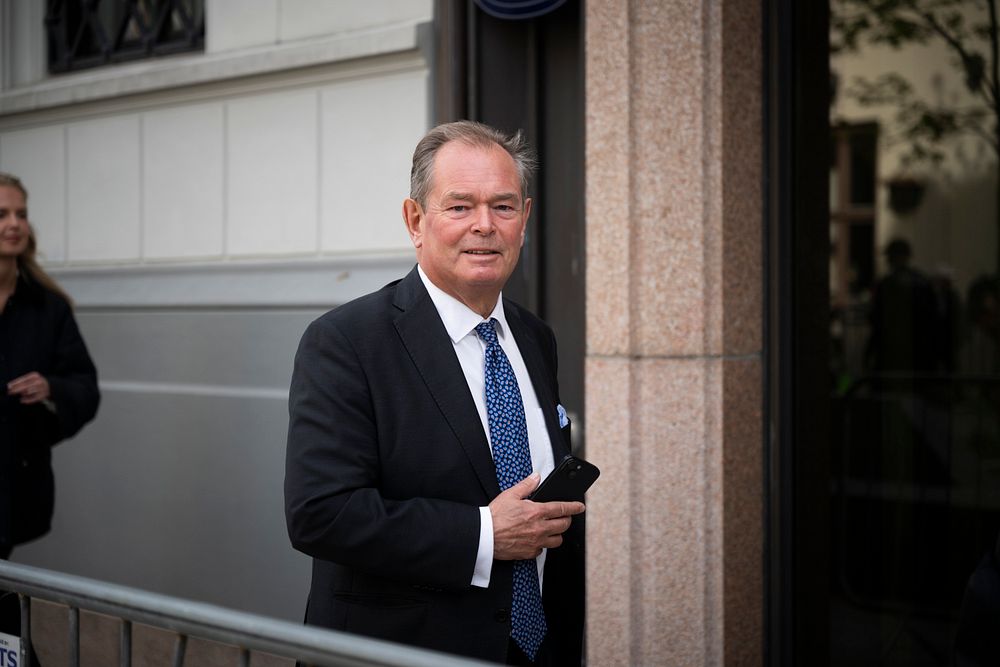
The core debate surrounding remote work centers on the question of whether employees should work from the office or at home. Bjorn Brundtland, the CEO of ABG Sundal Collier, firmly believes that being physically present in the office is the optimal solution. He notes that while remote work allows for certain activities like customer meetings and sales, it does not replace the need for in-person presence during all work hours.
The discussion around this issue is nuanced, as it depends on various factors such as the industry, job role, and the specific requirements of the position. ABG primarily relies on its employees being in the office, but there is extensive remote work activity outside the office as well. Employees are expected to both work on screens and serve customers.
The recent strain on ABG has also led to a heated debate among employees, with some referring to the practice as "corporate BS" and "thin soup." DNB, another major Norwegian bank, has also intensified its scrutiny of remote work practices. Many business leaders are now critical of the remote work model. ABG believes that to prevent underperformance over time, one must identify the underlying reasons.
It's not just about competence, but also about the commitment and freedom that employees are allowed. Brundtland expresses his surprise if employees would take prolonged sick leave absent from the office. He maintains a critical stance against employees taking excessive leave, believing that it reflects poorly on the collective effort and productivity.
Brundtland's mother is none other than the renowned Gro Harlem Brundtland. Last year, he revealed to E24 how the financial industry has evolved, noting that employees are no longer hiding the fact that they take time off for personal reasons. Brundtland emphasizes that flexibility is a challenge in "customer-related business." However, he believes that people should work where they are most productive, and if they need to pick up their children to work efficiently, they should do so.
The issue arises when the focus shifts to what offers the most flexibility, rather than individual productivity. In environments where outcomes, goals, and results are prioritized, the need for flexibility diminishes. Some professions benefit from working "isolated, undisturbed, or concentrated," according to Brundtland. Regarding quantitative work, he acknowledges that such tasks are conducted openly and can be performed remotely, but the overall workload can still require in-office presence.
Ultimately, he asserts that freedom should come with responsibility, and it would be foolish if someone had to ask their manager about their working arrangements. He reiterates his strong belief in trusting employees to make decisions that best serve the company's outcomes. He concludes by advocating for face-to-face meetings, highlighting the numerous engaging interactions that occur between people, both in and outside the office.
Written by urgent.news from E24 Norway's reporting — not their text. Machine-written — may contain errors; check the original before relying on it.