30% of Japan's temples could disappear by 2040; monks turn to AI
By 2040, Japanese temples may face closure due to dwindling religious commitment among the populace. In a bid to attract more visitors spiritually, monks are embracing artificial intelligence to improve operational efficiency and enhance communication with worshippers. While some view AI as a useful guide in matters of faith, others argue that the essential human connection is irreplaceable.
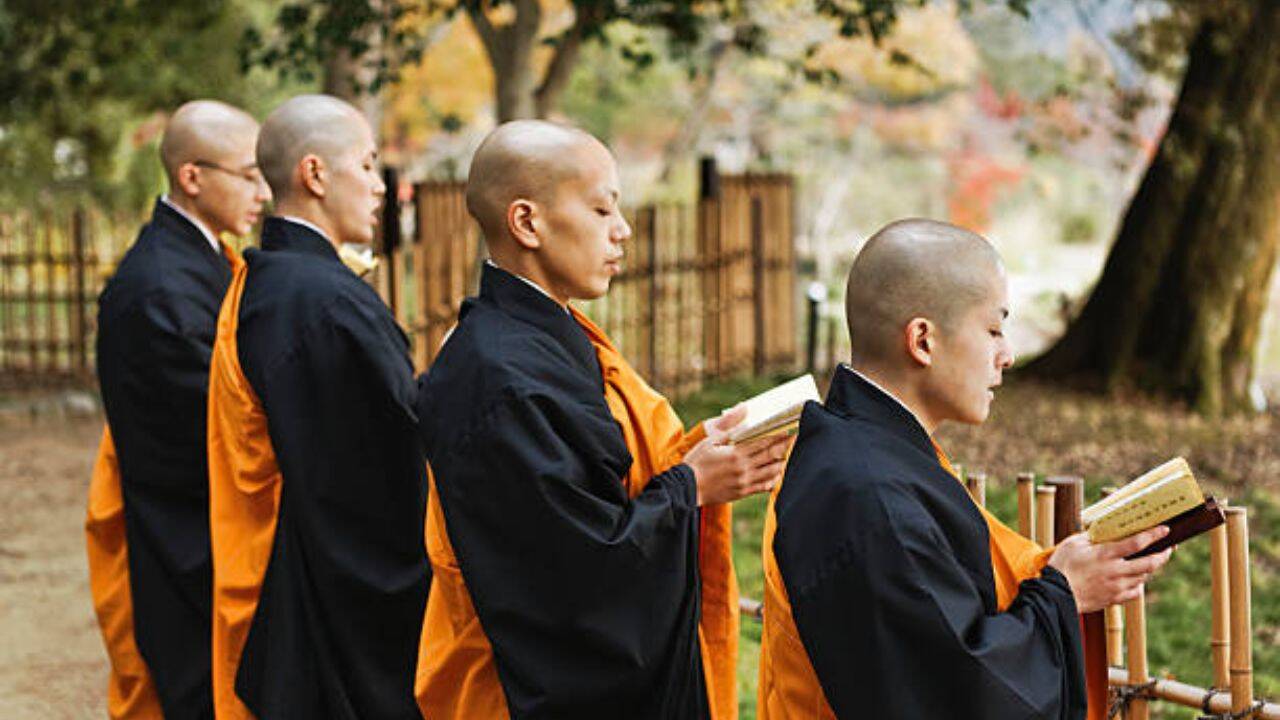
By 2040, approximately 30% of Japan's temples may vanish, not due to a sci-fi catastrophe, but because of waning religiosity among the populace, according to estimates. Monks in the country have turned to artificial intelligence (AI) to attract more followers to Buddhism and provide spiritual support, reports The Japan Times.
At Ganshuji temple in Odawara, Kanagawa Prefecture, resident monk Souou Iwayama spearheaded the shift. During the COVID-19 pandemic, he introduced an online zazen service as businesses adopted remote work, and transformed the temple cemetery into a space centered around jumokuso, a burial practice where cremated remains are interred beneath trees, shrubs, or flowers instead of ornate stone monuments requiring costly maintenance.
When Iwayama took over the temple's management several years ago, it relied on just four danka, or monks, for support. Today, over 550 families utilize the burial plots, aiding in the financial revival and widening the temple's congregation amid broader demographic decline. Apart from operational changes, Iwayama has also integrated AI into the temple's daily operations, leveraging it for scheduling memorials and refining written materials for parishioners.
"Rather than perceiving AI as a threat, we as monks must consider how it can be incorporated into our efforts at propagation," he stated. "The central question is whether robots or AI can replace our role, but that isn't a simple matter."
When someone passes away, and you hold their hand and assure them everything will be alright, that moment matters, Iwayama said. "There's something essential in a human presence where body and mind unite in an instant. That, too, is what it means to be a religious practitioner. I don't imagine that being replaced."
In contrast to Western responses to AI, Japan has seen little coordinated reaction from religious institutions. Buddhism is not a major force in the country, with only 26% of the population identifying as religious in the latest 2018 survey by the Institute of Statistical Mathematics, while 74% reported no religious beliefs—a ratio that has remained stable since 1958.
Even though practices like Shinto weddings and Buddhist funerals are widely observed, they are viewed as part of everyday life rather than expressions of faith. As of December 31, 2024, around 86 million people practiced Shinto and 80 million adhered to Buddhism, exceeding Japan's population by nearly 47 million.
The concept of AI becoming a quasi-spiritual presence may appear less disruptive in Japan. "If someone claimed AI was a deity, it might simply be seen as one more among the many," said Takako Inoue, a Tokyo-based antique art dealer, referring to yaoyorozu no kami—the belief that gods are present everywhere.
Written by urgent.news from Times of India's reporting — not their text. Machine-written — may contain errors; check the original before relying on it.