Why seed-stage investment is crucial for startup success
Kerryn Campion of Aions Ventures emphasises the critical role of seed-stage investment in nurturing these companies, creating jobs, and driving economic growth.
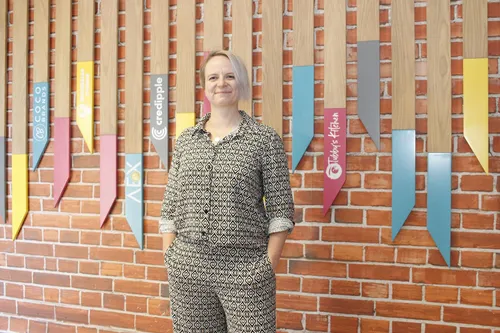
South Africa's startup scene is home to promising young businesses, yet additional assistance is necessary to help these companies transition from early-stage ventures to scalable, investment-ready enterprises. Kerryn Campion, chief operating officer at Aions Ventures, contends that bolstering the country’s seed-stage investment ecosystem could play a pivotal role in cultivating a stronger pipeline of businesses capable of attracting subsequent funding rounds, generating employment, and contributing to economic expansion.
Campion notes that numerous startups encounter difficulties in their development phase, having transitioned past the idea stage. Although they may possess a functional product, early clientele, and some revenue, they frequently lack the consistent growth and operational readiness anticipated by Series A investors. "This is where robust companies are most susceptible," Campion elucidated.
"The opportunity may be genuine, but the business surrounding it is still in development." According to the South African Venture Capital and Private Equity Association's 2025 survey, R3.29 billion was allocated to startups in 2024 through 222 investment rounds involving 110 entities. While the investment volume indicates a persistent interest in innovation, Campion asserts that the relatively small number of companies receiving funding underscores the necessity to fortify the pipeline much earlier.
"Series A investors cannot select from businesses that were never afforded the chance to become investable," she remarked. For Campion, seed-stage investment transcends merely offering founders capital. Emerging companies may confront a spectrum of challenges, including commercializing their products, establishing steady revenue streams, crafting suitable governance frameworks, and assembling teams capable of facilitating growth.
She believes investors and fund managers possess a crucial role in aiding founders in identifying these challenges early and cultivating the operational discipline requisite for scaling. The significance of structured support is also evident in the broader African startup ecosystem. As per Disrupt Africa's African Tech Startups Funding Report 2025, 88 out of the 178 African technology startups that secured funding during the year had engaged in an accelerator or incubation program preceding or during their funding round.
While participation in an accelerator does not assure a startup's acquisition of investment, Campion affirms that it demonstrates the escalating significance of practical support alongside capital. "Capital alone does not resolve those challenges," she emphasized. Campion also highlights the role specialist fund managers and fund-of-funds structures can play in augmenting access to early-stage investment.
For institutional investors, backing specialist fund managers can present greater access to emerging businesses that may be challenging to identify or evaluate directly. For founders, it may entail collaborating with investors who comprehend the intricacies of establishing a nascent company and the prerequisites for readiness for larger funding rounds.
The imperative to strengthen this ecosystem transcends the venture capital domain. South Africa's official unemployment rate was 32.7% in the first quarter of 2026, as reported by Statistics South Africa. Youth unemployment remains particularly alarming, with the rate reaching 60.9% among individuals aged 15 to 24. Although startups cannot alleviate the nation's unemployment predicament independently, Campion argues that thriving businesses can contribute to job generation, cultivate supplier networks, and commercialize locally devised solutions.
A more extensive and inclusive startup pipeline could also facilitate greater opportunities for women and Black founders to engage in South Africa's investment ecosystem. However, Campion posits that inclusion necessitates more than merely augmenting the capital available. It also demands investors capable of recognizing potential at an earlier stage and providing founders with the governance, financial, and commercial support essential to build enduring businesses.
To enable South Africa to produce more companies capable of attracting Series A funding and scaling into globally competitive enterprises, Campion advocates for a shift in focus further upstream. Seed-stage investment is where many fledgling businesses commence the development of their commercial acumen, governance structures, and resilience requisite for long-term growth.
Consequently, the argument transcends merely investing additional funds in startups; it pertains to establishing an ecosystem in which promising businesses possess a better chance of withstanding the arduous transition from initial traction to sustainable scaling. For Campion, fortifying that segment of the ecosystem could ultimately benefit more than founders and investors.
It could aid South Africa in constructing a stronger pipeline of businesses, attracting further investment, and generating prospects for economic participation during a period when unemployment remains one of the country's most pressing challenges.
Written by urgent.news from IOL's reporting — not their text. Machine-written — may contain errors; check the original before relying on it.