Why It Might Be Time to Rethink the Human Family Tree
The way we classify humanity’s ancient relatives is a mess. But there’s a simple fix. The post Why It Might Be Time to Rethink the Human Family Tree appeared first on Nautilus .
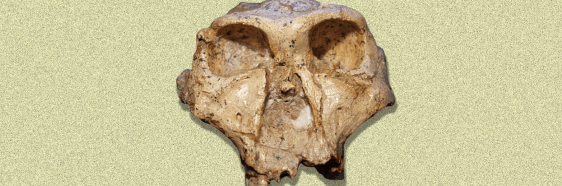
The classification of humanity's ancient relatives in the scientific community is a complex issue. Currently, scientists organize these relatives into three groups: Homo, Australopithecus, and Paranthropus, which are all classified as "genera." However, recent discoveries and advances in genetic analysis suggest that these groupings may not accurately represent the true family tree of humans and our extinct relatives. The current system may need to be revised.
A major issue with the current classifications is that they often do not represent real family branches, known as "clades." A clade consists of a common ancestor and all of its descendants. Additionally, a genus should ideally reflect shared behaviors, key traits, or ways of life among its member species. However, this is not the case with the Australopithecus genus, which includes the famous "Lucy" skeleton.
Recent fossils show that traits such as brain size, gait, diet, and behavior do not neatly align with the actual family tree.
Another problem with the Homo genus is that traits once thought to define it, such as large brains, tool use, and dietary shifts, have been challenged by more recent findings. Species like Homo naledi and Homo floresiensis, with their small brains and "primitive" features, coexist with traits typically associated with other Homo species.
This makes it difficult to identify a single feature shared by all Homo species that isn't also found in some Paranthropus or Australopithecus species. The reason for this is that different body parts evolve at different rates and directions, a phenomenon known as "mosaic evolution." Traits also tend to evolve multiple times independently in different closely related lineages facing similar pressures.
Paranthropus, known for its heavy jaws and large molars, is also in question. While these features were once thought to be adaptations for eating hard foods, new evidence suggests that eastern and southern African species had different diets. Some researchers argue that Paranthropus may not even be a single lineage, but rather two independent regional groups that evolved oversized teeth, which would further undermine the validity of this genus.
The current classifications may seem like an abstract semantic issue, but they can obscure patterns of descent, overstate differences between groups, and reinforce outdated "primitive versus advanced" thinking. With a growing fossil record and improved methods for reconstructing family trees, this gap is becoming too significant to ignore.
One potential solution is to combine Australopithecus and Paranthropus into a single, larger Homo genus. This would address the "not a real clade" problem and align our classification with the way non-human species are categorized. It would also better account for interbreeding between closely related lineages over the past few million years.
However, this change would come with costs, such as losing intuitive distinctions researchers rely on and the increasing evidence of a complex, branching burst of evolution beginning around 4 million years ago.
Written by urgent.news from Nautilus's reporting — not their text. Machine-written — may contain errors; check the original before relying on it.
This story
This is one outlet's version. Read the fullest account.
- Why it might be time to rethink the human family tree theconversation.com