Why Don't Insects Live in the Ocean? Scientists Just Ruled Out One Possible Explanation Thanks to Deep-Diving Fly Larvae
Researchers thought that insects might not live there because their respiratory systems would implode from water pressure. But certain fly larvae in East Africa make daily trips toward the bottom of Lake Malawi with the help of strong air sacs that contain a stretchy protein
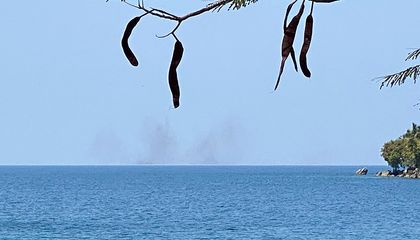
Insects, numbering in the millions, inhabit Earth, but not a single one resides in the ocean. Scientists have proposed several theories, one suggesting that insects' respiratory systems would be crushed by ocean pressure. However, a recent study published in Science on July 23 provides evidence challenging this idea. Researchers discovered that the larvae of the lake fly Chaoborus edulis, found in Lake Malawi, regularly dive over 650 feet below the surface, thanks to their strong air sacs containing a stretchy protein.
This discovery contradicts the previously held belief that water pressure would prevent insects from colonizing the ocean. The study's lead author, Philip Matthews, a zoologist at the University of British Columbia, describes this finding as a "big surprise," indicating that pressure might not be as much of a barrier as previously thought.
The unique ability of C. edulis to dive so deep could inspire new materials in material science, such as artificial muscles or valves activated by changes in pH levels. Despite this breakthrough, the absence of ocean insects remains a mystery. It could be due to the challenges of living in salt water or the lack of available ecological niches, as crustaceans, insects' distant cousins, already occupy these niches.
Written by urgent.news from Smithsonian's reporting — not their text. Machine-written — may contain errors; check the original before relying on it.