Why Are Some Octopuses So Smart? The Answer Might Lie in a Never-Before-Seen Mutation That Helps Them Accurately Build Proteins
Scientists discovered a strange feature in certain octopuses’ ribosomal RNA, molecules that create a 3D scaffold for cellular protein factories. It was found only in shallow-water creatures that have expanded nervous systems and can do complex behaviors
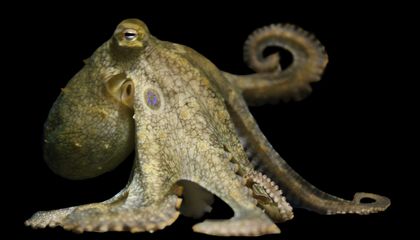
Octopuses are renowned for their remarkable intelligence, displaying abilities such as opening jars, navigating mazes, and using tools. One species, the common blanket octopus, even employs venomous tentacles obtained from Portuguese man o' war as weapons. Researchers have now identified a unique mutation in certain octopuses that could be the key to their cognitive prowess.
A study published in the journal Current Biology on August 17 reveals that these cephalopods can generate proteins with exceptional precision due to a variation unprecedented in any other animal. While there is no direct proof linking this adaptation to enhanced brain function, only creatures with enlarged nervous systems and capable of intricate behaviors exhibit the mutation.
The discovery was made by accident. Five years ago, Richard Han, then a Harvard Medical School graduate student, was analyzing ribosomal RNA (rRNA) molecules in California two-spot octopus tissues. These molecules form a three-dimensional scaffold for ribosomes, the cells' protein production factories. Typically, rRNA sequences remain consistent across all known animals.
However, Han observed an unusual gap in octopus rRNA, splitting what would usually be a single rRNA fragment into two. Initially, the researchers suspected a mistake in RNA extraction. Subsequent tests confirmed the anomaly. When the same break was introduced into Escherichia coli bacteria ribosomes, the engineered cells produced proteins twice as accurately.
To determine when this peculiar rRNA feature evolved, the scientists compared two groups of octopuses that diverged over 100 million years ago: incirrates, shallow-water octopuses with developed nervous systems supporting complex behaviors, and cirrates, deep-sea species with simpler nervous systems adapted for slow swimming and passive feeding.
The rRNA break was found in all five examined incirrate species but absent in a cirrate sample, a dumbo octopus. Squids, which diverged from octopuses about 300 million years ago, also lacked the mutation. Cephalopods, a group encompassing octopuses, squids, cuttlefish, and nautiluses, are renowned for their RNA editing capabilities—far more than other organisms.
A 2023 study found that octopuses extensively edit RNA in their brains to function in cold water. This finding suggests that the rRNA adaptation may be linked to the evolution of shallow-water octopuses' enlarged nervous systems. Their brains, spread throughout their bodies, had to rapidly expand as they adapted to predator pressure and increased competition in this environment.
Neurons, or nerve cells, are long-lived, making protein misfolding particularly detrimental to them. By preventing this, the rRNA break "might help these neurons to work well," according to Rishav Mitra, a study co-author. "The major surprise is that the ribosome, which is highly conserved across life, can actually undergo evolutionary changes that impact function, and may even contribute to new innovations," study co-author Amy Lee, a cell biologist at Harvard, stated.
Joshua Rosenthal, a molecular biologist at the Marine Biological Laboratory not involved in the research, finds the discovery "super interesting," though he emphasizes that more research is needed to confirm whether the rRNA change drove the evolution of sophisticated brains and behaviors. The researchers speculate that their findings could pave the way for potential therapies for neurodegenerative diseases like Alzheimer's and Parkinson's, which involve misfolded proteins in the brain.
Lee hopes the octopus mutation could be replicated to create drugs facilitating accurate protein synthesis in human cells, harnessing nature as a guide to understand and replicate these evolutionary advancements.
Written by urgent.news from Smithsonian's reporting — not their text. Machine-written — may contain errors; check the original before relying on it.