What Can We Actually Find on an Exoplanet? Part 3: Reading the Face of a Planet
A single pixel of light holds astonishing detail. How ocean glint, rotational mapping, and the vegetation red edge let us read a distant planet's oceans, continents, and even forests, all without ever resolving it as more than a point.
Part 3: Reading the Face of a Planet
---------------------------
It's never enough to find a single pixel of information on an exoplanet, but it's enough to justify constructing the Hubble Wide Field Observatory (HWO). That tiny dot possesses color, a spectrum, and changes in brightness as the planet rotates and orbits. The HWO, our first purpose-built biosignature machine, will detect signs of life if it is common on habitable-zone rocky planets. If life is rare, the HWO will confirm that.
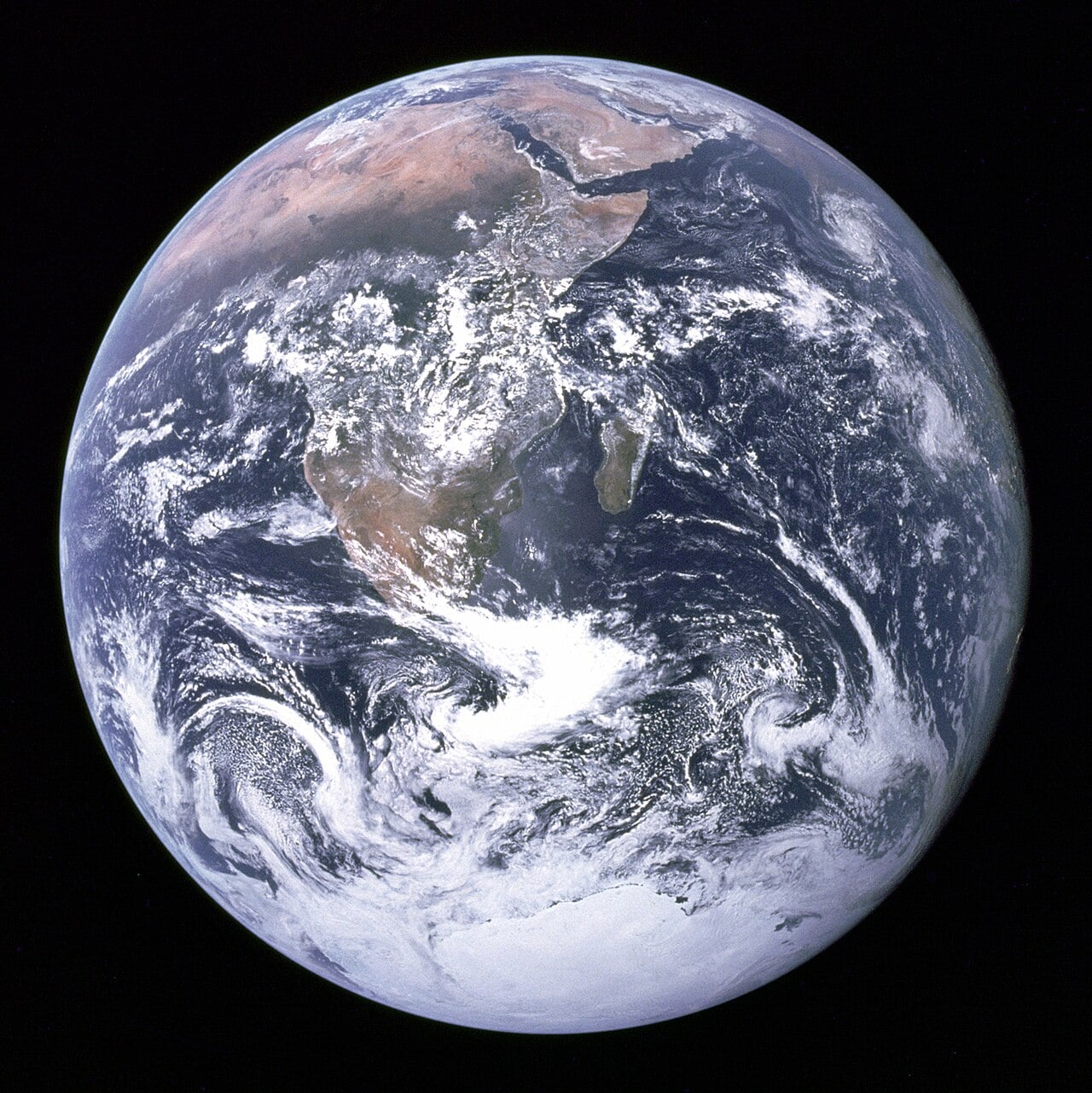
To gather enough light, the HWO must stare at each planet for days or weeks. Studying 25 worlds will take a decade as each planet requires months of preparation and planning, weeks of observation, and a lifetime of analysis. Earth, therefore, serves as a perfect test case. In 1993, scientists analyzed data from Earth as if it were an unknown target. They discovered oxygen and methane in equilibrium, an unexpected red wavelength reflectivity jump, and inexplicable narrow-band radio signals.
Earth's ocean-bearing nature causes ocean glint, a mirror-like reflection from smooth surfaces like oceans. This phenomenon almost doubles Earth's brightness at crescent phase, the angle when just a thin sunlit crescent is visible. The brightness change as the planet rotates reveals information about the planet's surface, including oceans, continents, shapes, and vegetation.
Chlorophyll, which makes plants green, absorbs red and blue light but reflects green strongly. Near-infrared light causes a sharp increase in reflectivity due to plant leaves' protective mechanism. This unique feature, called the vegetation red edge, occurs across a narrow wavelength range, making it an excellent indicator of vegetation on distant exoplanets.
Written by urgent.news from Universe Today's reporting — not their text. Machine-written — may contain errors; check the original before relying on it.
Also reported by 2 other outlets
- What Can We Actually Find on an Exoplanet? Part 4: Looking For Us universetoday.com
- What size of planet would prevent space travel due to gravity? Part 2 newscientist.com