Was Alexander really ‘great’? Gripping new biography knocks him off his pedestal
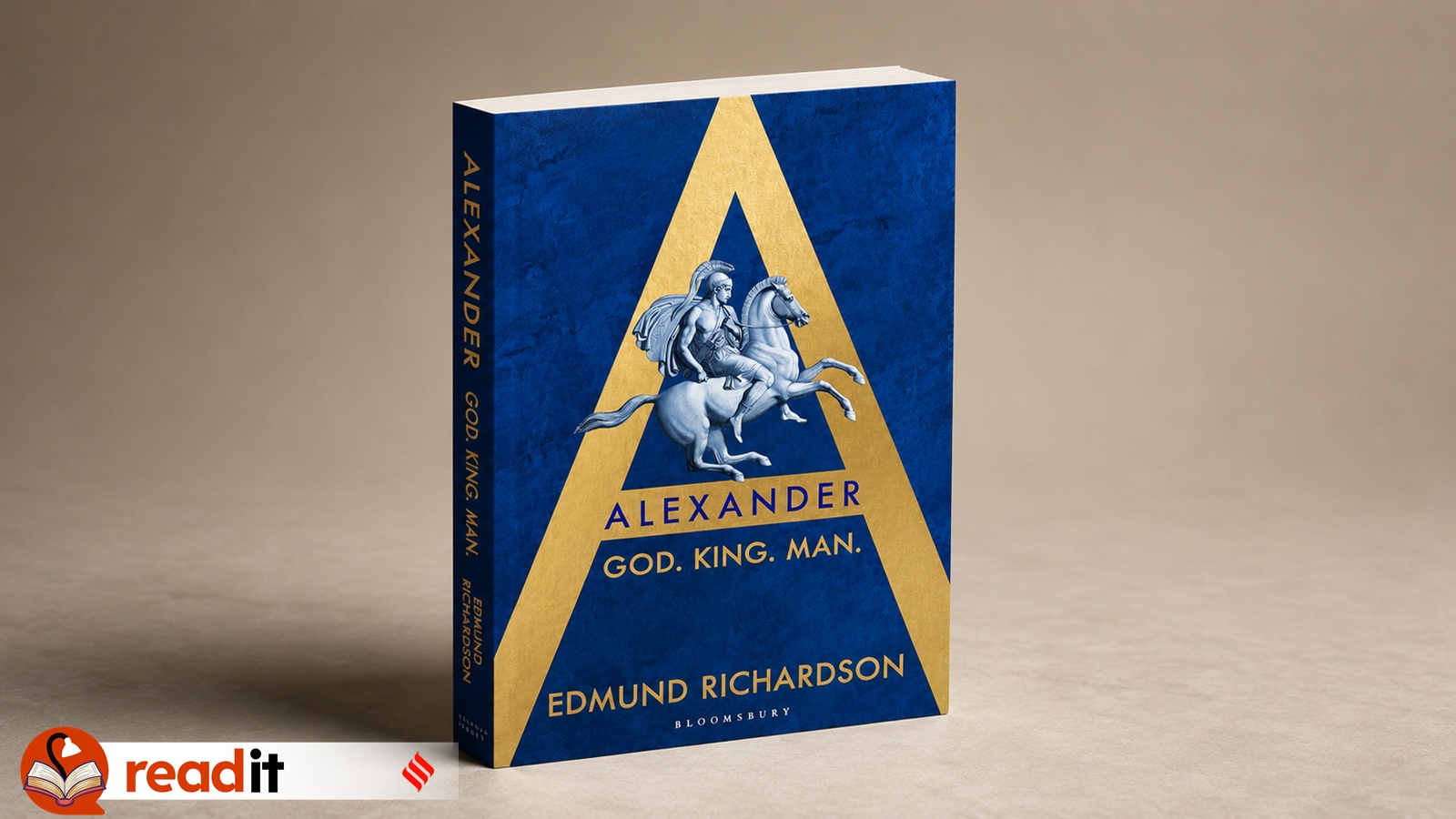
Alexander the Great, a Greek prince who ascended to the throne at 20 and expanded one of the largest empires in history over a span of 12 years, has long been the subject of admiration and fascination. Now, Durham University Professor of Classics Edmund Richardson has penned a new biography, "Alexander: God, King, Man," shedding fresh light on the legendary figure through the prism of new information gleaned from various sources.
This 480-page tome is rich with extensive notes and references, not to mention a compelling narrative that brings battles, key figures, cities, and cultures to life in detail.
The book begins on November 5, 333 BC, as Babylonian astronomers observe the night sky while a 23-year-old Alexander and his army prepare to confront the forces of the powerful Persian king Darius near Issus (present-day Turkey). Richardson artfully captures Alexander's mindset as he awaits the decisive battle that could prove his downfall: "Alexander was outnumbered and far from home.
Unable to sleep, he climbed to the top of a hill in the dead of night, surrounded by flaming torches, and prayed, aware that it might be the last time he ever saw the stars." However, Alexander's army would go on to triumph in the Battle of Issus and many more, eventually conquering Persia, Egypt, and venturing as far as India. Despite his many conquests, Alexander eventually returned to Greece in 331 BC, never to set foot on his homeland again, succumbing to his final illness in Babylon eleven years later.
Richardson's biography paints a complex portrait of Alexander, taking readers through his military triumphs and strategic achievements but also delving into his personal shortcomings and darker moments. The author paints a picture of a young, uncertain king who evolved into a self-doubting and often despotic ruler, suspicious of those around him, and known to torture and murder those he perceived as disloyal.
Richardson's portrayal of Alexander as both a man of nobility and generosity, yet one who subjected his enemies to brutal torture, creates a disturbing narrative that is hard to forget.
Throughout the book, Richardson challenges the notion of Alexander as the "Great," focusing on the frailties and cruelties that marked his rule. The author exposes instances of Alexander's cunning, including the supposed premeditation behind his famous act of cutting the Gordian knot, as well as his attempts to portray himself as the son of the Egyptian god Amun. Despite these manipulations, Richardson's biography effectively captures the awe and reverence that many of Alexander's subjects felt for their young leader.
While Richardson's work is undeniably human in its portrayal of Alexander, it falls short in providing a clear explanation for the widespread loyalty and respect that Alexander commanded from those he conquered. The author does offer plausible explanations, such as fear and superstition, but these do not fully satisfy the reader's desire for a deeper understanding.
Nevertheless, "Alexander: God, King, Man" remains a highly engaging and accessible biography, standing out as one of the most readable accounts of any ancient historical figure.
Written by urgent.news from The Indian Express's reporting — not their text. Machine-written — may contain errors; check the original before relying on it.