UAE stocks fall after missile scare; Qatar at over one-year low
BENGALURU: UAE’s stock markets ended lower on Wednesday after the country said it detected two ballistic missiles launched from Iran, while other Gulf bourses were subdued after Washington said there were no talks with Tehran to end hostilities. The United Arab Emirates said the missiles, the first such since a May 4 strike on Fujairah port, appeared to target maritime traffic and fell into the…
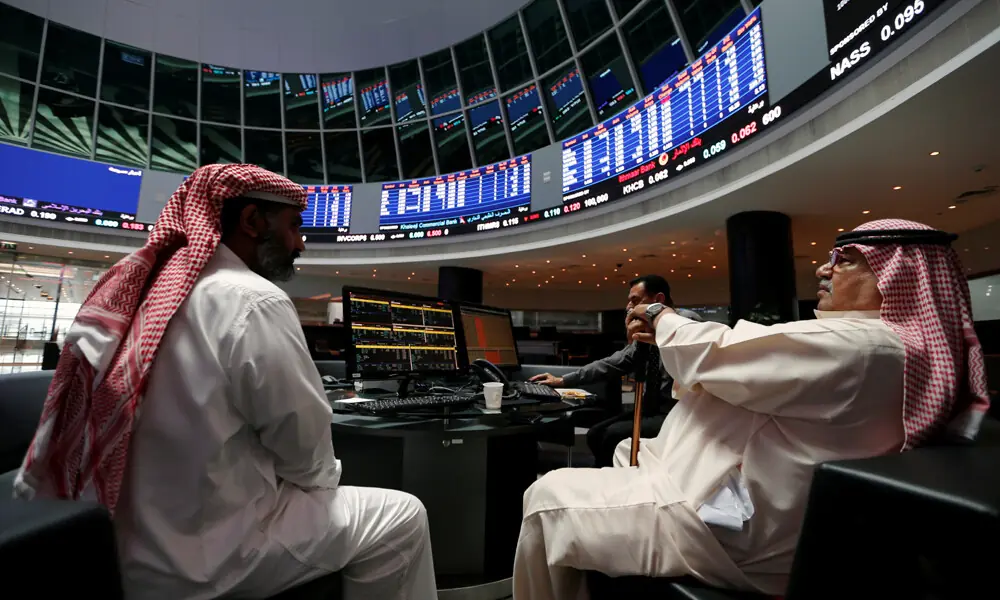
The UAE's stock markets saw a decline on Wednesday following reports of two ballistic missiles launched from Iran, while other Gulf stock exchanges experienced subdued trading due to Washington's announcement that no talks were underway with Tehran to end hostilities. The UAE disclosed that the missiles, the first in two months, seemed to be targeting maritime traffic and ultimately fell into the sea.
Iran's foreign ministry labeled the accusations as "baseless." In response, the UAE announced a suspension of all trade activities, commercial exchanges, and financial transactions with Iran. The Abu Dhabi benchmark index dropped 0.9%, primarily influenced by financial, telecom, consumer discretionary, and utility stocks. First Abu Dhabi Bank, the country's largest lender, experienced a 2.8% decline, while ADNOC Gas slipped by 0.9%.
The Dubai benchmark index fell by 0.3%, with most sectors registering negative performance. Emirates NBD saw a 3% decrease, and Spinneys 1961 Holding dropped by 1.6%. Despite these losses, Parkin Company, a parking operator, saw a 2.1% increase after announcing agreements with three Egyptian firms to explore smart-parking projects in Egypt.
Qatar's benchmark index continued its downward trend for the third consecutive day, closing at 9,773 points, its lowest level in over a year. The Qatar National Bank dropped 1.8%, and Qatar Fuel Company declined by 3.9%. Saudi Arabia's benchmark index managed a slight gain of 0.2%, driven by a 2.4% rise in National Shipping Company of Saudi Arabia and a 4.2% increase in Seera Holding.
Daniel Takieddine, co-founder and CEO of Sky Links Capital Group, stated that Gulf stock markets would likely remain impacted by the ongoing regional situation, with investors closely monitoring developments and the potential for renewed U.S.-Iran negotiations. However, the downside risks remain minimal as markets continue to thrive on robust local fundamentals.
Outside the Gulf, Egypt's blue-chip index declined for a third consecutive session, closing 1.4% lower, with most shares ending in negative territory. Commercial International Bank lost 1.8%, while Telecom Egypt declined by 2.9%.
Written by urgent.news from Business Recorder's reporting — not their text. Machine-written — may contain errors; check the original before relying on it.