Trump’s South Korea move creates more headaches for Takaichi
The U.S. president's order to shorten allied exercises with South Korea to avoid sending "inappropriate and hostile" signals to Pyongyang jolted Seoul with immediate implications.
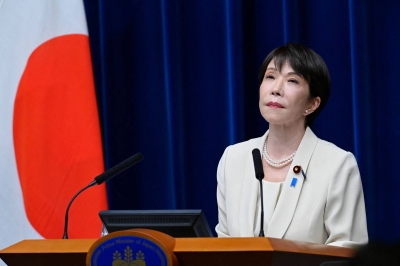
President Donald Trump's decision to shorten joint military exercises with South Korea has caused concern for Japan and raised questions about Prime Minister Sanae Takaichi's North Korea policy moving forward. The move, which Trump announced on social media, aims to avoid sending "inappropriate and hostile" signals to North Korea's regime led by Kim Jong Un. Trump stated that the exercises were "too costly" and did not accurately reflect the regime's recent behavior, describing it as "unthreatening and respectful."
The reduction in exercises has immediate implications for South Korea, but it also poses longer-term uncertainties for Japan. Takaichi's administration will need to reassess its approach to North Korea and maintain its alliance with the United States in the face of this new development. Trump's decision comes after South Korea declined an invitation to participate in Middle East defense efforts, a point Trump emphasized during a press conference on Monday.
The U.S. president's stance on the exercises has been met with criticism, as South Korea had previously contributed to U.S. defense and relied on oil trade through the strategically important Strait of Hormuz. Trump characterized Seoul's decision to not support the Middle East efforts as "strange," given the country's dependence on U.S. support for its defense and economy.
Written by urgent.news from Japan Times's reporting — not their text. Machine-written — may contain errors; check the original before relying on it.