Top India court allows passive euthanasia, but few aware of ‘living wills’
In a crowded ward of New Delhi’s All India Institute of Medical Sciences (AIIMS), India’s premier public hospital, a mother sits quietly beside her 29-year-old son, Piyush Singh*. Diagnosed with stomach cancer a year ago, Singh has already undergone five rounds of chemotherapy. He now lies in the hospital’s palliative care unit, where the goal […]
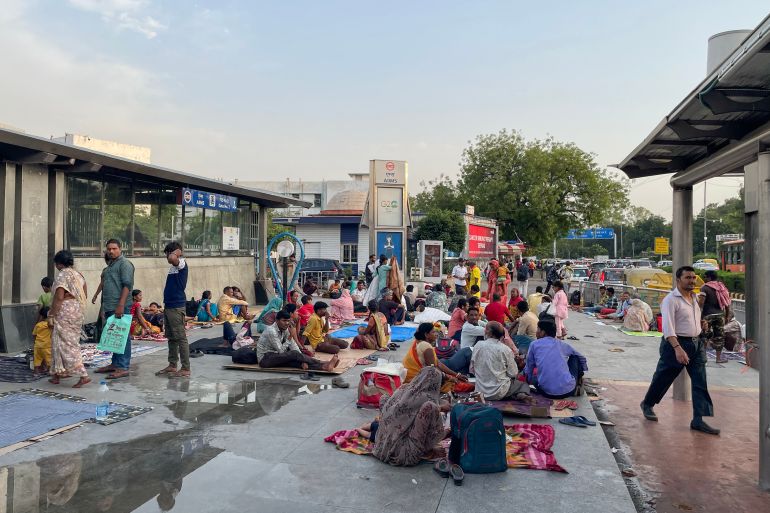
In a busy ward at New Delhi’s prestigious All India Institute of Medical Sciences (AIIMS), a mother cares for her 29-year-old son, Piyush Singh, who has been battling stomach cancer for a year. Piyush has undergone five rounds of chemotherapy, but his condition has not improved. Concerned, his mother questions where they should go for further treatment, as the doctors have not provided guidance.
Similarly, Aryan arrives in AIIMS from a small town in Uttar Pradesh to support his 40-year-old brother Amit, who has been suffering from mouth cancer for four years and has already received two surgeries, radiation, and two rounds of chemotherapy. The doctors have informed Aryan that there is little chance of Amit’s survival. In this situation, Aryan intends to take Amit to his rented apartment in Gurgaon and administer the painkillers prescribed by the doctors.
Neither Piyush nor Amit have any knowledge or resources for palliative care. These cases are indicative of a broader reality in India, where families face significant challenges when managing the end-of-life care for their loved ones, with limited institutional support. Cancer is a major health issue in India, with an estimated 1.56 million new cases recorded in 2024 according to an Indian Council of Medical Research study published in the Journal of the American Medical Association.
However, only a small fraction of those suffering from cancer receive palliative care, which is essential for managing pain and preserving dignity for patients in their final stages. A 2025 analysis by ecancermedicalscience reveals that between seven to 10 million people in India require palliative care, but only four percent receive it.
This lack of awareness and preparedness is also seen in families of patients with traumatic brain injuries and degenerative neurological conditions. The lack of awareness about palliative care and the legal right to document treatment preferences is rooted in cultural attitudes towards death. In many Indian households, discussing death is considered taboo, leading to a lack of conversations about medical wishes until a loved one is critically ill.
This leads to difficult decisions being made during moments of grief and uncertainty. In response to the growing need for legal clarity, the Indian Supreme Court recognized the "right to die with dignity" as part of the fundamental right to life under Article 21 of the Constitution in 2018. This decision allowed terminally ill individuals to record their preferences for life-sustaining treatment in case they lose the capacity to decide.
The ruling came in response to a petition filed by Common Cause, an NGO, which advocated for legal procedures to enable terminally ill individuals to create Advance Medical Directives, also known as "living wills", to refuse life-prolonging treatment. However, despite the legal recognition, the right to die with dignity remains largely theoretical for most Indians.
It was only six years after the Supreme Court's ruling that the Delhi High Court and the Supreme Court finally allowed passive euthanasia, or withdrawal of life support, in the case of a 32-year-old patient who had been in a vegetative state for nearly 13 years. On March 11, the Supreme Court directed the withdrawal of life support for Harish Rana, who passed away two weeks later.
However, the transformation from caregiving to the courtroom has been arduous. Rana's father, Ashok, had to care for his son's feeding tube, tracheostomy, and urine bag daily for 13 years, an experience that has taken a toll on the entire family. The decision to seek legal assistance came when Ashok realized that his son would not recover and wondered who would take care of him if something happened to him or his wife.
Although the Rana case is a landmark decision, experts believe that the legal recognition of passive euthanasia may not immediately lead to widespread acceptance and implementation in a country where death is a sensitive subject. Despite living wills being legalized in 2018, they are still not commonly used and remain largely unknown.
As a result, terminally ill patients are hesitant to discuss their wishes while they are still capable, and families often make decisions for them without adequate knowledge or preparation.
Written by urgent.news from The Island Sri Lanka's reporting — not their text. Machine-written — may contain errors; check the original before relying on it.