The Neville D’Souza Ground: A Small Pitch, A Larger Question
On Tuesday night the BMC general body approved changing the reservation of the Neville D’Souza football ground in Bandra Reclamation from playground to an exhibition and convention centre. The Improvements Committee had cleared it in June. The Mumbai Football Association is in the Bombay High Court; replies are due by 24 August. Officials say a new ground will be provided. That promise is now the…
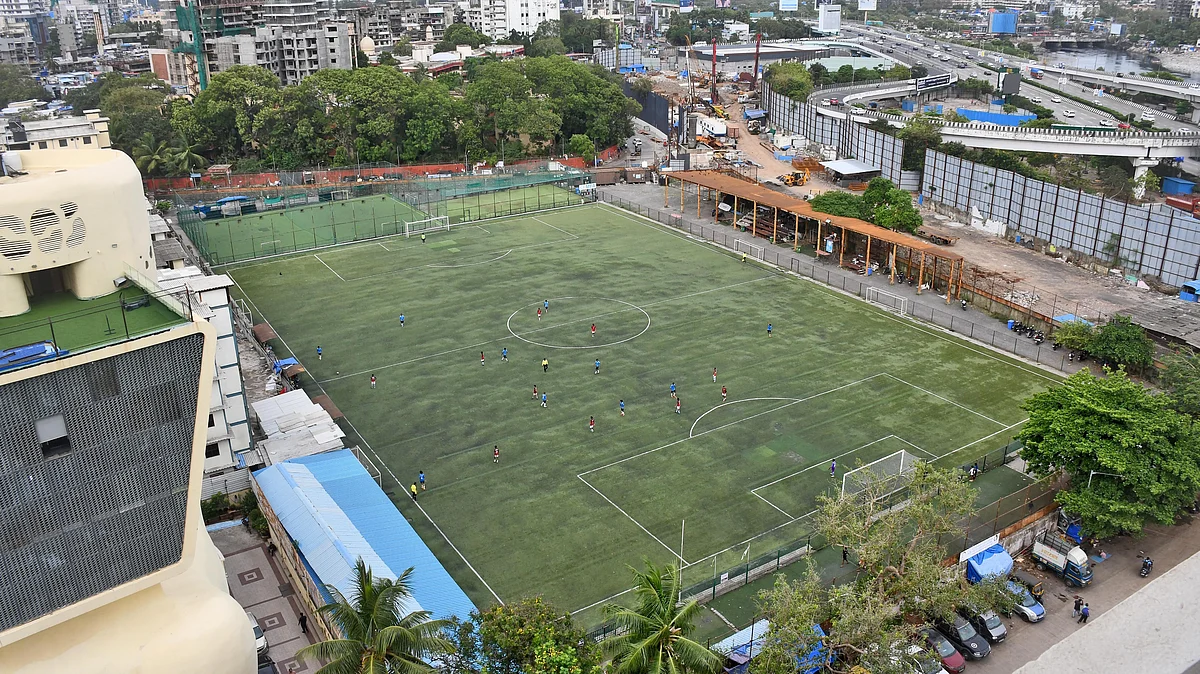
On a Tuesday night, the civic body known as the BMC approved a change in the reservation of the Neville D’Souza football ground, located in Bandra Reclamation, from a playground to an exhibition and convention centre. This decision was finalized back in June. The Mumbai Football Association (MFA) is currently involved in a legal battle in the Bombay High Court, with replies expected by 24th August.
Officials have mentioned that a new ground will be provided in its place. The plot of land is relatively small, spanning around 8,450 square meters or slightly over two acres. It boasts a FIFA-standard turf and can accommodate approximately 5,000 spectators. This ground is regularly used by MFA leagues and is frequented by around 8,000 to 10,000 players each year.
The ground is named after Neville D’Souza, a Goan-born striker who made history by scoring a hat-trick against Australia at the 1956 Melbourne Olympics, marking the first time an Asian player had achieved this feat. The Maharashtra Housing and Area Development Authority (MHADA) secured the land for the football association around 2011, and it was renamed in 2015.
The current FIFA-standard turf was installed by the Mumbai Metropolitan Region Development Authority (MMRDA) in 2018. Prior to these developments, the land had faced numerous encroachments and a boundary wall had been erected to secure it. The original layout of Bandra Reclamation reserved a larger parcel for a convention complex in 1983, but it was categorized as a playground due to the presence of an existing football ground.
MHADA sought to restore the original reservation, arguing that the area lacks a dedicated convention facility and that this change could generate revenue. There are concerns about temporary sports allotments becoming permanent fixtures, as well as Mumbai's overall shortage of public open spaces, with an average of just 1.28 square meters per person.
While the booking and lighting of this turf for regular use limits its availability to other users, the promise of a new ground is not new to the city. The claim of having an additional convention space is weaker when compared to the extensive facilities available at other nearby venues. The Jio World Convention Centre in Bandra-Kurla Complex (BKC) boasts 15,000 square meters of exhibition halls and 10,000 square meters of convention halls, along with a ballroom and meeting rooms, all within a precinct designed specifically for events.
Nesco in Goregaon is even larger. Whether Bandra Reclamation specifically requires an additional hall is a matter of planning preference, whereas the city's lack of convention space is a separate issue altogether. The MHADA's claim holds weight, but so does this football ground. The logical course of action would be to first evaluate a comparable ground and then consider any changes in usage.
In Mumbai, the typical sequence of events is reversed, leading to the potential loss of the pitch and the failure to deliver on promises. Ankieta Kothari, the founder of The Bombay Blueprint, a platform chronicling Mumbai's architecture, heritage, and evolving urban landscape, has been documenting the story of this ground and the broader urban narrative.
Written by urgent.news from Free Press Journal's reporting — not their text. Machine-written — may contain errors; check the original before relying on it.