The Fastest Star on Record Has Been Found Hurtling Past Our Galaxy's Black Hole
"This is unprecedented." Don't miss a story, subscribe here.
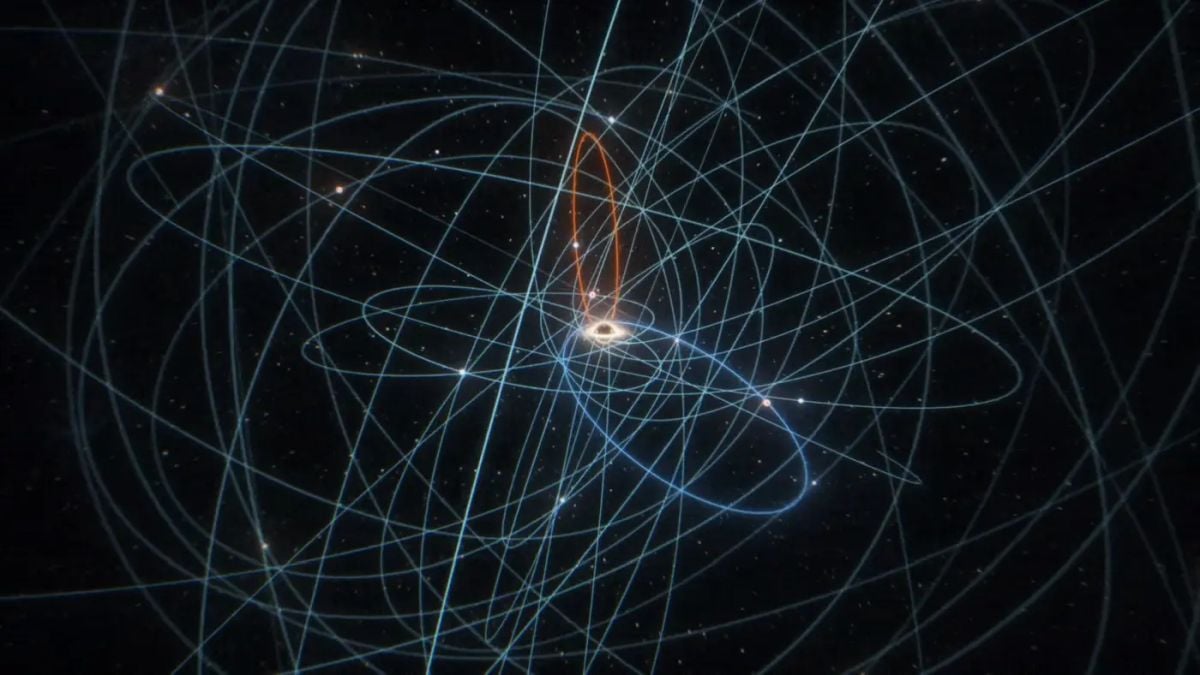
Astronomers have discovered the fastest known star in our Milky Way galaxy, named S301. This celestial body whizzes around the supermassive black hole at the galaxy's heart, Sagittarius A*, at an astonishing 25,000 kilometers (15,500 miles) per second. That's 100,000 times faster than a commercial airplane. S301 also holds the record for being the closest star to the Milky Way's central black hole, orbiting it at a distance comparable to the Earth-Sun separation.
PhD student Felix Mang, from the Max Planck Institute for Extraterrestrial Physics in Germany and co-author of the study, described the star's orbit as "unprecedented". The star takes just 8.7 years to complete its orbit around Sagittarius A*, and approaches the black hole at a mere 12 times the distance of Earth to the sun. This extreme proximity to the black hole could provide a new perspective on the black hole's fundamental properties and the extreme environment surrounding it.
If S301's orbit has the perfect combination of a highly eccentric and very tight path, scientists believe they could directly measure the spin of a massive black hole for the first time. This would be a significant test of Einstein's general theory of relativity, as the spinning black hole drags spacetime along with it, warping the orbits of surrounding stars.
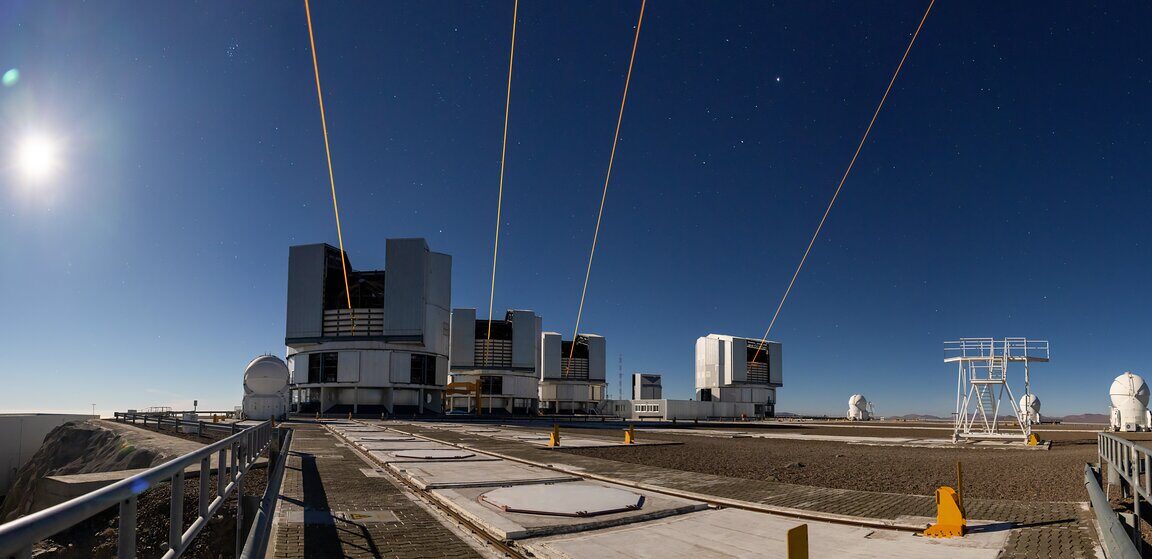
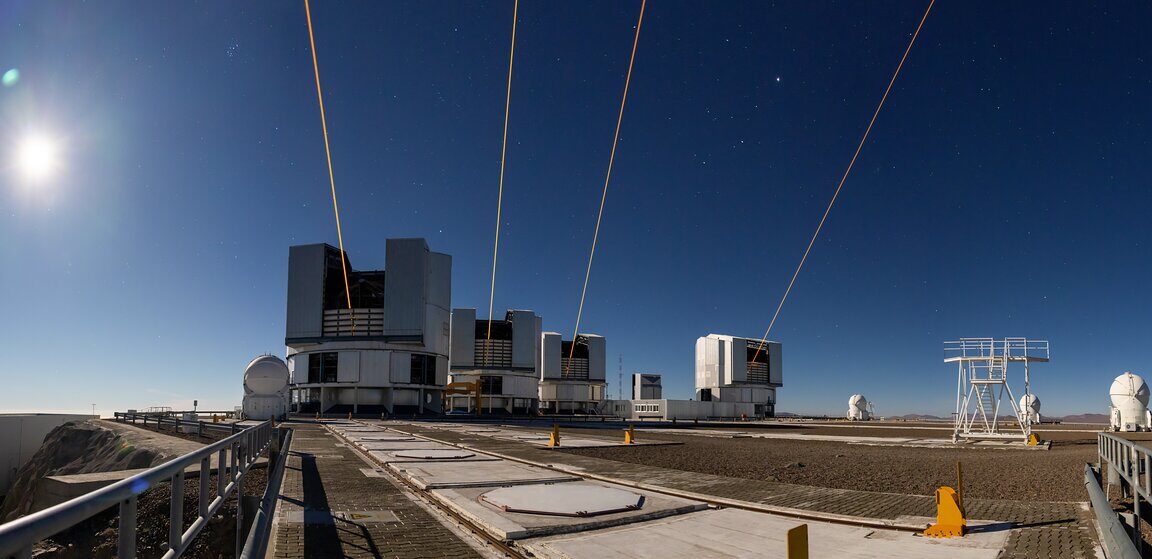
The European Southern Observatory's Very Large Telescope Interferometer in Chile was used to track S301's orbit back to 2017. By monitoring its next closest approach to the black hole in 2031, scientists hope to gather enough data to calculate the spin of Sagittarius A* within the next decade. Although S301 is unusually close to the central black hole, it is not expected to cross the event horizon, the point beyond which objects cannot escape the black hole's gravitational pull.
Astrophysicist Dr Ziri Younsi, from University College London, emphasized the importance of this discovery, highlighting the star's incredible proximity to Sagittarius A* and its peak speed of about 8% of the speed of light.
Written by urgent.news from Guardian Science's reporting — not their text. Machine-written — may contain errors; check the original before relying on it.
This story
This is one outlet's version. Read the fullest account.
- Astronomers detect fastest known star in Milky Way theguardian.com
- Newly-Discovered Star Could Finally Reveal Spin of Our Galaxy’s Central Black Hole sci.news
- This high-speed star is whipping around the black hole in the middle of our galaxy npr.org
- Astronomers spot the closest, fastest star ever seen orbiting our galaxy's monster black hole livescience.com