The $1 Trillion Black Box
The post The $1 Trillion Black Box appeared first on ProPublica .
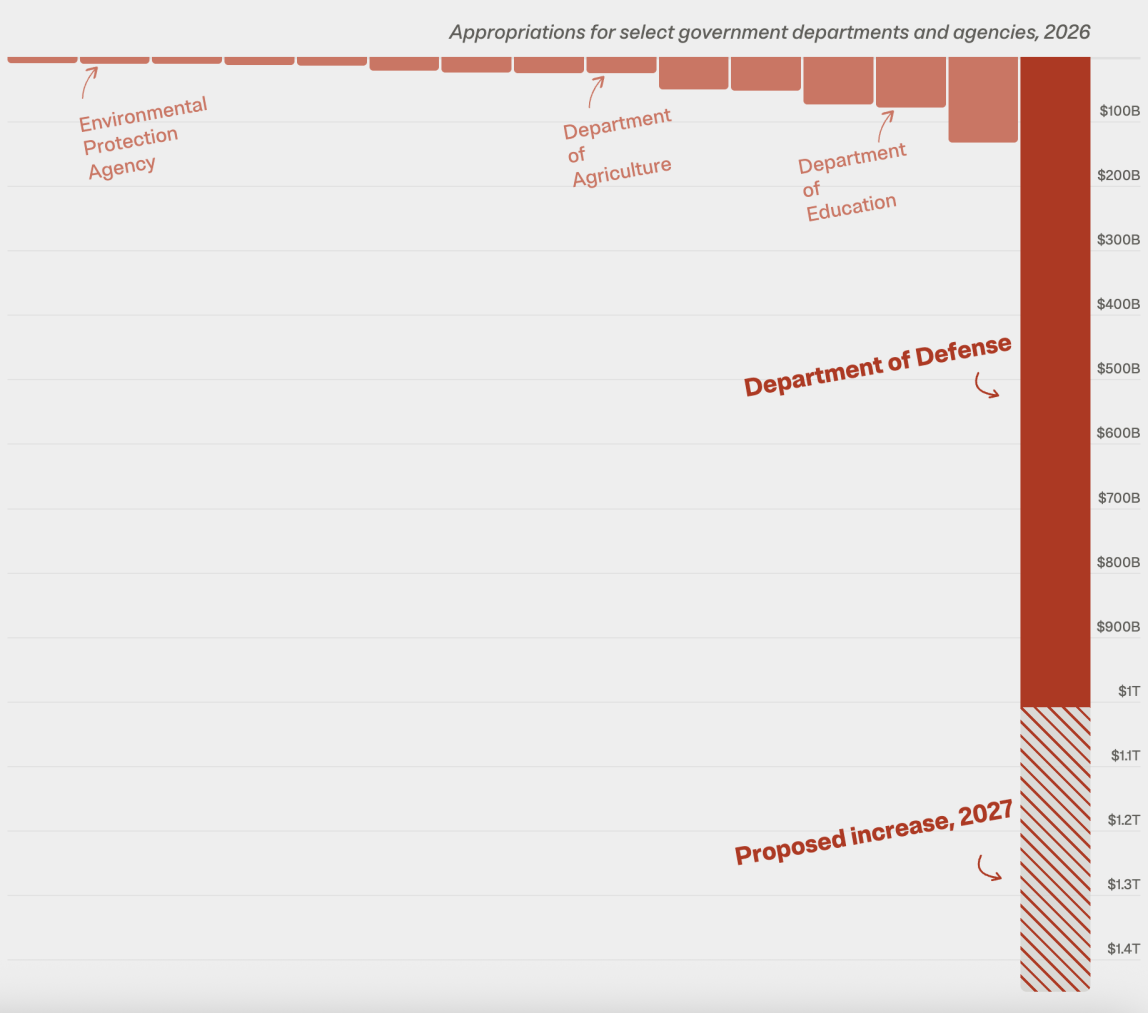
In the fiscal year, the United States allocated an astounding $1 trillion for defense, surpassing the total appropriations for agencies responsible for health, veterans affairs, education, housing, agriculture, and justice. If the current administration's budget priorities materialize, defense spending is projected to skyrocket to $1.5 trillion, marking the highest expenditure on defense in U.S. history, adjusted for inflation.
This colossal figure dwarfs the country's annual defense spending during the height of World War II.
Despite the astronomical budget, the Pentagon's financial transparency remains a pressing issue. The agency has not received a passing grade on a comprehensive financial audit, with the Department of Defense declining to comment on the matter. An Army major general and nonresident senior fellow at the American Enterprise Institute described the spending as "twisted like a Rubik's Cube," emphasizing the lack of transparency.
ProPublica, a nonpartisan nonprofit newsroom, is undertaking a series of investigative articles to shed light on the convoluted spending patterns within the Department of Defense (DoD). The investigative journey will focus on how President Donald Trump is utilizing taxpayer money and aims to uncover previously untold stories. The series will address the grandiose plans, staggering consequences, and questionable deal-making within the Pentagon budget, which often involve exorbitantly expensive military equipment, projects gone awry, and opaque negotiations with influential arms dealers.
The Pentagon budget encompasses a wide range of expenditures, including procurements, research and development, supply support services, and associated services. For instance, the Air Force alone received $32.6 billion, while the Defense-Wide Research, Development, Test, and Evaluation accounted for $35.2 billion. However, the smallest allocation, amounting to $650 million, was designated for "supplies and associated support services" linked to a specific section of U.S. Code Title 10.
The budget's complexity makes it challenging for the public to comprehend where their tax dollars are being spent. ProPublica aims to untangle this intricate web in subsequent articles, shedding light on the government's spending decisions and their consequences.
Written by urgent.news from ProPublica's reporting — not their text. Machine-written — may contain errors; check the original before relying on it.