Tech leads losses as Asian stocks track Wall St selloff
Higher yields raise hyperscalers' borrowing costs, raising concerns over capital spending and AI infrastructure companies.
Technology stocks continued their downward trend on Wednesday, suffering heavy losses as investors reacted to rising bond yields, soaring oil prices, persistent inflation, and dwindling hopes for a reopening of the Strait of Hormuz. The slide mirrored the losses on Wall Street, particularly for firms heavily invested in AI and chips, which had been recovering from a sharp decline in July.
The Middle East crisis showed no signs of resolution, with US and Iranian officials entrenched in a standoff, leading to higher crude prices as traders anticipated the Strait of Hormuz remaining closed. This situation heightened inflation expectations and drove up US government debt costs, with the 30-year Treasury yield hitting its highest level since June 2007 and 10-year yields surpassing levels from the first US-Israel strikes on Iran in late February.
Notably, AI-linked stocks displayed heightened sensitivity to the upward shift in longer-dated yields, with National Australia Bank's Rodrigo Catril observing that borrowed AI-linked stocks now faced greater repercussions from the rising yields. US tech and chip giants, such as Nvidia, Intel, Micron, and Broadcom, experienced significant setbacks, contributing to the decline of the Nasdaq and S&P 500.
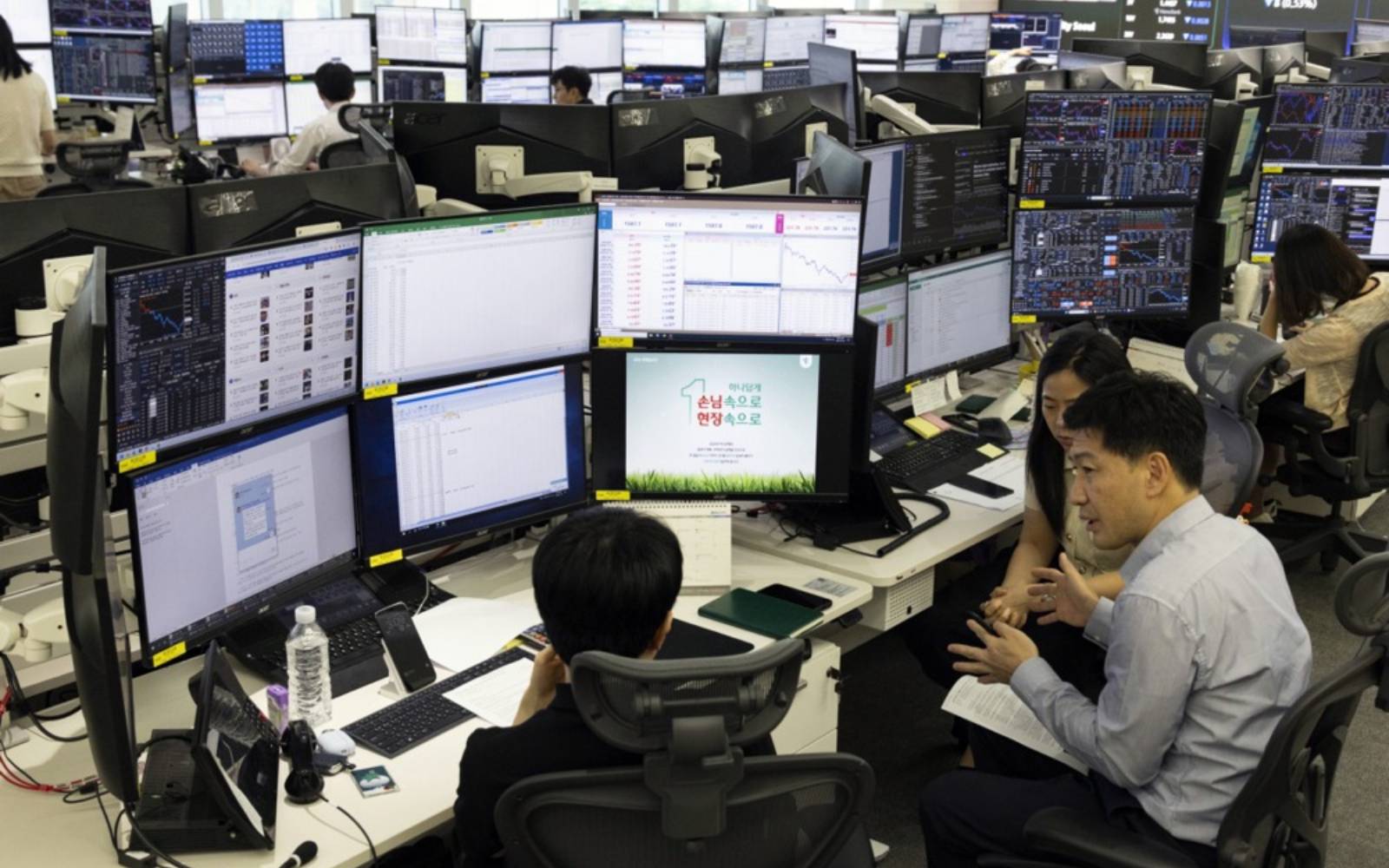
In Asia, the Kospi Index in Seoul, once a symbol of the AI tech rally, plummeted over 5%, while SK hynix and Samsung chips saw at least a 7% decline. Tokyo's Nikkei Index also slipped more than 2%, with Kioxia off around 10% and investment giant SoftBank not faring much better. Tokyo, Taipei, and Manila experienced declines above 1%, alongside losses in Hong Kong, Sydney, Singapore, and Jakarta.
Higher yields would increase borrowing costs for hyperscalers, raising concerns about capital spending and the potential impact on AI infrastructure companies, according to Daiwa Asset Management's Kazunori Tatebe. Both major crude contracts rose more than 1%, with Brent hovering around $92 a barrel, as the likelihood of any Middle East deal dwindled after US President Trump declared he would not extend a 60-day truce.
Trump's envoy and son-in-law, Jared Kushner, had previously suggested positive conversations were ongoing, but Trump dismissed these claims on his Truth Social network, stating, "There are no talks or conversations going on, or scheduled, with the Islamic Republic of Iran. The Naval Blockade remains in full force and effect."
Analysts cautioned that a prolonged spike in crude prices posed a troubling prospect for traders, with oil prices nearing $90 a barrel. The Federal Reserve was under pressure to raise interest rates to combat inflation, which had remained near the bank's 2% target for five years. Central bankers and finance officials were set to meet in Jackson Hole, Wyoming, later in the month, with Fed chief Kevin Warsh's speech at the gathering considered a crucial event for insights into the Fed's plans.
Minutes from the bank's most recent policy meeting were due later the same day, potentially providing clues about decision-makers' outlook.
Written by urgent.news from Free Malaysia Today's reporting — not their text. Machine-written — may contain errors; check the original before relying on it.
Also reported by 1 other outlet
- Tech leads losses as Asian stocks track Wall St selloff freemalaysiatoday.com