Taiwan-made satellite launcher fails first test, triggers missile panic
Taiwan’s first test of a locally developed satellite launch vehicle failed on Wednesday after the rocket veered off course, terrifying nearby villagers who mistook it for an incoming missile. The rocket was launched at around 6am local time from the Jiupeng missile testing base in southern Pingtung county. The base is operated by the government-backed National Chung-Shan Institute of Science and…
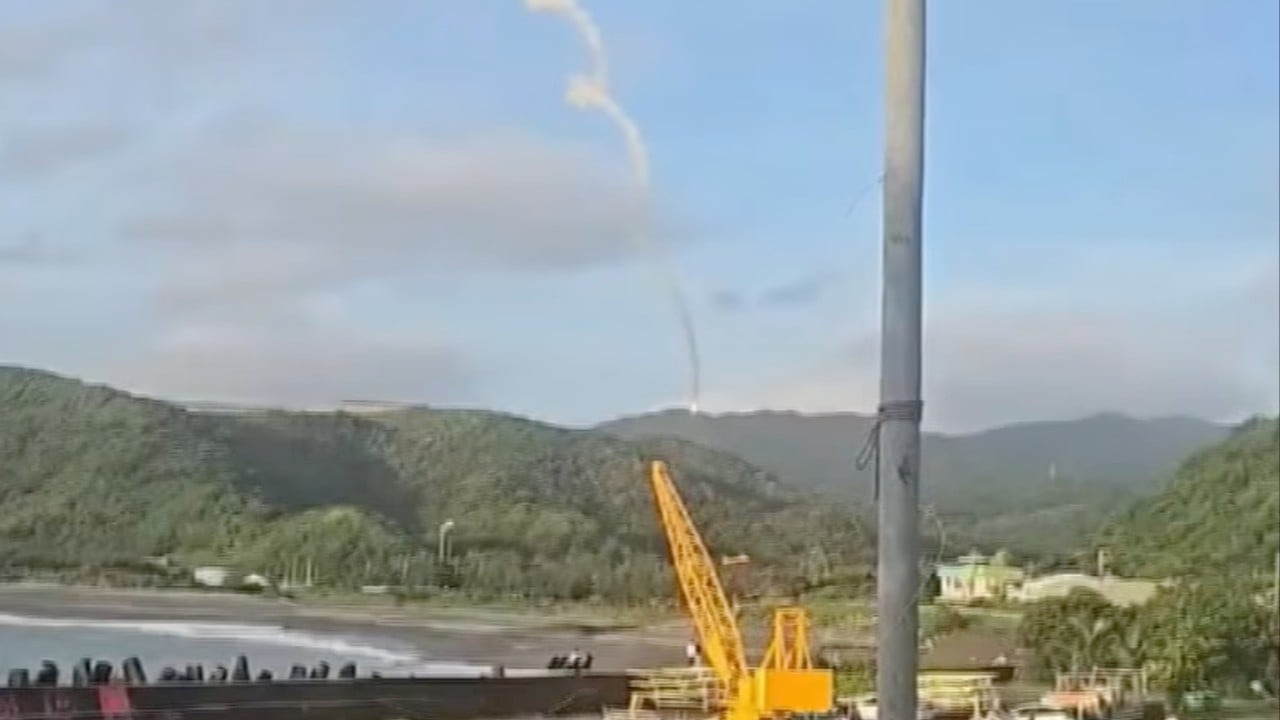
Taiwan's inaugural test of an indigenous satellite launch vehicle concluded in failure on Wednesday, compelling local residents to flee in panic, mistaking the rocket's veer off course for an approaching missile. The launch occurred at approximately 6am from the Jiupeng missile testing site in southern Pingtung county, operated by the National Chung-Shan Institute of Science and Technology (NCSIST), Taiwan's premier weapons manufacturer.
Eyewitnesses reported the projectile ascending briefly before abruptly veering towards the mountains, prompting villagers to cry out in distress on video footage going viral online. The rocket ultimately crashed in an uninhabited, mountainous region, releasing a cloud of thick smoke. Fortunately, no injuries or property damage were reported.
The incident prompted immediate concern from the Pingtung county government, which demanded an urgent investigation and called for NCSIST to suspend missile tests and related exercises until the root cause was identified. They urged the institute to review launch procedures and ensure trajectories no longer posed risks to local communities. Pingtung's Mudan township mayor, Pan Chuang-chih, also demanded a swift explanation, emphasizing the potential danger to residents' lives and property.
NCSIST later clarified that the test involved its first experimental satellite launch vehicle, not a missile. An anomaly in the vehicle's initial trajectory caused its self-destruct mechanism to activate, as per the original contingency plan. The impact area was within the planned safety zone, falling within designated safety zones and not on privately owned land, causing no casualties or damage.
Experts believe the failed launch was likely due to a gyroscope, propulsion system failure, or a weight distribution issue with the full-up test vehicle. Telemetry data from the flight will be used to adjust the vehicle's design and system parameters.
Despite this setback, space-launch technology advancements in Taiwan remain significant. The multistage solid-fuel launch vehicle is being developed to carry small payloads into low Earth orbit at altitudes above 500km. Its ability to launch multiple satellites holds potential military applications, as satellite launch vehicles and ballistic missiles share key technologies, including solid-fuel propulsion, staging, guidance, and flight-control systems.
The institute previously developed the Kirin Project, which aimed to create a solid-fuel launch vehicle capable of placing microsatellites weighing between 50kg and 200kg into orbit at an altitude of about 500km. The recent progress on this project remains undisclosed. Experts note that while the current project is intended for civilian space use, its propulsion, staging, and guidance technologies could potentially bolster surface-to-surface missile capabilities.
Written by urgent.news from Reuters Business via SCMP's reporting — not their text. Machine-written — may contain errors; check the original before relying on it.