Scientists discover how narwhals grow nature’s only straight tusk
PARIS, Aug 20 — Narwhals have nature’s only straight tusk, a single tooth up to three metres long so st...
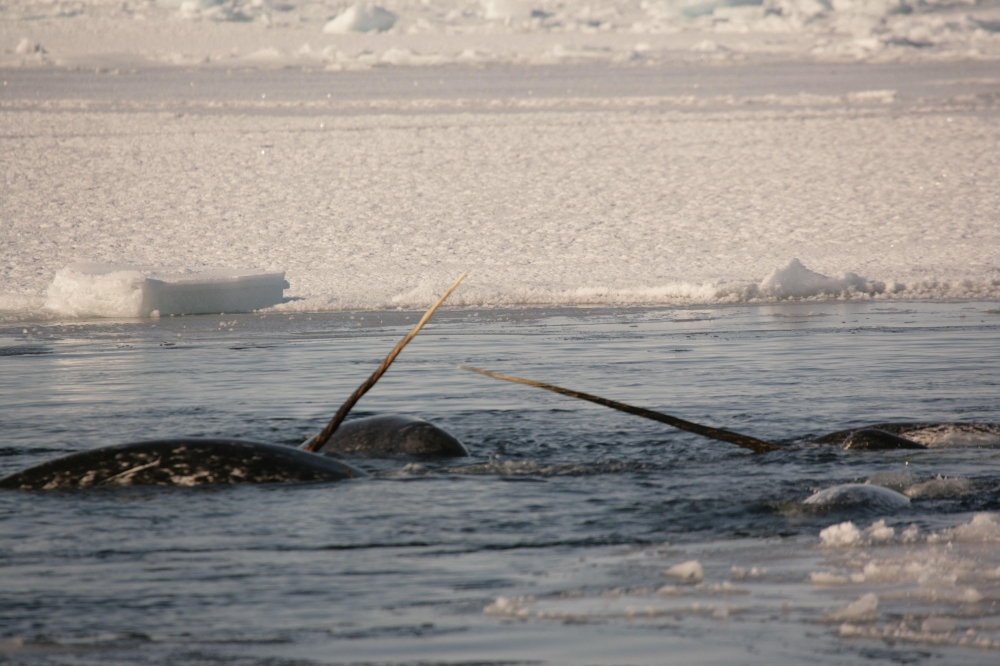
In a groundbreaking study published in Nature Communications, scientists have unraveled the mystery of how narwhals develop their unique straight tusk, a phenomenon that has fascinated researchers for centuries. The left canine tooth of male narwhals grows through their jaw and upper lip, extending outwards and forming the iconic tusk. The right canine tooth remains buried within the animal's head.
To understand the tusk's unique structure, an international team of researchers employed advanced 3D X-ray technology, including three European particle accelerators known as synchrotrons. The results revealed that the tusk is composed of two distinct dental tissues: dentin on the inside, which forms a right-handed spiral, and cementum on the outside, which forms a left-handed spiral. This counteracting force causes the tusk to grow in a straight, arrow-like shape, unlike the curved tusks of other animals.
The researchers were also intrigued to find growth layers within the tusks, similar to tree rings, which could provide insight into the narwhals' lives, potentially spanning up to 80 years. The tusks were sourced from museums as well as from narwhals hunted by Greenland's indigenous Inuit people for sustenance.
The purpose of the narwhal tusk remains a subject of debate among scientists. While some suggest it could be used for hunting or sensing environmental factors like temperature and salinity, the study's authors believe these hypotheses are unlikely, as the tusk is exclusively grown by male narwhals. Observations of male narwhals engaging in a tusk-measuring contest suggest the tusk may be used to establish dominance and attract potential mates.
However, leading narwhal tusk expert Martin Nweeia from Harvard University remains unconvinced, proposing that the tusk serves as a sensory organ instead. Nonetheless, the new study is hailed as a valuable contribution to understanding the micro-anatomy and morphology of this fascinating natural wonder.
Written by urgent.news from Malay Mail's reporting — not their text. Machine-written — may contain errors; check the original before relying on it.