Princeton’s ‘AI Snake Oil’ author says the real fear isn’t thinking machines—it’s that AI exposes who already knows how to think
Princeton's Arvind Narayanan says his students are "in a bind." How much should they use AI versus resist it to build up their own skills?
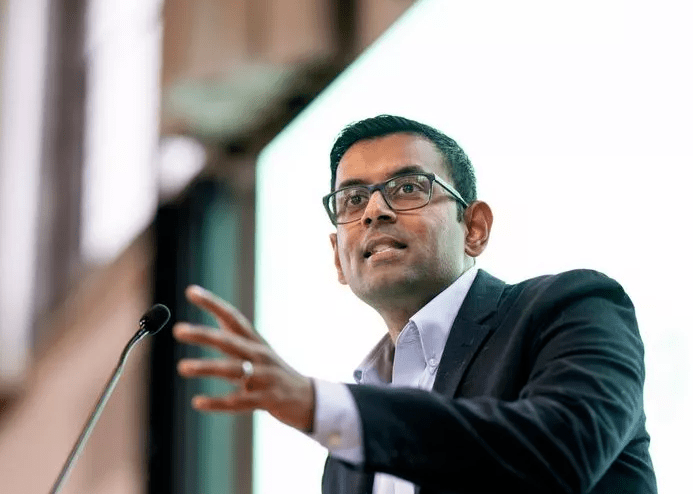
Princeton computer-science professor Arvind Narayanan has spent years debunking Silicon Valley's grandest claims about artificial intelligence. In his book AI Snake Oil, Narayanan challenges the idea that algorithms can reliably predict employees' performance, patients' illnesses, or potential criminals. He also doubts that generative AI will replace large portions of white-collar work, comparing it to a "sandwich" where the meat shrinks while the bun expands.
While Narayanan acknowledges the public's growing hostility toward AI, he believes the backlash is multifaceted and not a single fear. He identifies five main anxieties: job loss fears, distrust of powerful tech companies, anger over billionaire influence, environmental concerns, and social effects uncertainty, especially among younger people.
Narayanan does not dismiss AI's potential to transform knowledge work, but his concern lies in systems that predict high-stakes outcomes for individuals. He criticizes the use of machine-learning systems in hospitals, insurance, HR, and criminal justice due to their inherent unpredictability and potential for detrimental decisions.
Narayanan uses a metaphor of "janitorial work" to describe the risk of people retaining their jobs but being relegated to menial tasks as AI takes over more responsibilities. He also introduces the term "moral crumple zone" to describe the situation where automated systems fail, causing those in charge to bear the blame due to limited visibility and authority.
Narayanan's critique targets claims that AI systems can make high-stakes predictions about people, as these systems are fraught with uncertainty and can lead to consequential decisions about employment, coverage, bail, or policing. While AI can be a useful tool for knowledge workers, Narayanan warns against a dependence spiral, where users rely solely on AI for intellectual labor and lose their ability to evaluate the system themselves.
He advocates for a growth cycle, where humans work alongside AI to find bugs, test outputs, and incorporate suggestions throughout a project. However, for students, AI poses a unique challenge, as excessive reliance on the technology can hinder their ability to develop essential skills for evaluating automated outputs. The differing reactions among professions highlight the need for careful integration of AI into various fields, emphasizing the importance of ongoing regulation and oversight to ensure responsible use.
Written by urgent.news from Fortune's reporting — not their text. Machine-written — may contain errors; check the original before relying on it.