Orangutan Day: Here’s where the three critically endangered species stand
Aug. 19 is World Orangutan Day, a day to honor the three species of Southeast Asian great apes, all of which are classified as critically endangered by the IUCN, the global conservation authority. Orangutans were classified into two species: The Sumatran orangutan (Pongo abelii) found in northern Sumatra, Indonesia, and the Bornean orangutan (Pongo pygmaeus), […]
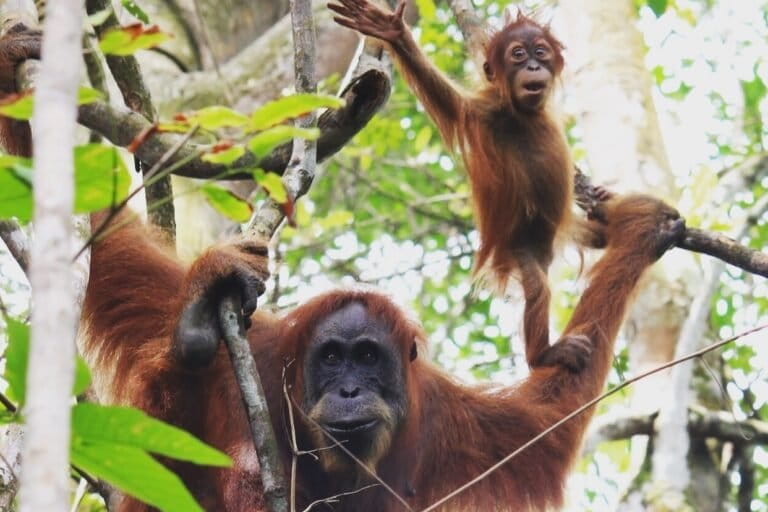
August 19 marks World Orangutan Day, a day to celebrate the three critically endangered species of Southeast Asian great apes. These orangutans are the Sumatran (Pongo abelii), Bornean (Pongo pygmaeus), and Tapanuli (Pongo tapanuliensis) orangutans. In 2017, scientists recognized the Tapanuli orangutan as a distinct third species, also native to northern Sumatra.
The Tapanuli orangutan has had a particularly challenging year. In September 2025, researchers discovered a new population of these orangutans in a peat swamp forest in North Sumatra, previously unknown to science. The new population, estimated at 716 individuals, was found in a forest about 32 kilometers (20 miles) east of the previously known Batang Toru population.
However, this discovery came with a grim reminder of the threats these orangutans face. Just two months later, Cyclone Senyar caused widespread landslides in Batang Toru, resulting in the estimated death of 58 Tapanuli orangutans. Habitat destruction due to small-scale agriculture and logging accounts for about 70% of direct forest loss.
Additionally, large-scale industrial projects, such as the Batang Toru hydropower plant and the Martabe gold mine, are encroaching into the orangutans' territories, further threatening their survival.
Written by urgent.news from Mongabay's reporting — not their text. Machine-written — may contain errors; check the original before relying on it.