Nikkei: Angst vor Staatsverschuldung belastet Börsen in Asien
In Asien ziehen die Renditen an, befeuert von den Sorgen um die Staatsschulden. Der Nikkei und die Börse in Schanghai notieren schwächer.
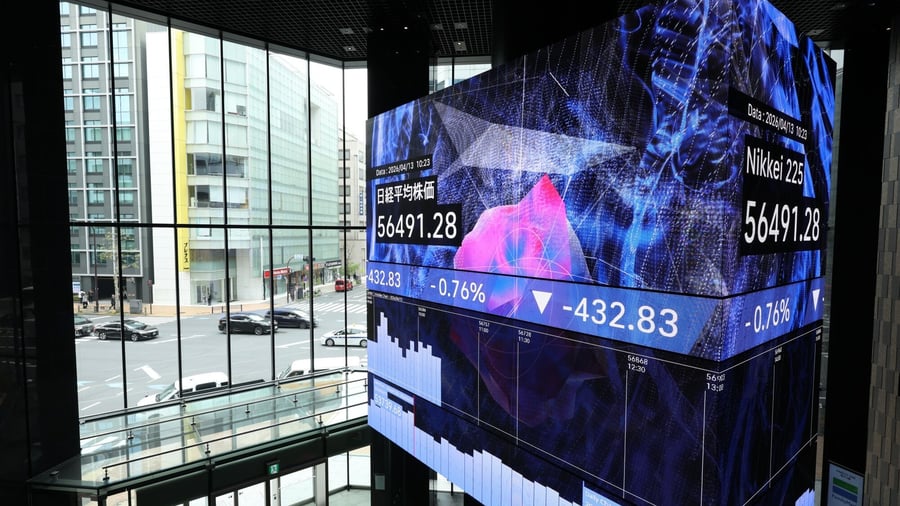
The sale of stocks on Asian markets continued mid-week, with the Nikkei Index in Japan and the Topix index both falling by roughly three percent on Wednesday. The Shanghai stock exchange and the Shanghai and Shenzhen indices dropped by 2.5 and three percent respectively. South Korea's KOSPI technology-focused index lost nearly six percent.
Analysts from Sony Financial Group attributed the declines to growing long-term bond yields, which bolstered the view that growth-oriented stocks were overvalued. Japanese technology giants like Furukawa, Kioxia, and Softbank shed between 10.3 and 13.7 percent of their value. Concern over rising government debt drove bond yields to multi-decade highs worldwide, making them a key benchmark for nearly all other asset classes and a crucial reference rate for mortgage rates.
Sally Auld, Chief Economist at National Australia Bank, noted that a sharp sell-off in bonds could pose problems for some asset classes, including real estate, stocks, and infrastructure. In China, the robotics company Unitree made a spectacular stock market debut, with its share price opening at around 1100 Yuan – more than 600 percent above its issue price of 150.80 Yuan – before closing 845 Yuan, a 460 percent gain.
Written by urgent.news from Handelsblatt's reporting — not their text. Machine-written — may contain errors; check the original before relying on it.
This story
This is one outlet's version. Read the fullest account.
- Nikkei: Ende von Iran-Waffenruhe drückt auf Kurse in Asien handelsblatt.com