Medicare’s Paying Less for Cataract Surgery. Eye Doctors Are Turning to Lucrative Lasers.
More cataract patients, wanting not only restored but improved vision, are paying extra for their doctors to use a laser when a scalpel would do.
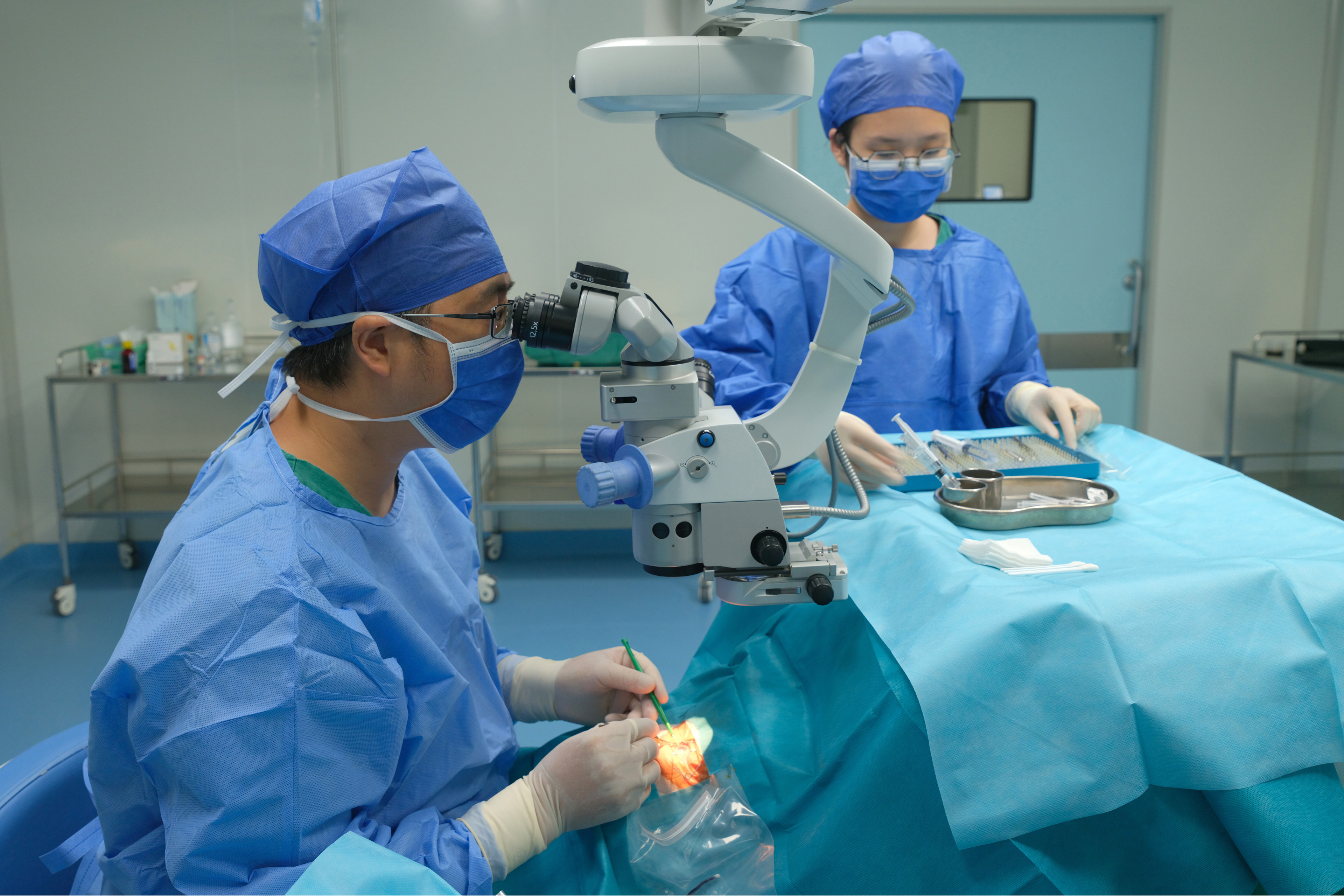
Tammy Chalala, a 69-year-old retired dietitian from New York, was pleased with her cataract surgeries, which left her with near 20/20 vision. She paid nearly $4,000 out-of-pocket for the two surgeries last year, opting for the laser-assisted method over the traditional scalpel procedure after researching online and consulting with doctors. Chalala believed the laser method would provide the best outcome.
Cataract surgery, one of the most common operations covered by Medicare, typically leaves patients with a few hundred dollars in out-of-pocket expenses, though some may pay more for vision correction during the procedure. While both laser-assisted and scalpel methods are safe and can significantly reduce or eliminate the need for glasses, many doctors claim the laser provides more precise cuts, leading to more options for patients.
The laser method also allows doctors to recoup more revenue, as Medicare has gradually reduced the payment doctors receive for cataract surgeries.
Oliver Schein, an ophthalmologist at Johns Hopkins Medicine, notes that doctors may use the laser due to financial incentives, as the equipment can cost a practice up to $500,000. Despite the strong financial incentive, most patients believe that paying more for the laser will result in better outcomes. Medicare pays doctors about $520 for a standard cataract procedure, which has decreased by about 20% over the past decade.
Doctors can bill patients extra when using the laser to insert premium lenses or correct astigmatism, as most vision correction is not covered by traditional Medicare. Premium lenses can cost $1,000 to $4,000 per eye, while laser-assisted procedures may cost $1,000 to $3,000 per eye. Private insurers typically follow Medicare benefit rules, and research shows that the laser does not provide better outcomes than the scalpel for standard cataract procedures.
The American Academy of Ophthalmology states that studies do not show laser surgery results in fewer complications or better outcomes.
Cataracts affect nearly 12% of the 5 million annual cataract surgeries performed in the U.S. and are expected to affect over half of Americans by age 80. Cataracts cause blurred vision and poor night vision and develop slowly due to the breakdown and clumping of proteins and fibers in the eye's lens. For decades, surgeons have used scalpels to perform cataract surgery, which involves removing the cloudy natural lens and replacing it with a clear artificial one.
Barbara Cobuzzi, a 71-year-old medical billing consultant with traditional Medicare coverage, had cataract surgery last year. She was charged $1,500 per eye to use the laser for the procedure but was not satisfied with the results, as she still needed glasses for distance vision. When her second doctor performed the surgery without a laser, Cobuzzi was happy with the outcome, including no longer needing glasses for distance vision.
Doctors are using the laser as a moneymaker, she said, as they make a little more money on top of the Medicare reimbursement and the industry benefits from the development of new technology.
Written by urgent.news from KFF Health News's reporting — not their text. Machine-written — may contain errors; check the original before relying on it.