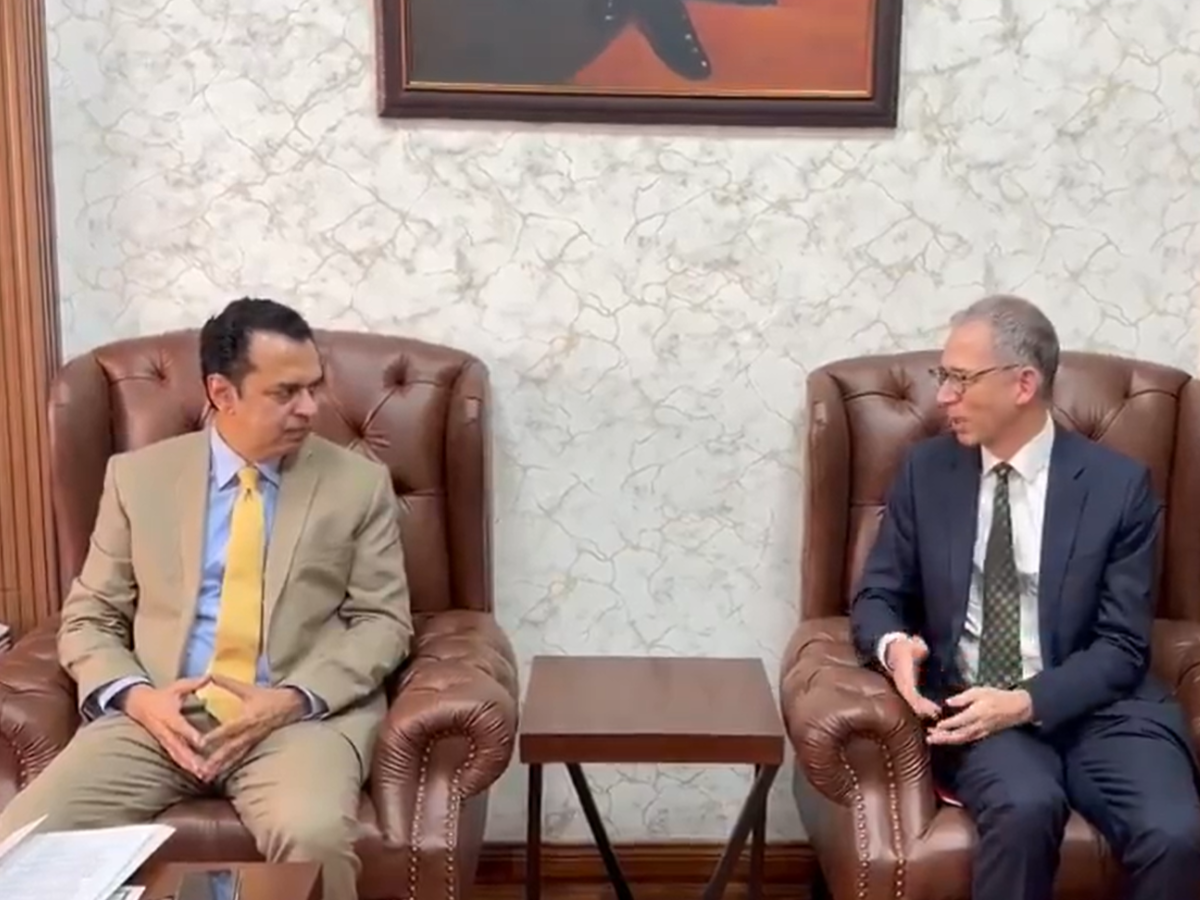
Linturi advises Ruto on how to assess SHA’s real weaknesses
Former Agriculture Cabinet Secretary Mithika Linturi, now a political ally of the Democracy for Citizens Party (DCP), has advised President William Ruto on how to assess the Social Health Authority (SHA) beyond the positive picture presented at the Kenya Health Summit 2026. In a post on X on Wednesday, August 19, 2026, Linturi urged Ruto […]
Mithika Linturi, a former Agriculture Cabinet Secretary and current supporter of the Democracy for Citizens Party, has counseled President William Ruto on how to evaluate the Social Health Authority (SHA) beyond the optimistic narrative presented at the Kenya Health Summit 2026. In a recent post on X, Linturi urged Ruto to obtain direct information from hospitals nationwide rather than relying heavily on SHA's self-reported performance.
"Instead of expending significant effort to showcase the operational efficiency of SHA, the president would benefit from a more direct and pragmatic approach," Linturi wrote. He argued that a thorough examination of hospital data would offer a clearer view of whether SHA is fulfilling its commitments to patients and healthcare institutions.
"He should request comprehensive data from hospitals across the country," Linturi stated. Linturi asserted that such data would uncover instances where patients, including mothers with newborns, remain hospitalized due to unpaid bills, even though they are covered under SHA. "Such information would quickly reveal the presence of thousands of patients detained in medical facilities due to unpaid hospital bills, despite being covered by the SHA scheme," he wrote.
Linturi's remarks came a day after Ruto utilized the summit's inauguration at the Kenyatta International Convention Centre in Nairobi to showcase the SHA's advancements. He highlighted that SHA had accumulated Ksh209 billion since October 2024, paid Ksh178 billion to contracted health facilities across the 47 counties, and registered over 32 million Kenyans.
Ruto also defended the digital systems used to monitor claims, arguing that the NHIF system's previous shortcomings had created opportunities for fraudulent claims and payments. During the summit, Ruto presented SHA as part of a broader transformation of Kenya's healthcare financing system, emphasizing increased enrollment, payments to facilities, and digital oversight.
However, his stance has been contested by critics who contend that national figures may not accurately reflect the experiences of individual hospitals and patients. "The management cost under NHIF was 40 per cent of collections at one point. In 2022, it was 17 per cent of collections and went to management," Ruto argued. "Under SHA, we have reduced management costs from 17 per cent in NHIF to five per cent," Ruto added.
Linturi's suggestion would effectively put that question to the test by juxtaposing SHA's reported performance with records held by hospitals. Consequently, the debate shifts from the number of registered individuals or disbursed funds to a more critical inquiry: how many SHA-covered patients are still encountering obstacles when they require medical care?
As discussions at the two-day health summit persist, the disparity between national statistics and the experiences of patients and hospitals will likely remain a focal point in assessing whether SHA is delivering the healthcare reforms promised by the government.
Written by urgent.news from People Daily Kenya's reporting — not their text. Machine-written — may contain errors; check the original before relying on it.