LG Energy, once fixed on EV batteries, jumps to Plan B
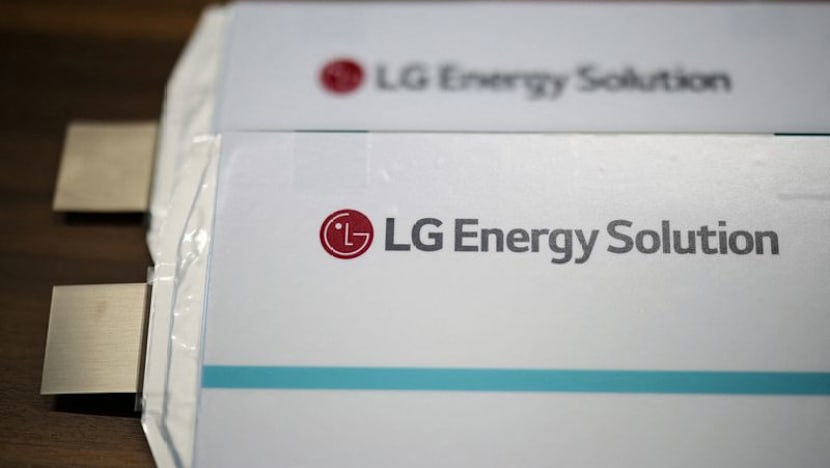
Just a few years ago, LG Energy Solution was concentrating on producing cells for electric vehicles. These days, the company has mostly shifted its attention to energy storage batteries. Most of LG Energy’s North American factories are now manufacturing energy-storage batteries or getting ready to do so, according to Robert Lee, the company’s president for the region.
The demand for large battery cells to store power is surging as a result of the expansion of AI data centers. This has been a hectic transition for battery makers and automakers, who invested billions in U.S. battery factories earlier this decade with the anticipation of an EV boom that has not come to fruition.
LG Energy, which claims to be North America’s leading battery producer by cell count, announced that five of its eight factories in the region will be manufacturing energy storage systems (ESS) batteries by the end of 2023. Lee stated during a recent opening event in Lansing, Michigan, that the company is emphasizing ESS right now due to the unexpected growth in this area. The Lansing plant is currently producing energy-storage cells for Tesla and utilities, and it is also creating batteries for Toyota Motor EVs.
Adapting to ESS batteries has been more complex than a simple switch. LG Energy had to develop a new battery chemistry with which it had little experience: lithium iron phosphate (LFP), a market dominated by Chinese manufacturers. LFP batteries are also utilized in EVs but have a lower energy density than nickel-based batteries, which are LG Energy’s specialty.
Consequently, they offer shorter driving ranges. However, LFP chemistry is considered safer and more durable, making it suitable for storing significant amounts of energy from a power plant. This move to ESS batteries was well-timed for battery and car companies that had heavily invested in plants to produce EV batteries. However, it is unlikely to fully utilize all that factory space.
Benchmark Mineral Intelligence anticipates that demand for stationary batteries in North America will reach 76 gigawatt-hours this year, as reported by Reuters earlier this year. While storage demand is expected to nearly double over the next five years, reaching 125 GWh, Benchmark does not anticipate this to be sufficient to absorb the excess capacity installed for EVs.
Despite this, LG continues to manufacture nickel-based EV batteries. Its joint-venture plant with General Motors, located in northeast Ohio, recently restarted production of cells for GM EVs after a seven-month shutdown. Lee stated, "EVs will come back, and it will account for a majority of the passenger vehicles in the U.S. eventually," emphasizing that this change is just a matter of time.
Written by urgent.news from CNA - Business's reporting — not their text. Machine-written — may contain errors; check the original before relying on it.
This story
This is one outlet's version. Read the fullest account.
- LG Energy, once fixed on EV batteries, jumps to Plan B investing.com
- LG Energy, once fixed on EV batteries, jumps to Plan B channelnewsasia.com