Jens Bisplinghoff (1944 – 2026)
Jens Bisplinghoff (1944 – 2026) — The AMBER Collaboration is deeply saddened by the passing of our dear colleague Jens Bisplinghoff at the age of 81. Jens devoted more than four decades to experimental nuclear and particle physics. He began his scientific career in nuclear physics, conducting research at the University of Bonn, the Nuclear […]
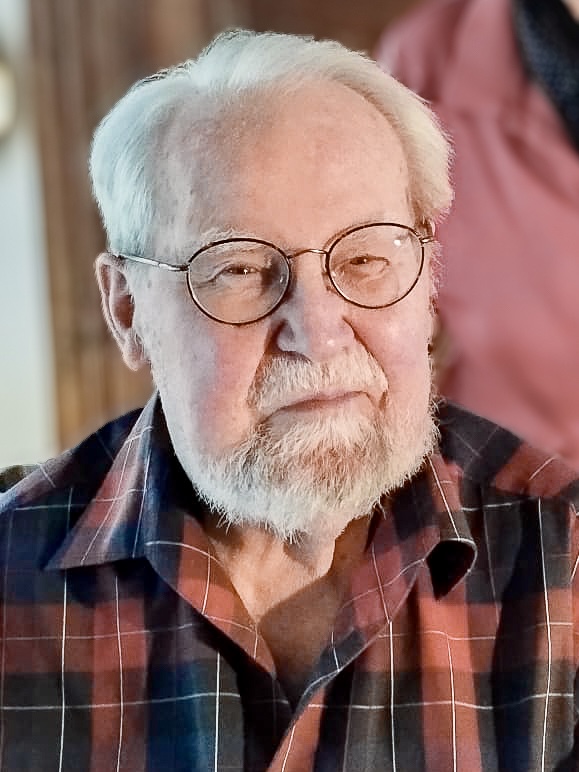
Jens Bisplinghoff, who lived from 1944 to 2026, left a profound impact on the world of experimental nuclear and particle physics. He passed away on 19 August, 2026, at the age of 81. His career spanned over four decades, during which he made significant contributions to the field.
Bisplinghoff's journey began in nuclear physics, where he conducted research at the University of Bonn, the Nuclear Structure Research Laboratory in Rochester, and the Lawrence Livermore National Laboratory in the United States. In the early 1990s, he shifted his focus to hadronic and particle physics, working at COSY in Jülich and later at the European Organization for Nuclear Research (CERN).
It was at CERN that he became a founding member of the COMPASS Collaboration, a role that significantly shaped the experiment from its inception.
His expertise extended to the development of the COMPASS detector, for which he was responsible for the scintillating-fibre detectors. The group he led built most of the detector stations that continue to operate at AMBER today. His practical ingenuity and deep understanding of experimental physics had a lasting influence on the experiment, continuing to benefit the collaboration even after his passing.
Beyond his scientific achievements, Bisplinghoff was admired for his down-to-earth attitude, commitment to experiment and detector development, and his friendly, straightforward personality. He approached detector problems, discussions about analyses, and even restaurant recommendations with the same insight, pragmatism, and good humour. His comprehensive knowledge of both the experimental and social aspects of collaboration life made his perspective highly valued and trusted by his colleagues.
Outside the laboratory, Bisplinghoff was a passionate sailor, pursuing his hobby with the same enthusiasm and good humour that defined his professional work. To those who worked alongside him, he left a lasting impression, with his impact still evident in the detectors he helped build, the experiments he shaped, and the many colleagues whose careers and lives he influenced.
Jens Bisplinghoff is remembered as an outstanding experimental physicist, a dear colleague, and a good friend. His passing has left a void in the scientific community, but his legacy will continue to inspire and guide future generations of physicists. Our thoughts are with his family, friends, and colleagues during this difficult time.
Written by urgent.news from CERN's reporting — not their text. Machine-written — may contain errors; check the original before relying on it.