Japan’s So-Called ‘Rising Militarism’ and Japan-US Relations
Insights from Kuni Miyake.
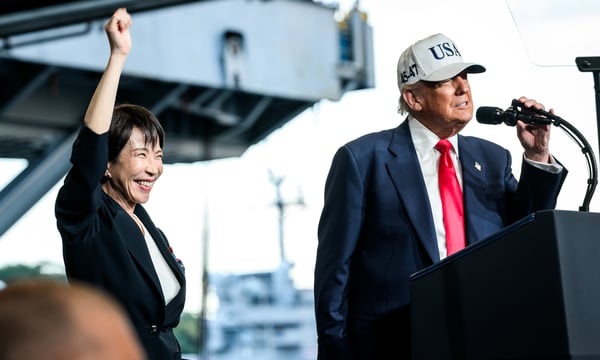
Japan's so-called "rising militarism" and its relationship with the United States have been subjects of debate. Contrary to claims, most Japanese people and experts reject the notion that the country is becoming more militaristic. At the recent Shangri-La Dialogue, only one non-democratic government, which is increasingly aggressive towards its neighbors, engaged in such rhetoric.
Prime Minister Sanae's approach to strengthening Japan's Self-Defense Forces is not aimed at creating a military threat, but to maintain the status quo in the Indo-Pacific region, where power balance is shifting due to China's growing military presence. Japan's position on Taiwan has been consistent since China's normalization of relations with Japan in 1972, but the military policy towards Taiwan is evolving due to concerns from neighboring countries.
Japan opposes any country attempting to change the status quo by force and maintains the status quo in the Taiwan Strait. Concerns about North Korea's cooperation with Russia and its dependence on China have heightened regional tensions, prompting Japan to continue working with the international community, including the United States and South Korea, under the principles of dialogue, pressure, and action.
Despite Japan's aging population, declining birth rate, and slow economic growth, the nation remains committed to civilian control of its military and strong partnerships with regional allies, including the United States. Criticizing Japan's cooperation with the United States as "militarism" is misguided and part of a broader propaganda effort.
Written by urgent.news from The Diplomat's reporting — not their text. Machine-written — may contain errors; check the original before relying on it.