Is Cape Town's water supply secure? City prepares for future uncertainties
How Cape Town is navigating rising water demand and unpredictable rainfall to secure its future water supply.
The City of Cape Town is actively working to ensure its water supply remains secure despite increasing demand and lower rainfall than anticipated. The 2026 Water Outlook reveals that water consumption surpassed projections in 2025/26 due to a combination of factors, including reduced rainfall, an early end to the rainy season, and heightened usage during winter.
Councillor Zahid Badroodien, the Mayoral Committee Member for Water and Sanitation, emphasized that the city is not waiting for the next drought to begin preparations. They are investing in new water sources and improving the management of existing resources.
Badroodien stated that the ultimate goal is to create a water supply network that is more resilient, diversified, and capable of withstanding climate instability, drought, and a growing population. The report indicates that early rains in July 2026 brought dam levels to approximately 76%, reducing immediate supply risks. However, given the forecast of below-average rainfall, the city is closely monitoring conditions to anticipate possible low-level restrictions.
Managing demand is another crucial aspect of water security. The New Water Programme aims to diversify water sources, incorporating groundwater, surface water, reuse, desalination, and nature-based solutions. This initiative seeks to increase daily water supply by 300 million liters by 2036. The Trans Caledon Tunnel Authority is implementing the Berg River-Voëlvlei Augmentation Scheme, which is expected to deliver about 40 million liters per day, although delivery has been delayed until 2030 due to financing and procurement challenges. Phase one of the Faure New Water Scheme aims to provide up to 70 million liters per day.
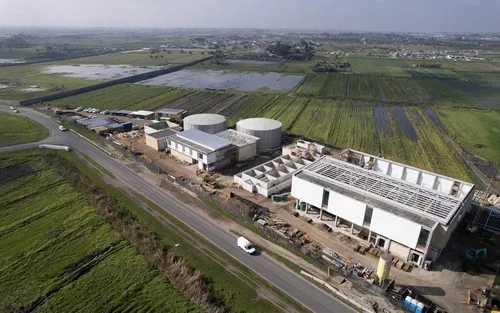
The city is also navigating the complexities of its first large municipal public-private partnership, with the Request for Qualification process anticipated in September 2026, with initial water supply expected by 2031. For the Paarden Eiland Desalination Plant, initially planned to deliver 70 million liters per day, delays are expected.
Transnet National Port Authority announced plans to update its Port Development Framework Plan in 2026, which could impact the desalination project's feasibility, affordability, and integration, potentially pushing the delivery date to 2036.
Despite stable current water supplies, Badroodien highlighted the importance of demand management. The city is employing leak detection, pressure management, infrastructure replacement, and enhanced metering to ensure efficient use of water resources.
Written by urgent.news from IOL's reporting — not their text. Machine-written — may contain errors; check the original before relying on it.
This story
This is one outlet's version. Read the fullest account.