How Physical AI Is Changing Invoicing, Working Capital and Trade Finance
The robots aren’t just coming. They are already here, across factory floors and logistics yards. North American companies ordered 8,940 robots worth $622 million in the second quarter, up 4.3% in units and 21.3% in revenue from a year earlier. Firms like FedEx, for example, are deploying physical artificial intelligence and robotic solutions into scaled […] The post How Physical AI Is Changing…
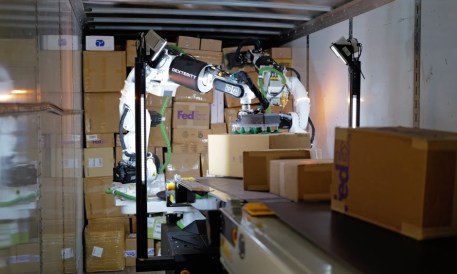
Robots are no longer confined to the realm of science fiction. They are already making their presence felt in factories and logistics yards. In the second quarter of the current year, North American companies ordered 8,940 robots worth $622 million, a 4.3% increase in units and a staggering 21.3% rise in revenue compared to the previous year.
Technology giants like FedEx are integrating physical artificial intelligence and robotic solutions into their real-world operations. FedEx's latest offering, introduced in July, employs a dual-armed robot named Mech and an AI platform that collaborates to analyze packages and decide the optimal way to load them.
The primary objectives of these deployments are operational, focusing on safety, consistency, trailer utilization, and throughput. However, the integration of physical AI could pave the way for a novel financial instrument – a category of data that is both operationally and financially actionable. As machines become adept at observing work, executing it, and meticulously documenting each step, they may generate a wealth of data that can be leveraged for financial purposes.
Many B2B financial processes still rely on proof of physical occurrence before funds are exchanged. For instance, a shipment's completion cannot be confirmed until goods have been loaded onto a trailer and transported to its destination. FedEx anticipates that, in the future, their robotic systems will be interconnected with various processes such as destination planning, trailer assignment, maintenance, and workforce management.
With machines capable of validating these events, the gap between performing work and receiving payment is likely to shrink.
Invoice creation often experiences delays, primarily due to the need to verify the fulfillment of the underlying obligation. Electronic fund transfers may be instant, but invoices can linger for days as verification procedures are carried out. According to a PYMNTS Intelligence report titled "Time to Cash™: A New Measure of Business Resilience" released in October, 77.9% of chief financial officers consider enhancing the cash flow cycle as a "very or extremely important" strategy for their businesses in the coming year.
The potential for physical AI to address this issue is immense, as it could provide a digital verification system that connects specific events in the physical world with financial transactions.
Written by urgent.news from PYMNTS's reporting — not their text. Machine-written — may contain errors; check the original before relying on it.