Haroutiun Galentz’s True Colors
A new book traces the function of color as both a mask and a mirror in psychological portraits by the modernist painter, who lost his parents during the Armenian Genocide.
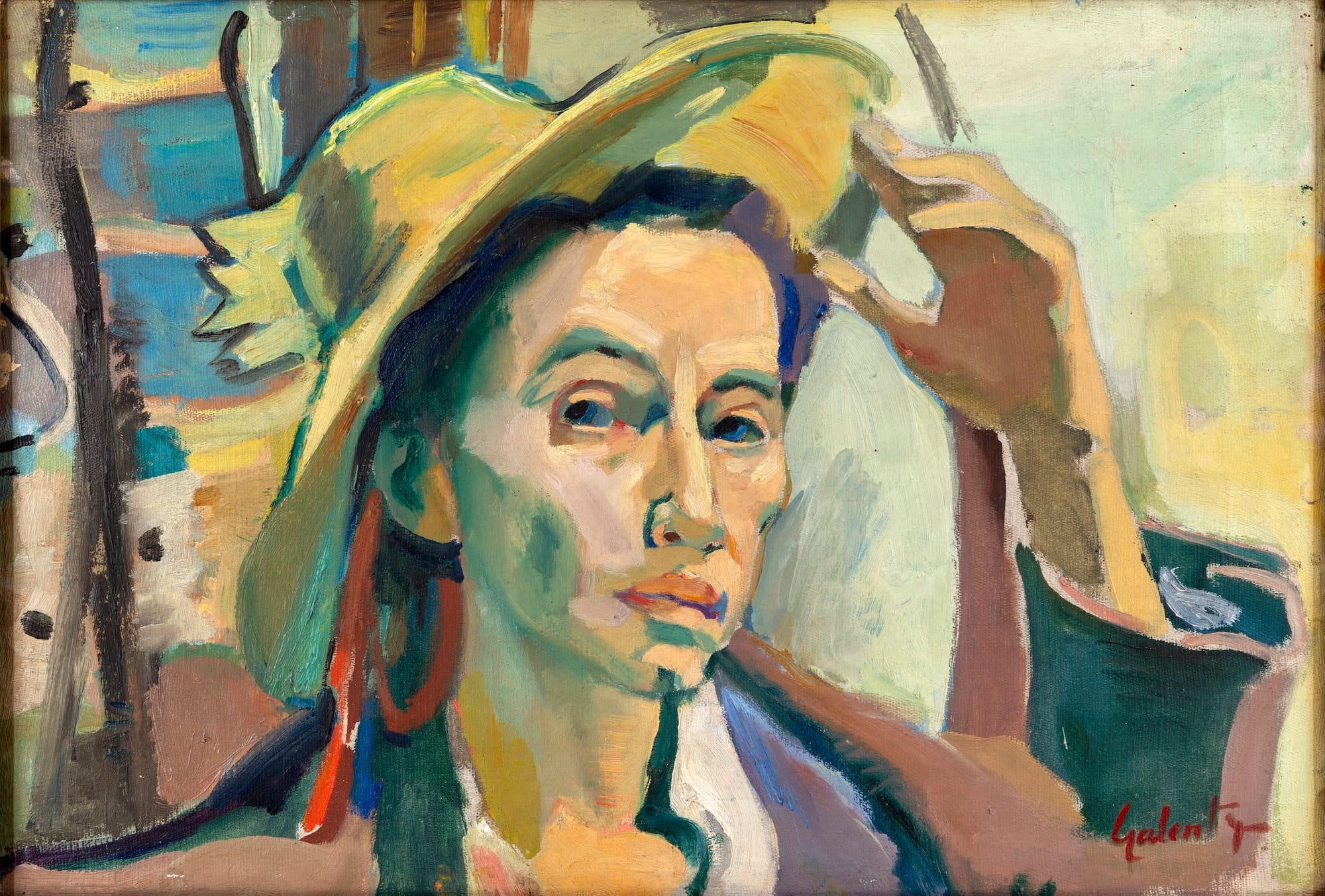
Haroutiun Galentz, born in 1910 and lost to the world in 1967, stands as a rare gem among the modernist painters of the 20th century. A victim of the Armenian Genocide's cruel hand, he was orphaned and uprooted, forced to wander amidst the tumult of Lebanese nationalism, French colonialism, Soviet Stalinism, and Armenian socialism. Yet, despite the myriad of political and social upheavals that besieged him, Galentz's work has been examined in varied lights across these historical contexts.
His magnum opus, "Haroutiun Galentz: The Form of Colour" (2025), posits that Galentz crafted a distinct modernist language centered around color and psychological portraiture, rather than as a flight from his circumstances. Vartan Karapetian and Marie Tomb, the book's editors, assert that this language was a clever response to the trauma and ideological pressures he faced.
However, this argument brings forth a disquieting thought: could Galentz's rich use of color and form have been a deceptive camouflage, a protective shield that helped him evade the ugly truths of his existence?
Art historian Silvia Burini's semiotic essay within the book suggests that Galentz's portraits and landscapes employed chromatic intensity and structural distortion to articulate inner truths. Her argument hinges on the artist's bold, often unnatural colors – vivid reds, deep blues, striking violets – which are, according to Burini, not arbitrary but serve as emotional equivalents.
An excellent example of this is Galentz's self-portrait, "Bonjour Tristesse" (1955), derived from Françoise Sagan's 1954 novel. The title itself, laden with melancholy, signifies the title's essence. To portray this sentiment, Galentz fragmented his own visage into warm and cool planes, juxtaposing shadow and light. The melancholy isn't depicted through the expression but through the color's structure.
Haroutiun Galentz: Female Portrait (1965) further exemplifies this radical approach to portraiture. He didn't render what a person looks like but what it feels like to be that person, or perhaps what it feels like to be himself looking at that person. His portraits and landscapes were painted in this manner because realism seemed false to his experiences of losing both his parents in 1915 during the Armenian Genocide, teaching himself art as an unhoused orphan in Syria, and inhabiting a fractured, displaced world.
Written by urgent.news from Hyperallergic's reporting — not their text. Machine-written — may contain errors; check the original before relying on it.