Giant 2.7-Meter Predator Identified From Fossil Abandoned in Arctic for Decades
A fossil left on a remote Arctic island in 1948 has revealed Arctobatrachus urdensis, a previously unknown Triassic predator. Researchers estimate that it reached about 2.7 meters (8.9 feet), making it the largest known plagiosaurid. The findings were published in Papers in Palaeontology, a peer-reviewed journal focused on paleontology and the study of ancient life. […]
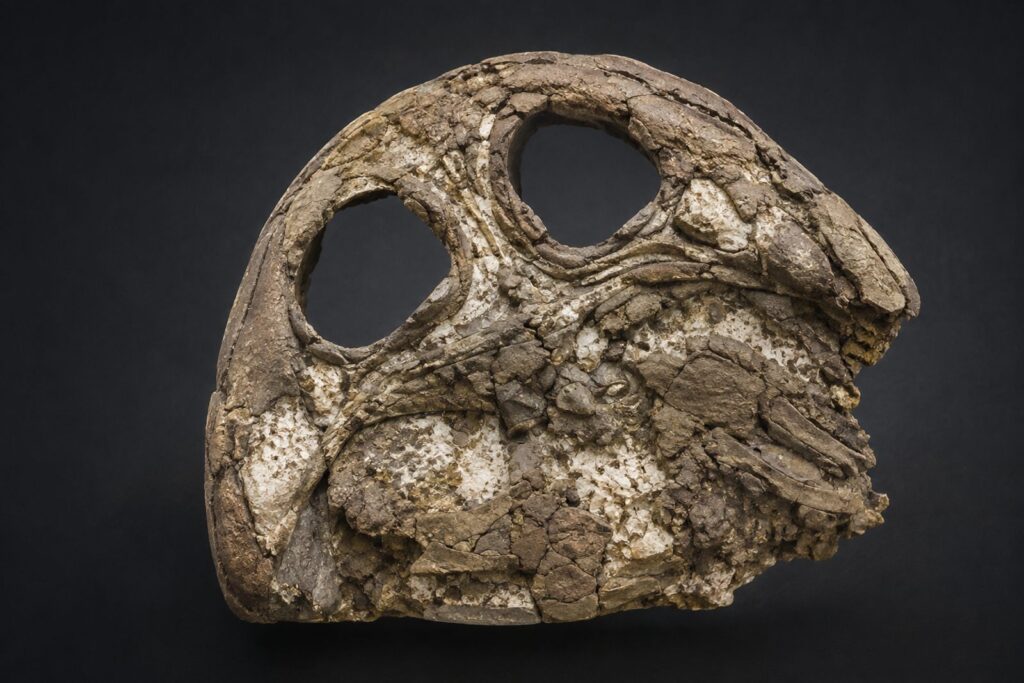
In 1948, a fossil was inadvertently left on Bear Island, an Arctic Norwegian archipelago, after a British expedition found it and decided it was too large to transport back to the mainland. The heavily weathered skull remained there for decades until 1984, when a Norwegian field team rediscovered it. The exposed remains and original photographs allowed researchers to reconstruct parts of the animal's skeleton, ultimately identifying a new species of Triassic predator named Arctobatrachus urdensis.
This marine reptile, belonging to the plagiosaurid family, is estimated to have reached about 2.7 meters (8.9 feet) in length, making it the largest known plagiosaurid. The unusually shaped skull, which measures 70 centimeters (27.6 inches) wide, indicates a predatory nature. The species provides valuable insight into the evolution and adaptation of early plagiosaurids, as well as the Triassic ecosystem in high northern latitudes during a warmer period following a mass extinction event.
Written by urgent.news from Colombia One's reporting — not their text. Machine-written — may contain errors; check the original before relying on it.