Ghana is ready for nuclear power adoption – Gov’t affirms
The government has affirmed Ghana’s readiness to include nuclear power as part of efforts to diversify the country’s energy mix and secure reliable, affordable electricity for industrialisation.
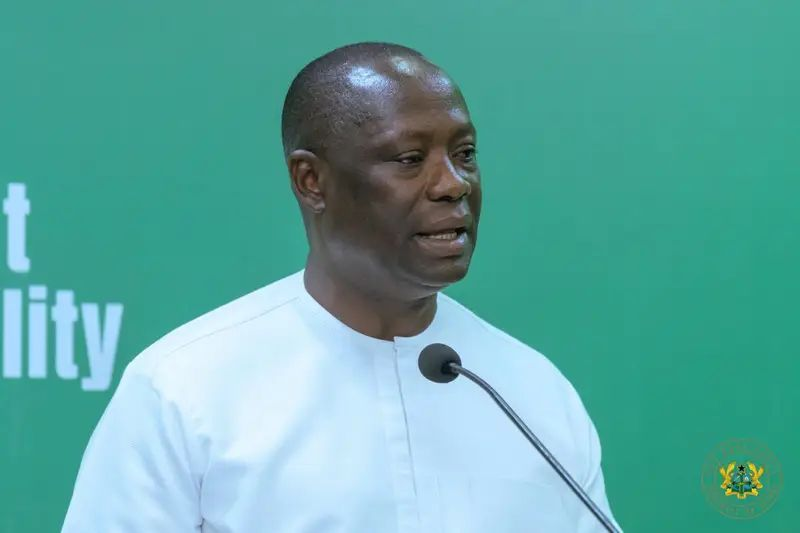
Ghana's government has declared the country ready to embrace nuclear power as part of its strategy to diversify the energy mix and ensure a dependable, economical electricity supply for industrialization. According to Emmanuel Armah-Kofi Buah, the Minister of Lands and Natural Resources and Acting Minister for Environment, Science and Technology, Ghana is in the second phase of the International Atomic Energy Agency's roadmap for developing nuclear power infrastructure.
The nation has made considerable progress in site studies, institutional development, stakeholder interaction, and talks with technology providers. However, Armah-Kofi Buah emphasized that nuclear power expansion must extend beyond reactor construction to encompass human capacity development, stating, "Human capacity in itself is infrastructure.
We, therefore, cannot build physical infrastructure today and hope to find the people tomorrow. We must build both." John Jinapor, the Minister of Energy and Green Transition, highlighted that nuclear power would assume a "critical" role in Ghana's energy mix as the nation endeavors to satisfy escalating electricity demand and foster industrialization.
Ghana's electricity demand has surged from approximately 300 megawatts when the Akosombo Dam was inaugurated to around 4,500 megawatts presently, with the majority of the country's installed generation capacity stemming from thermal sources. Consequently, Ghana is dedicated to broadening its generation mix to incorporate natural gas, renewable energy, and nuclear power to deliver reliable, low-carbon, and cost-effective electricity.
The country is advancing through the IAEA milestone approach with the goal of integrating nuclear capacity into the national generation mix. Additionally, Ghana and the United States are making substantial strides toward finalizing a 123 Agreement on peaceful nuclear cooperation, which has already been initialled and awaits the requisite approvals.
Matt Goff, the Principal Deputy Assistant Secretary for the US Department of Energy's Office of Nuclear Energy, expressed the United States' commitment to assisting Ghana and other African countries in developing nuclear energy programs. The US has partnered with Nuclear Power Ghana to establish a Regional Energy Training Centre in Accra, offering training and technical exchanges concerning reactor technologies, cybersecurity, quality assurance, and spent fuel management.
Goff emphasized that their objective is not to deliver individual training programs but to cultivate enduring institutional partnerships and technical prowess that can expand alongside Africa's nuclear ambitions. Dr. Humphrey Ayim-Darke, the former President of the Association of Ghana Industries (AGI), advocated for Ghana's nuclear power program to be treated as a strategic national project capable of supporting the country's long-term industrial development.
He emphasized that the program necessitates continuous and predictable investment, robust institutional commitment, and collaboration among government, industry, development partners, investors, and technical institutions. Joshua Ansah, the General Secretary of the Trades Union Congress, pledged the Union's support for the nuclear program, emphasizing that it would hinge not only on technology and financing but also on skilled labor, robust institutions, and sustained public confidence.
Written by urgent.news from MyJoyOnline Ghana's reporting — not their text. Machine-written — may contain errors; check the original before relying on it.
Also reported by 1 other outlet
- Ghana is ready for nuclear power adoption – Gov’t affirms myjoyonline.com