Facebook und Instagram: Meta wegen App-Nutzung durch Kinder vor Gericht
Mehrere US-Bundesstaaten werfen dem Meta-Konzern vor, Kinder absichtlich an Facebook und Instagram gebunden zu haben. Meta weist das zurück. In einem Prozess werden Geschworene darüber entscheiden.
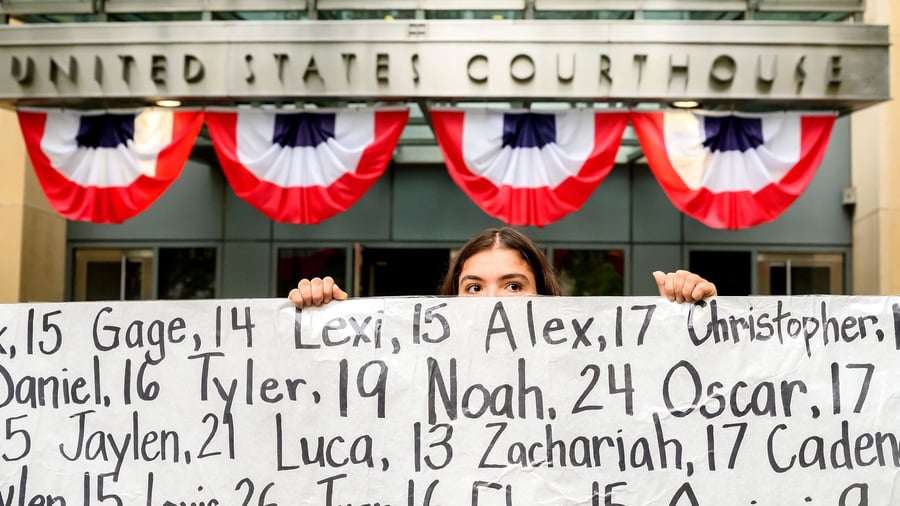
A potentially costly lawsuit against Meta, the parent company of Facebook and Instagram, has begun in the United States. If successful, the case could result in billions of dollars in fines and restrictions on key features. Several U.S. states accuse the company of deliberately encouraging extensive use of Facebook and Instagram among children.
At the same time, Meta allegedly concealed risks from parents and the public. The company denies the allegations. The trial before a jury in California's Oakland is set to last up to seven weeks and began on Tuesday with opening statements. Testimonies are expected to include Meta founder and CEO Mark Zuckerberg and current Instagram chief Adam Mosseri.
Allegations of intentional addiction potential? California's Deputy Attorney General Megan O'Neill accused Meta of intentionally designing online platforms to make children addicted. The company had exploited "how their brains work." Meanwhile, Meta did too little to stop children under 13 from using the services fraudulently by entering a false birthdate.
Prosecutors had access to internal Meta communications during the preparation of the case. Meta's attorney Paul Schmidt countered that company employees had expressed concerns about the problems related to children's use of the services and had taken measures. However, there was a trade-off between restrictions and freedom of expression.
For example, Meta decided not to censor some posts but not recommend them to others. In the past three months alone, Meta removed 600,000 accounts of children under the age of 13, Schmidt said. Whistleblower testimony The first witness for the states was former Facebook employee Arturo Béjar, who now criticizes the company as a whistleblower.
He became aware of the misconduct through his 14-year-old daughter's experience with Instagram after she left the company in 2015. She received sex offers and genital photos, which is why he returned to Meta as a consultant in 2019 to make the platforms safer. He warned the company leadership that young users would be shown 100-400 times more harmful content than what Meta statistics recorded.
How costly could this be for Meta? Meta claimed in a court document a few months ago that the fines demanded by the states could amount to $1.4 trillion (currently €1.2 trillion) and thus threaten the company's existence. Recent information from the plaintiffs' lawyers suggests it might be closer to around $200 billion. Meta calls the accusations unfounded and the financial demands unreasonable.
California's Deputy Attorney General Rob Bonta stressed in a press conference that the billion-dollar figure was based on Meta's own estimate. The company simply multiplied the number of young users with potentially possible fines. "We don't ask for $1.4 trillion," said Bonta. And the final amount would not be that high. Meanwhile, the states targeted addictive features like autoplay, which automatically plays the next video, and sought an industry-wide solution.
They would also bring TikTok, the video platform, to court. Series of setbacks for Meta Meta has recently suffered several significant losses in U.S. courts. The company is alleged to have paid over half a billion dollars in assistance to children harmed by social media use in a court decision in New Mexico. In addition, additional restrictions for users under 18 years of age are to be introduced in the state, among other things, limiting them to a maximum of 90 hours per month on Facebook and Instagram.
Users under 18 in New Mexico will also generally not receive push notifications between 10 PM and 7 AM. On school days, the notifications will also be disabled between 8 AM and 3 PM. Meta plans to appeal. In March, Meta and the Google video platform YouTube lost a potentially landmark case on the addictive potential of online services.
Jurors in Los Angeles concluded that the platforms had been negligent and had insufficiently informed users about the risks. Both judgments Meta wants to overturn.
Written by urgent.news from Handelsblatt's reporting — not their text. Machine-written — may contain errors; check the original before relying on it.