Eurobond borrowings over 2007-2021 used for budget financing; Ghana borrowed US$15.59bn – Opoku-Afari
In an article titled “How not to Miss a Crisis: Lessons from Ghana”, Dr. Opoku-Afari who is a Non-Resident Fellow of Finance for Development Lab said Ghana’s public debt had surged from about 63% of Gross Domestic Product (GDP) in 2019 to about 93% by the end of 2022 at the time of the IMF-supported programme approval in 2023, adding, the headwinds of fiscal and balance of payments made it…
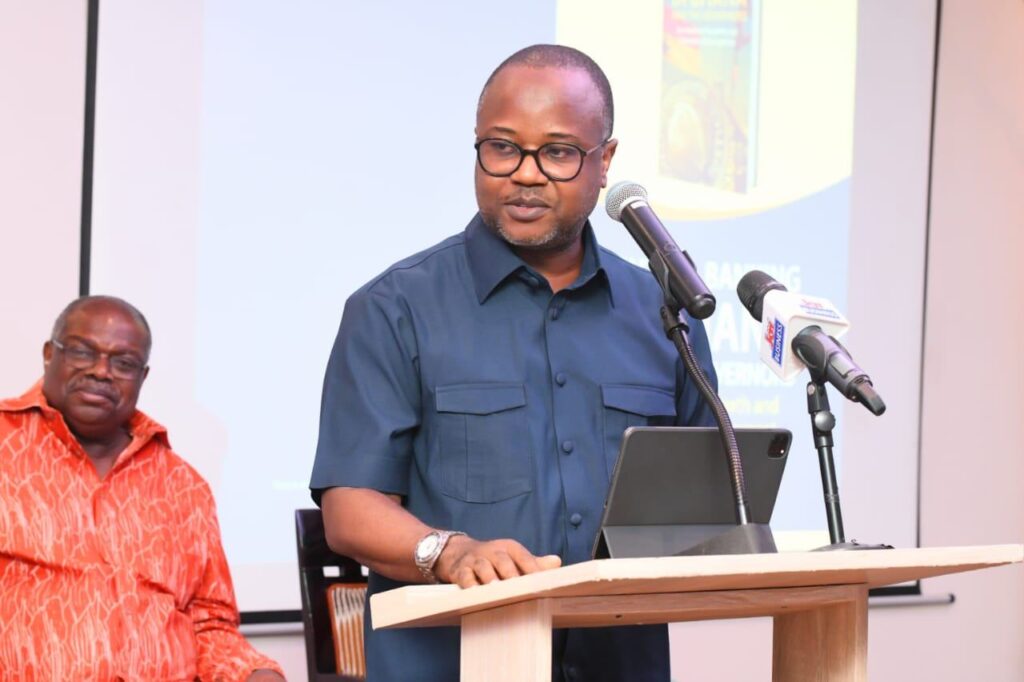
Dr. Maxwell Opoku-Afari, a former First Deputy Governor of the Bank of Ghana, has revealed that Ghana's Eurobond borrowings from 2007 to 2021 were primarily utilized to finance the national budget, with a significant portion allocated to recurrent expenses. This practice contributed to the widening fiscal deficits, exacerbated by the consequences of the COVID-19 pandemic, the effects of the Russia-Ukraine conflict, sharp fluctuations in the value of the local currency, and the loss of market access in 2022.
In his article titled "How not to Miss a Crisis: Lessons from Ghana," Dr. Opoku-Afari, a Non-Resident Fellow at the Finance for Development Lab, reported that Ghana's public debt had increased from around 63% of the country's Gross Domestic Product (GDP) in 2019 to approximately 93% by the end of 2022, as approved for an IMF-supported program in 2023.
The mounting fiscal and balance of payments pressures resulted in technical default, forcing Ghana to suspend debt service payments on Eurobonds, bilateral loans, and commercial term loans in December 2022.
According to Dr. Opoku-Afari, Ghana had borrowed US$15.59 billion from the international capital market between 2007 and 2021, through nine separate issuances, to bridge the budgetary financing gaps. These Eurobond borrowings were not earmarked for 'self-repaying projects'; instead, they were used for budget financing, with a substantial portion spent on recurrent expenditure.
The International Monetary Fund (IMF) supported program between 2015 and 2019 did not fundamentally change Ghana's underlying fiscal and structural issues, despite the reduction of trade and budget deficits. Between 2010 and 2019, Ghana was considered one of Africa's top economic performers, experiencing steady growth, successfully completing an IMF-supported reform program, updating its Public Financial Management framework, strengthening debt management institutions, and consistently receiving favorable Debt Sustainability Analyses from the IMF and World Bank.
However, these favorable conditions rapidly deteriorated, resulting in one of the most severe sovereign debt crises in Ghana’s history. Dr. Opoku-Afari emphasizes that this sudden shift raises crucial questions that go beyond Ghana's situation alone. He wonders how a country with established fiscal management institutions could have fallen into debt distress and why strong economic growth, approval of fiscal reforms, fiscal rules, and repeated macroeconomic surveillance did not prevent the accumulation of vulnerabilities.
Dr. Opoku-Afari urges a reassessment of the underlying economic strategy during the period and questions whether the "Ghana Beyond Aid" vision was merely an illusion or an ambition disconnected from reality.
Written by urgent.news from MyJoyOnline Ghana's reporting — not their text. Machine-written — may contain errors; check the original before relying on it.
This story
This is one outlet's version. Read the fullest account.