Economy experience high but unbalanced growth from mid-2000 to 2022 debt crisis – Former 1st Deputy Governor
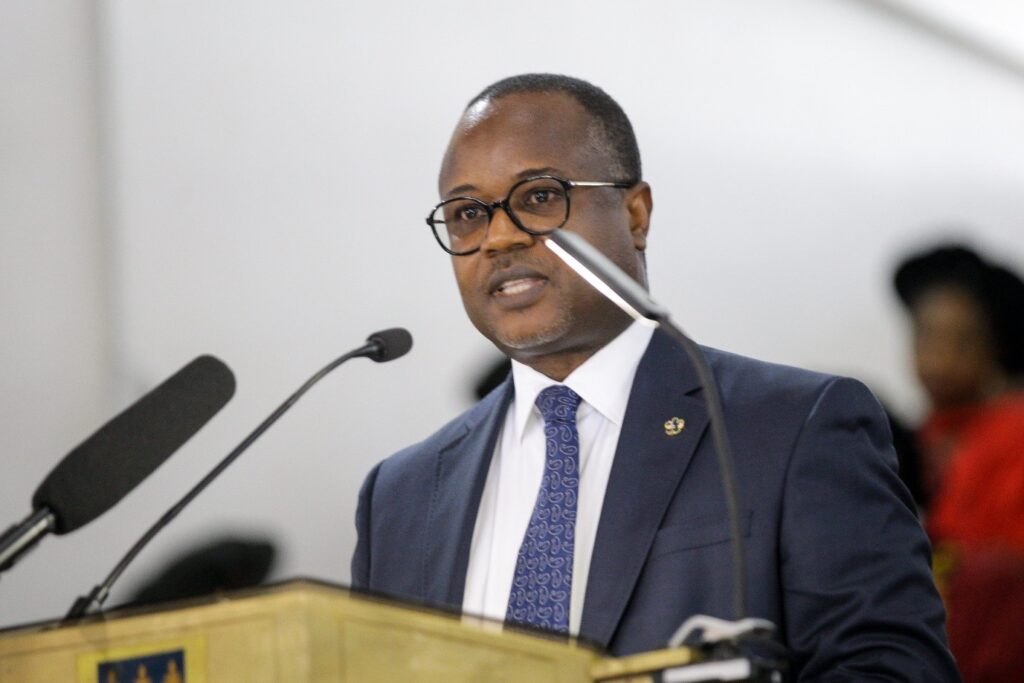
Ghana's economy witnessed periods of high, yet unstable growth from the mid-2000s until the 2022 debt crisis. According to Dr. Maxwell Opoku-Afari, a former First Deputy Governor of the Bank of Ghana, this growth was primarily driven by cocoa exports, gold production, and subsequently, oil production during the mid-2000s. However, this expansion was marred by rising fiscal deficits and a reliance on external borrowing, setting the stage for potential future vulnerabilities.
Dr. Opoku-Afari detailed these observations in his article titled "How not to Miss a Crisis: Lessons from Ghana." He noted that Ghana's economic trajectory began to falter by the early 2010s, with the discovery and exploitation of oil boosting growth but weakening fiscal discipline, particularly during election periods. He highlighted that while election-driven spending induced growth, it was often followed by severe fiscal and debt crises, with little correlation between election spending and electoral outcomes.
Dr. Opoku-Afari, who is a Non-Resident Fellow at Finance for Development Lab, emphasized that Ghana's growth performance masked significant vulnerabilities due to high and increasing fiscal deficits. The growth was not diversified, nor was it based on private investment or robust public infrastructure. He further explained that Ghana's debt story is typical of fiscal challenges faced by resource-rich, lower-middle-income countries, characterized by high infrastructure deficits and a burgeoning middle class.
Despite HIPC relief, Ghana started the decade with low gross public debt but, within two decades, returned to debt distress, underscoring the cyclical nature of fiscal vulnerabilities and the difficulty in sustaining debt relief gains. From 2010 to 2024, Ghana's fiscal deficits averaged 8.3% of GDP, while its gross public debt, encompassing both domestic and external debt, surged from 38.9% of GDP in 2010 to 92.7% by 2022, before decreasing following 2023-24 debt restructurings.
Key turning points included increased Eurobond issuance starting in 2007, particularly after 2013, fiscal overspending, energy sector costs, the COVID-19 pandemic, terms-of-trade shocks, and a depreciating Ghanaian Cedi. In 2022 alone, the depreciation of the Cedi contributed significantly to the external debt stock, amounting to GH¢93.9 billion, which equated to 0.2% of GDP.
Dr. Opoku-Afari pointed out that the high interest burden and stock-flow adjustments played a more significant role in debt dynamics post-2020, with primary deficits becoming dominant. By 2018-2020, debt service accounted for over 45% of government revenues, sharply increasing perceptions of an unsustainable debt trajectory. By 2022, interest payments had consumed nearly 60% of Ghana's public expenditure, leaving meager fiscal space for essential services such as education, health, and water infrastructure.
Consequently, Dr. Opoku-Afari concluded that the national budget's ability to serve as an effective development policy tool had been severely constrained, creating the foundation for a cycle of unsustainable borrowing to meet annual budgetary financing gaps.
Written by urgent.news from Joy Business's reporting — not their text. Machine-written — may contain errors; check the original before relying on it.
This story
This is one outlet's version. Read the fullest account.