Continuous Aggregate Refresh, Demystified: Invalidation, Lookback, and Late-Arriving Data
Learn why late-arriving time-series data can leave aggregates stale and how TimescaleDB continuous aggregate refresh windows determine reconciling corrections.
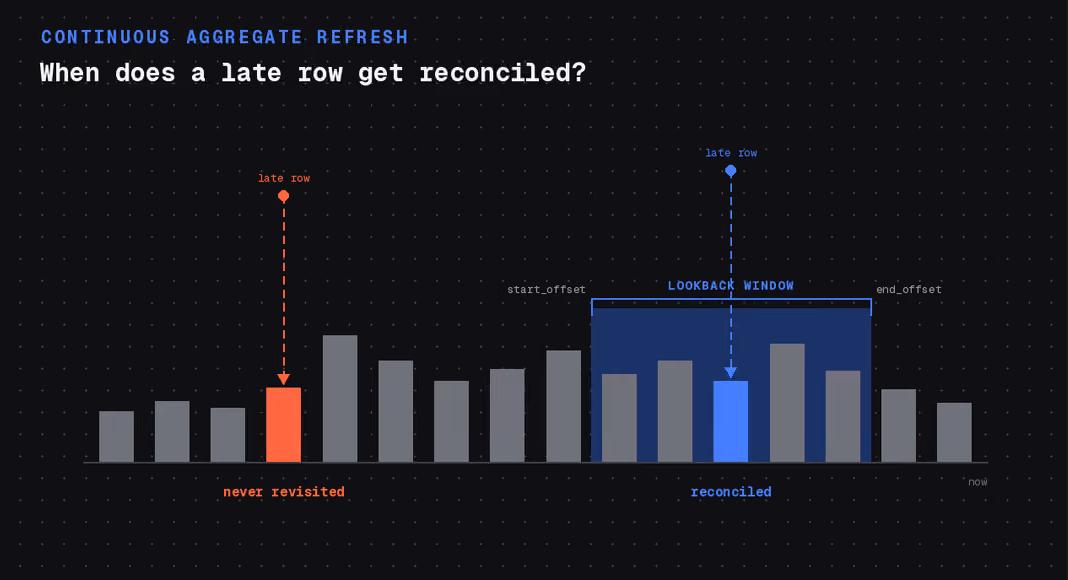
The continuous aggregate refresh in TimescaleDB has four strategies that handle different events related to data arrival and changes. These strategies include scheduled full recompute, insert-triggered incremental views, streaming dataflow engines, and invalidation-tracked window refresh. All four strategies start by picking up new data at the head of the table with a current timestamp, with no intervention required.
However, they differ in how they handle late data for a closed window and changes to aggregated rows. Scheduled full recompute and insert-triggered incremental views refresh at the next scheduled run, while streaming dataflow engines and invalidation-tracked window refresh handle late data and changes within the window, recomputing only the necessary buckets. The choice of strategy depends on the freshness requirements and the workload of the data.
Written by urgent.news from HackerNoon's reporting — not their text. Machine-written — may contain errors; check the original before relying on it.