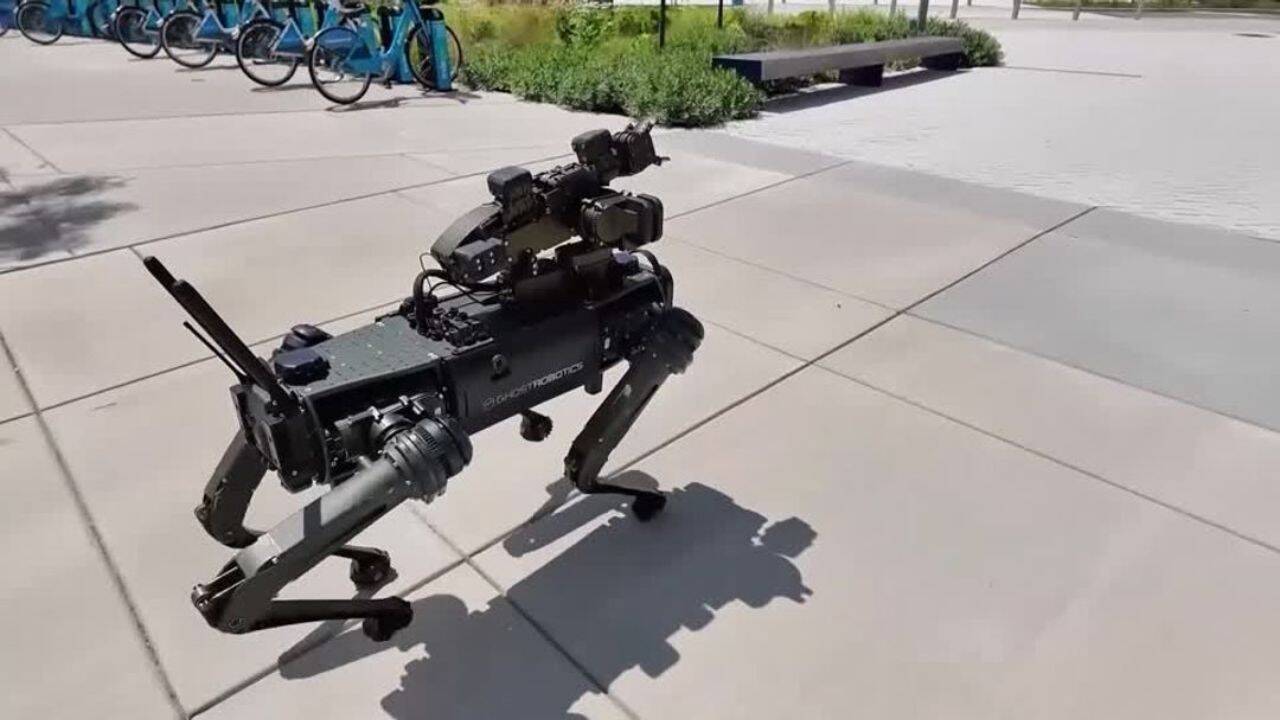
China robot makers flock to Beijing show, seek path to mass adoption
Investor enthusiasm for the sector hits fresh highs in China
Over 300 companies gathered for the World Robot Conference in Beijing to display more than 2,000 exhibits and launch over 150 products, signaling investor enthusiasm for China's burgeoning robotics sector. Shares in Unitree, a leading humanoid robot maker, jumped nearly six-fold following its successful initial public offering, which was more than 8,000 times oversubscribed by retail investors.
Meanwhile, startup Lumos Robotics and the robotics division of China's largest auto exporter, Chery Automobile, both expressed interest in listing their shares on the stock market.
Vice Minister of the Ministry of Industry and Information Technology, Xin Guobin, highlighted the sector's growing importance, declaring that robotics had already become "an important force" in China's economic and social development. Zhang Dapeng, an assistant vice president at Leju, an industrial humanoid robot firm, noted that their robots are commonly used for logistics tasks such as moving crates and small objects.
Major European factories and domestic auto plants have already incorporated Leju's robots to perform similar tasks, achieving the same efficiency as a human worker.
Despite the sector's rapid growth, large-scale commercial adoption remains limited. Startup Robotera showcased a parcel-sorting humanoid robot with a continuous running time of 900 to 1,000 hours and claimed to be 85 percent as effective as a human worker. Other notable exhibits included DexForce's humanoid robots, designed for packaging mobile phones, and a giant robotic horse that can be ridden. UBTECH presented teaching robots capable of conducting English language classes and supervising university examinations.
The industry's swift expansion resembles China's electric vehicle sector a few years ago, with numerous companies emerging rapidly and competing fiercely. Zhang Guibing, head of AiMOGA Robotics, Chery's robotics division, expressed optimism about the competition, stating that it would ultimately deepen the industry's technology and capabilities.
However, a robotics analyst, Georg Stieler, warns that between 50 to 70 percent of humanoid robots produced this year might end up in "data factories" for training purposes rather than directly benefiting paying customers. He also predicts that competition in the Chinese market could become extremely intense, potentially taking about a decade for humanoid robots to mature before witnessing rapid adoption.
Written by urgent.news from The Business Times - Companies & Markets's reporting — not their text. Machine-written — may contain errors; check the original before relying on it.
This story
This is one outlet's version. Read the fullest account.
- From robot dogs to helpers, China puts robotics ambitions on display at world conference apnews.com
- China robot makers flock to Beijing show, seek path to mass adoption economictimes.indiatimes.com
- How China Leveraged US Funding To Turn Robot Dogs Into $9 Billion Business ndtv.com
- How U.S. military funding propelled China’s robot dogs japantimes.co.jp
- China’s backflipping robot maker Unitree pops 542% in Shanghai debut cnbc.com
- From robot dogs to helpers, China puts robotics ambitions on display at world conference winnipegfreepress.com
- China puts 'robocops' on traffic duty; a 'Superman' robot claims it can outrun Bolt timesofindia.indiatimes.com