Cerebras CS-4 rack systems juice their dinner-plate-sized AI chips for every last drop of AI perf
Next-gen systems double per-chip performance while cramming 3x as many into a rack
Cerebras has unveiled its next-generation Wafer Scale Engine (WSE) and Nexus rack systems, aiming to further extend its lead in AI performance. The newly announced WSE-3T, which stands for "Turbo," promises twice the compute, memory fabric, and I/O bandwidth of its predecessor, the WSE-3, without actually using new silicon. Instead, Cerebras has pushed its existing wafer-scale engine harder, achieving this through improved power delivery that allows for higher operating frequencies and faster token generation.
The WSE-3T boasts 250 petaFLOPS of AI compute, 44 GB of SRAM, 43.2 PB/s of memory bandwidth, and 2.4 Tbps of off-die connectivity. While these specifications sound impressive, they may not be as impressive as the company would like to make them seem. Cerebras' headline performance figure heavily relies on sparsity, which typically does not benefit large language model (LLM) inference.
Adjusting for the same level of sparsity used in the WSE-3, the WSE-3T's dense FP16 performance is expected to be closer to 25 petaFLOPS rather than the 50 petaFLOPS claimed by the company.
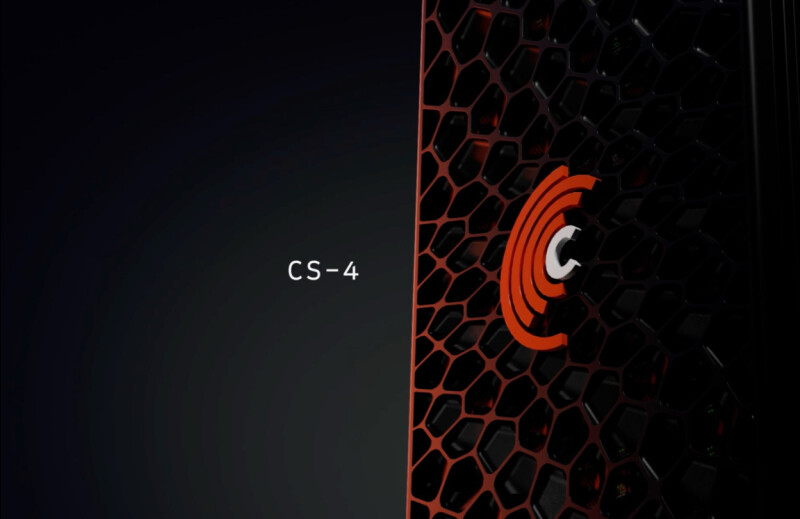
In addition to performance gains, Cerebras has shifted its focus to rack-scale compute architectures, similar to those employed by Nvidia and AMD. The company's latest CS-4 rack system houses its chips in a "backpack" form factor, which includes all necessary control electronics. Each CS-4 can accommodate up to three backpacks, which plug into the back of the rack, while the front of the rack is dedicated to power shelves. This modular design allows for easier deployment, maintenance, and upgrades.
Despite the power efficiency improvements, the CS-4 racks are expected to consume around 120 kW to 140 kW of power, which is still significantly less than the 240 to 250 kW rack systems anticipated from AMD and Nvidia later this year. This power consumption is still relatively conservative compared to the past, as each CS-4 backpack can house up to three accelerators, pushing the total system power to around 46 kW per backpack.
Written by urgent.news from The Register's reporting — not their text. Machine-written — may contain errors; check the original before relying on it.